The Complications
Most houses in Fillmore went up around 1975, which puts them square in the era when steel sectional doors with raised-panel faces became the default builder choice, replacing the old one-piece swing-up slabs.
Panel wear after 50 years
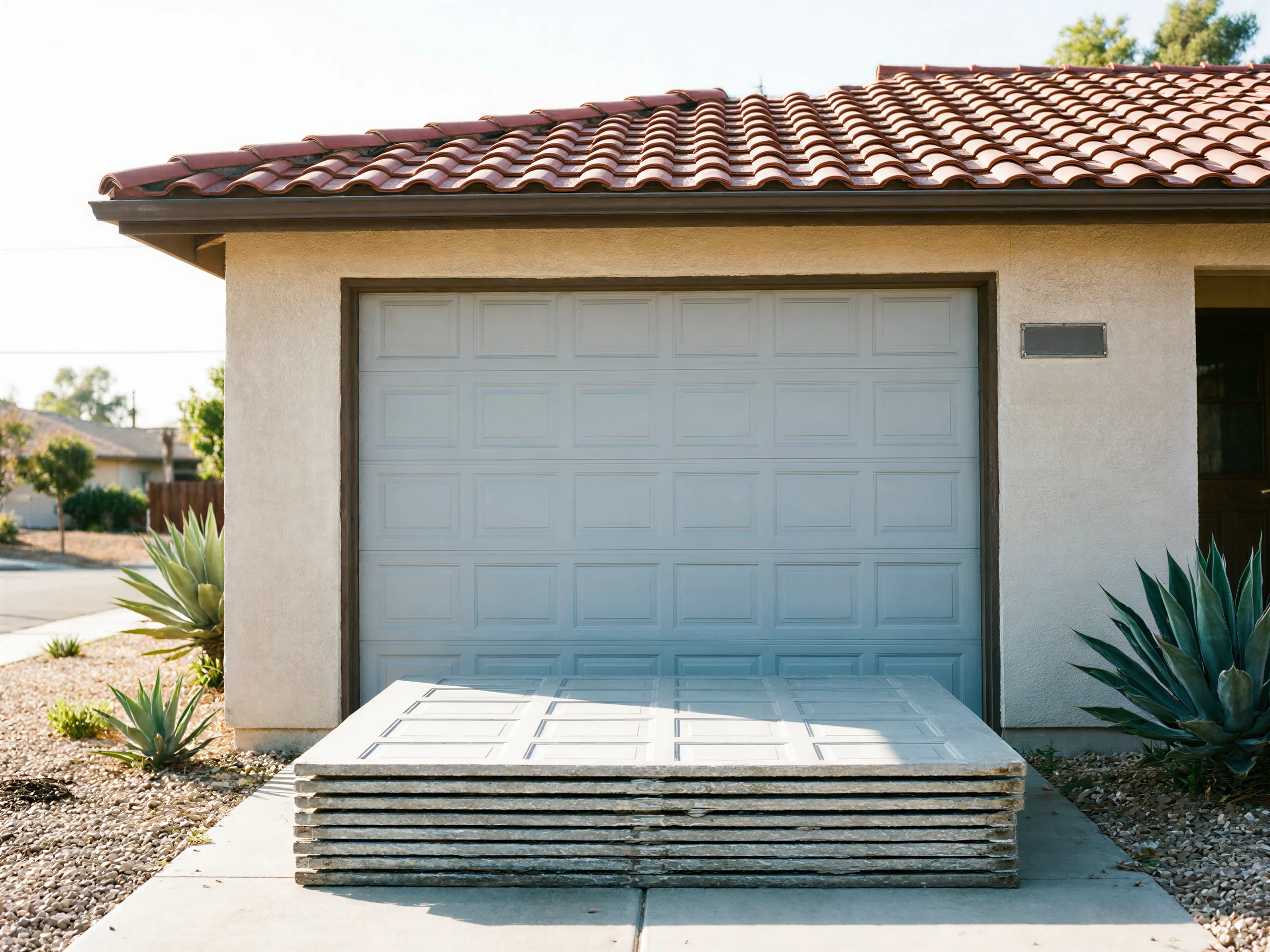
That's good news and bad news. Good, because parts for this generation of door are more common than for the 1950s stock we see closer to Ventura. Bad, because 50 years in means the panels themselves have usually taken the damage - sun-bleached paint, hairline cracks at the hinge stiles, a dented bottom section from a trailer hitch or a bike.
Brittle fold lines
The mild coastal-valley climate out here hasn't rusted these doors out the way a wetter region would, but it has baked the finish and made the steel brittle at the fold lines.
Discontinued profile matching
The complication we run into most in Fillmore specifically is matching a discontinued panel profile to a door that's otherwise sound - the track, springs, and opener from 1975 often still work fine, so replacing the whole door is overkill when one or two panels are the actual problem.
Parts We Carry
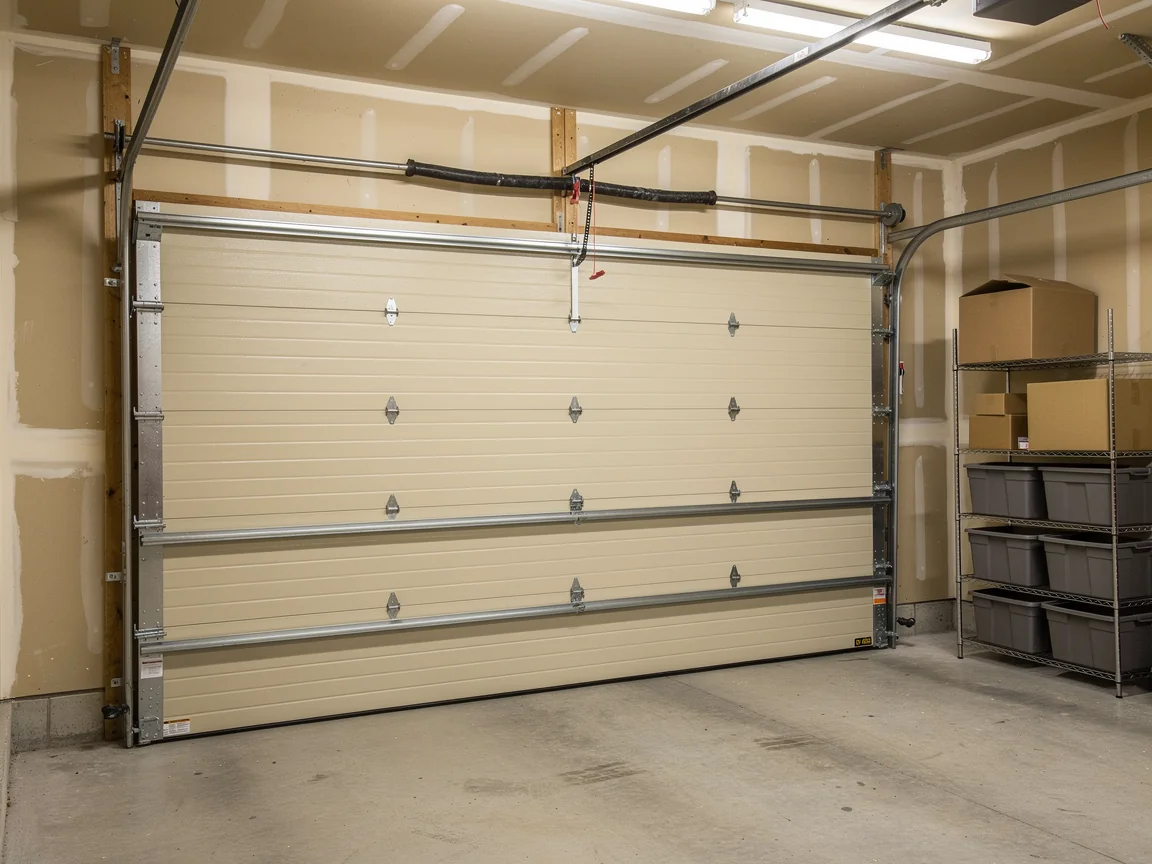
We stock panel sections and end stiles sized for the steel sectional doors that match Fillmore's building era - the raised-panel and flush designs that were standard through the mid-1970s to late-1980s. If your door uses a less common profile from that stretch, we bring samples on the truck to match paint and panel depth on site rather than guessing from a photo. What we don't carry is obsolete wood-composite panel stock from the earliest houses in the area; those jobs sometimes mean a full door swap instead of a patch, and we'll tell you that up front rather than order a part that won't hold up.
Can You Do This Yourself
Swapping a single bottom panel on a sectional door is within reach for a handy homeowner if the door is unplugged from the opener and the springs are left alone - panel work doesn't usually touch spring tension.
Unsupported track rollers
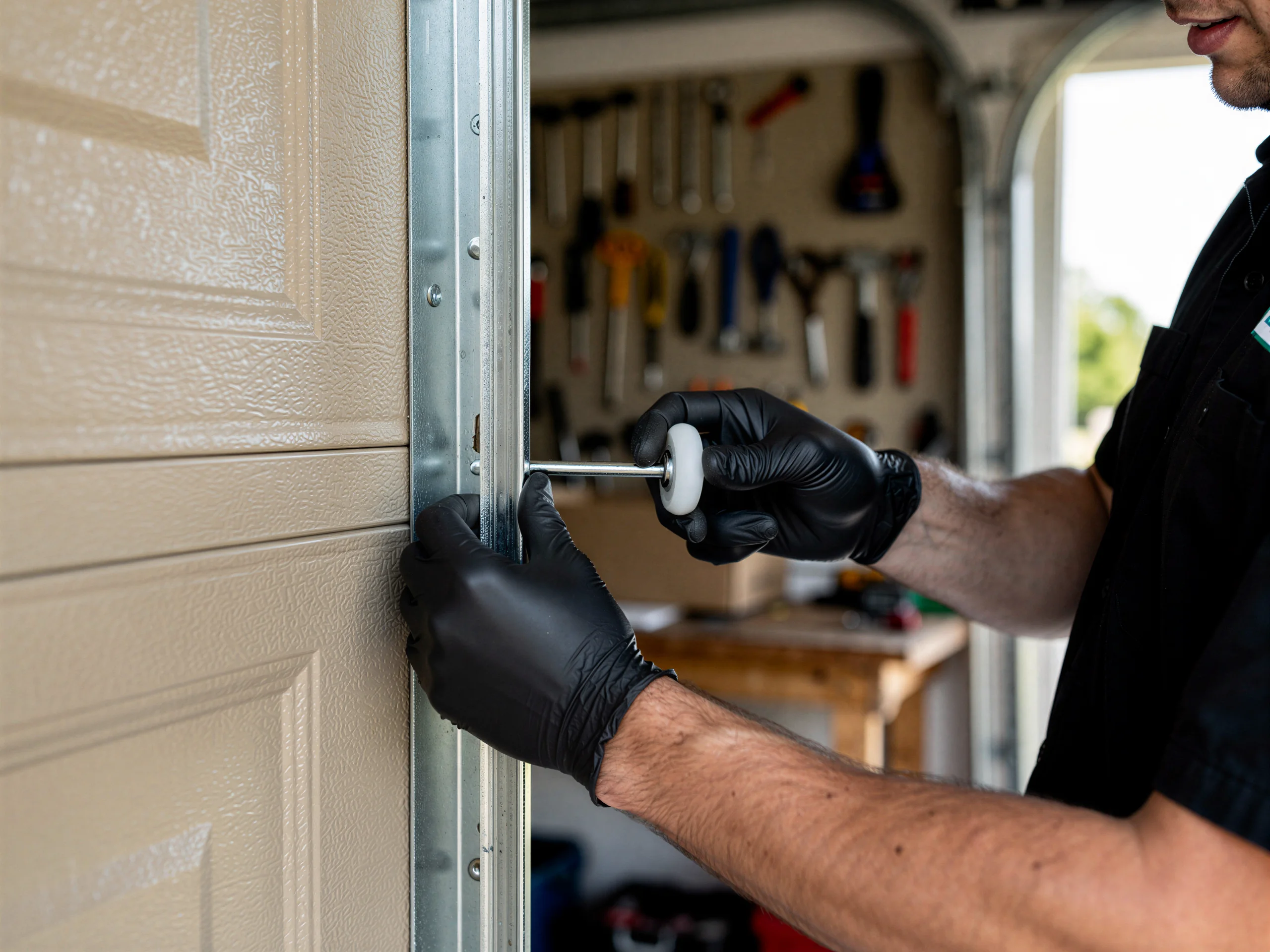
Where people get hurt is pulling the whole section without supporting the track rollers, which lets the door rack sideways and bind. If more than one panel is damaged, or the damage is near a hinge where the steel has gone brittle, we'd rather you call than find out mid-job that the replacement panel doesn't sit flush.
Single-panel swap limits
That's the honest limit: a clean single-panel swap, go for it; anything touching the hinge line or more than one section, it's worth the call.
Getting It Booked In
We run this service out of Ventura, about 23 miles from Fillmore, so panel jobs here get scheduled rather than dropped in same-day. Tell us the door's age and whether you can see a model sticker on the inside track rail - that narrows down the panel profile before we even load the truck, which cuts down on return trips for a wrong-match part.
How We Fix It
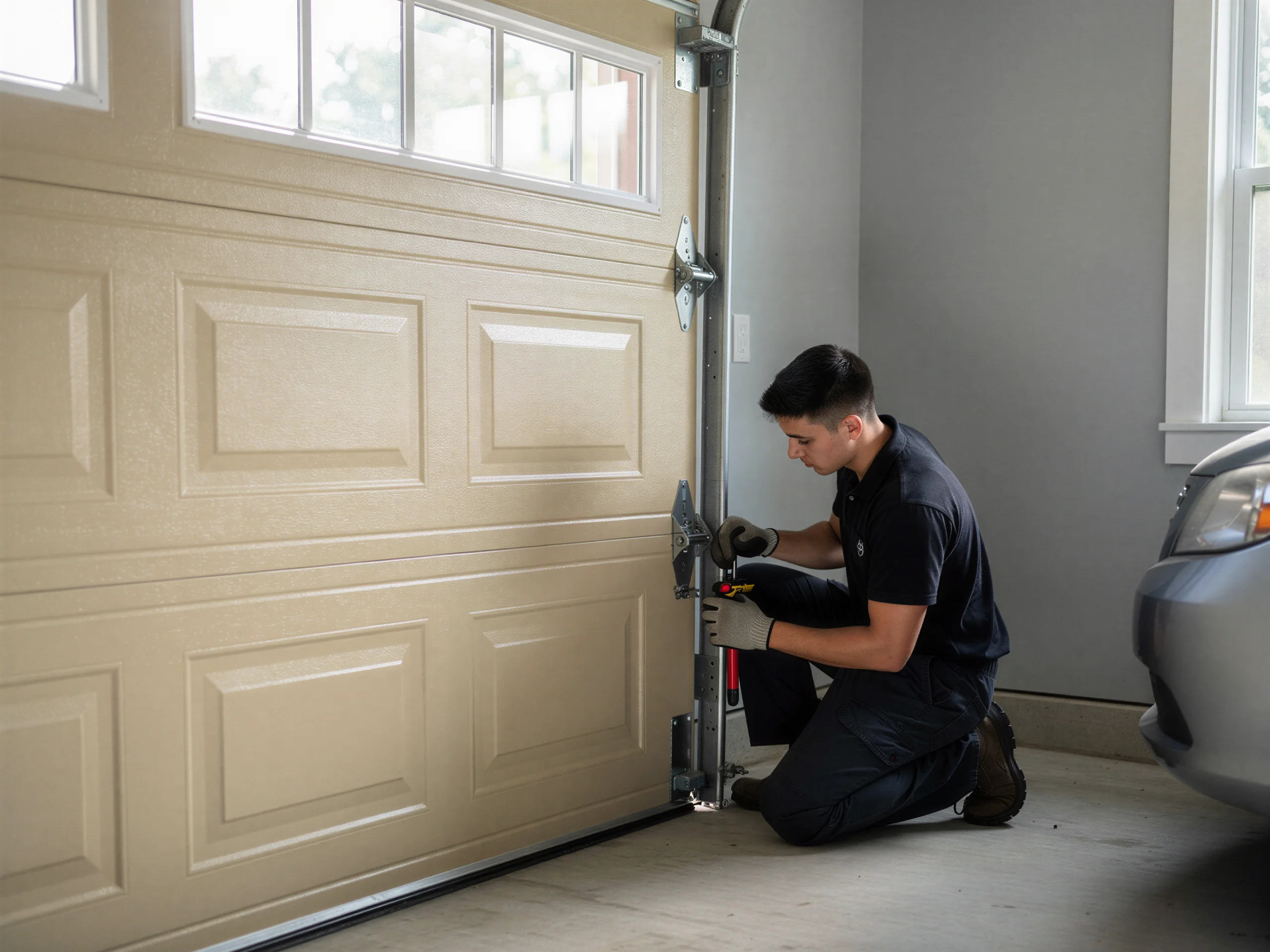
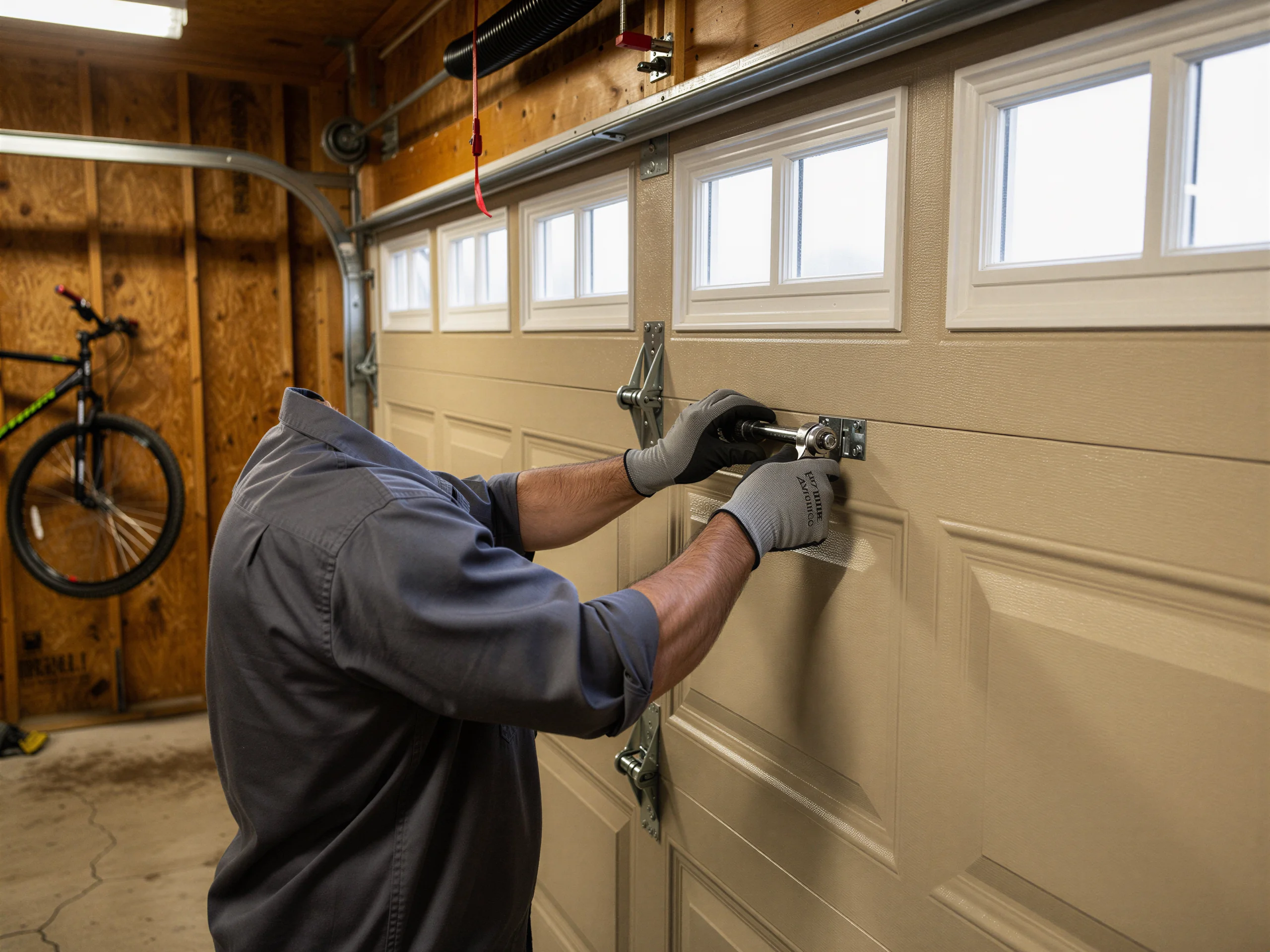
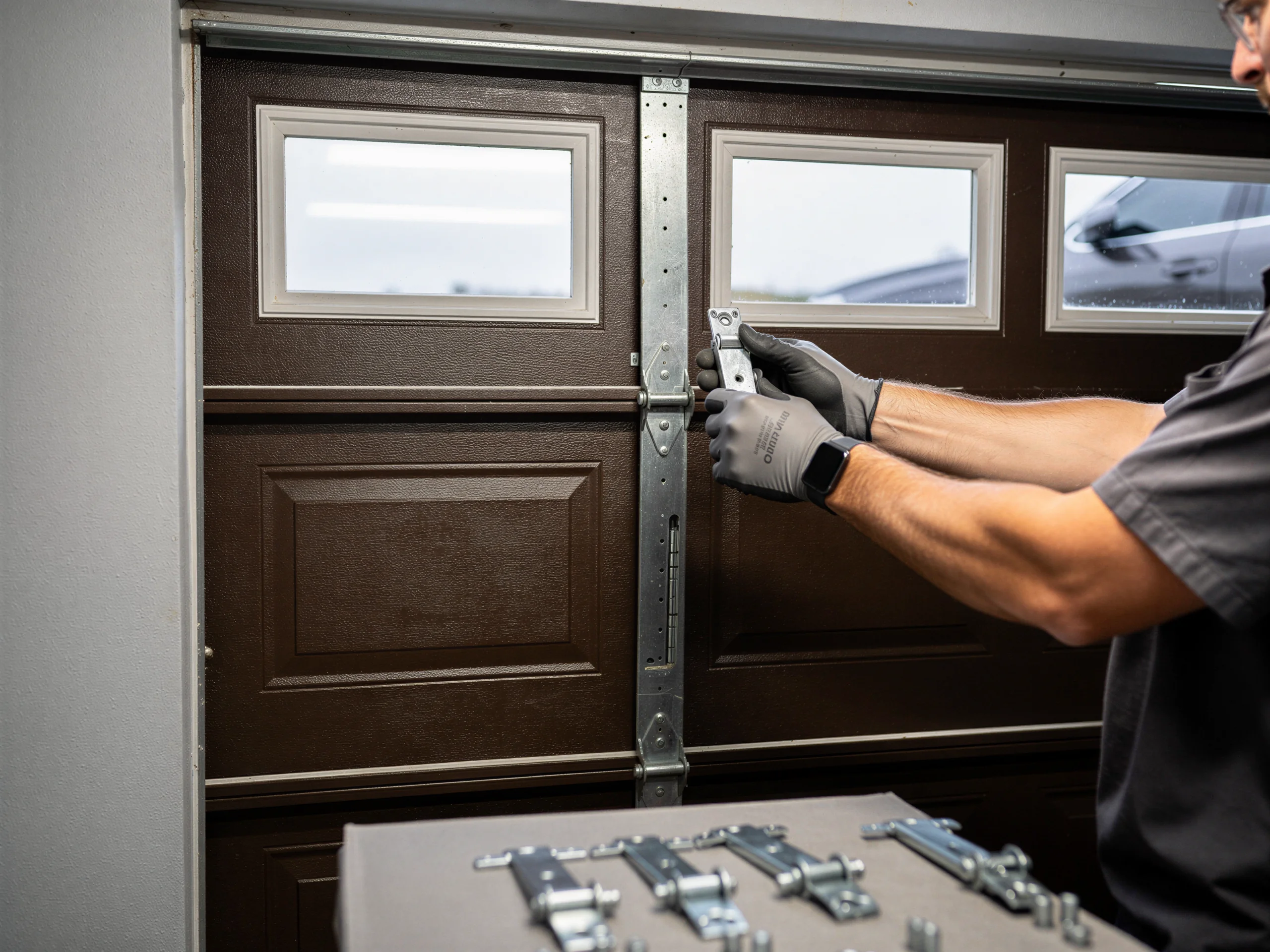
We start by confirming the door's actual build year isn't a renovation mismatch - plenty of 1975-era Fillmore houses have had an opener swapped later, but the door itself usually hasn't moved. Once we've got the right panel profile, we unbolt the damaged section at the hinges, support the remaining stack on the track so nothing shifts, and set the new panel in before re-torquing the hinges to spec. We check the roller alignment on both sides afterward, since a panel swap on an older door often reveals a roller or track bracket that's been quietly wearing loose for years and was masking itself behind the dented section.
Talk to a local pro
Garage door service in Ventura?
Same-day service with honest, upfront quotes.