Why This Fails Locally
Ventura's housing stock runs mostly 1956 to 1997, with the median build year sitting at 1973. That matters more than most homeowners realize when a garage door starts acting up. A door and opener installed, or even replaced once, during that stretch is now old enough that steel fatigues, galvanized coating wears through on tracks, and the extension springs common to that era have gone through tens of thousands of open-close cycles.
Ventura sits in a mild temperate band, so we don't see the freeze-thaw cracking or extreme heat warping that wrecks doors in harsher climates. That's the good news. The bad news is that in this climate, failure here is almost never weather-driven - it's age-driven. A spring doesn't snap because of a cold snap. It snaps because it's been doing the same job since the Ford administration and nobody told you springs have a cycle life.
Across the 14 named areas that make up this part of the county, the pattern repeats: original hardware, original torsion or extension spring setups, and openers that were state of the art when Carter was president. None of that is unusual here. It's just what a house built in 1973 looks like 50 years on.
Parts We Carry
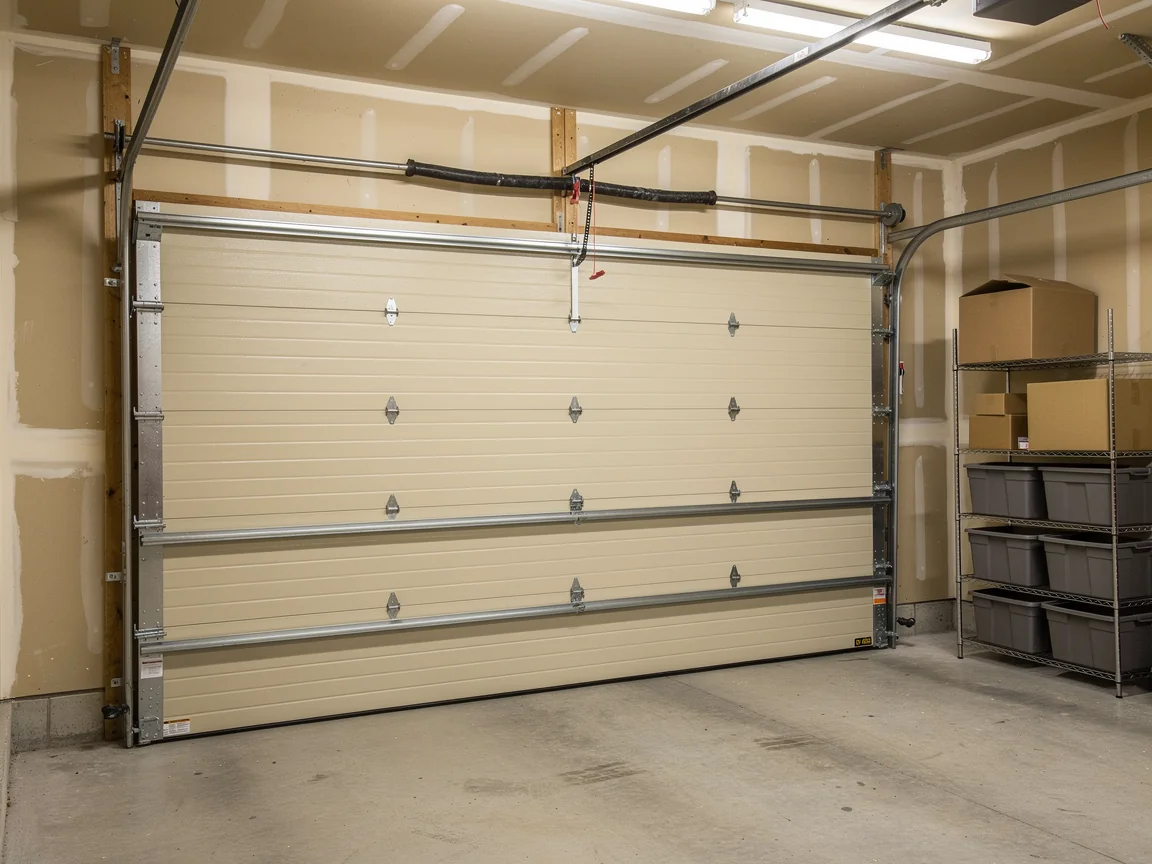
Because so much of the local stock dates to the 1960s and 70s, we stock parts sized for that era, not just whatever ships fastest from a national warehouse.
Extension and torsion springs
That means extension springs in the lengths and wire gauges common on doors from that build window, along with torsion springs for the 7-foot and 16-foot openings that showed up in tract construction through the 1970s and into the 1990s.
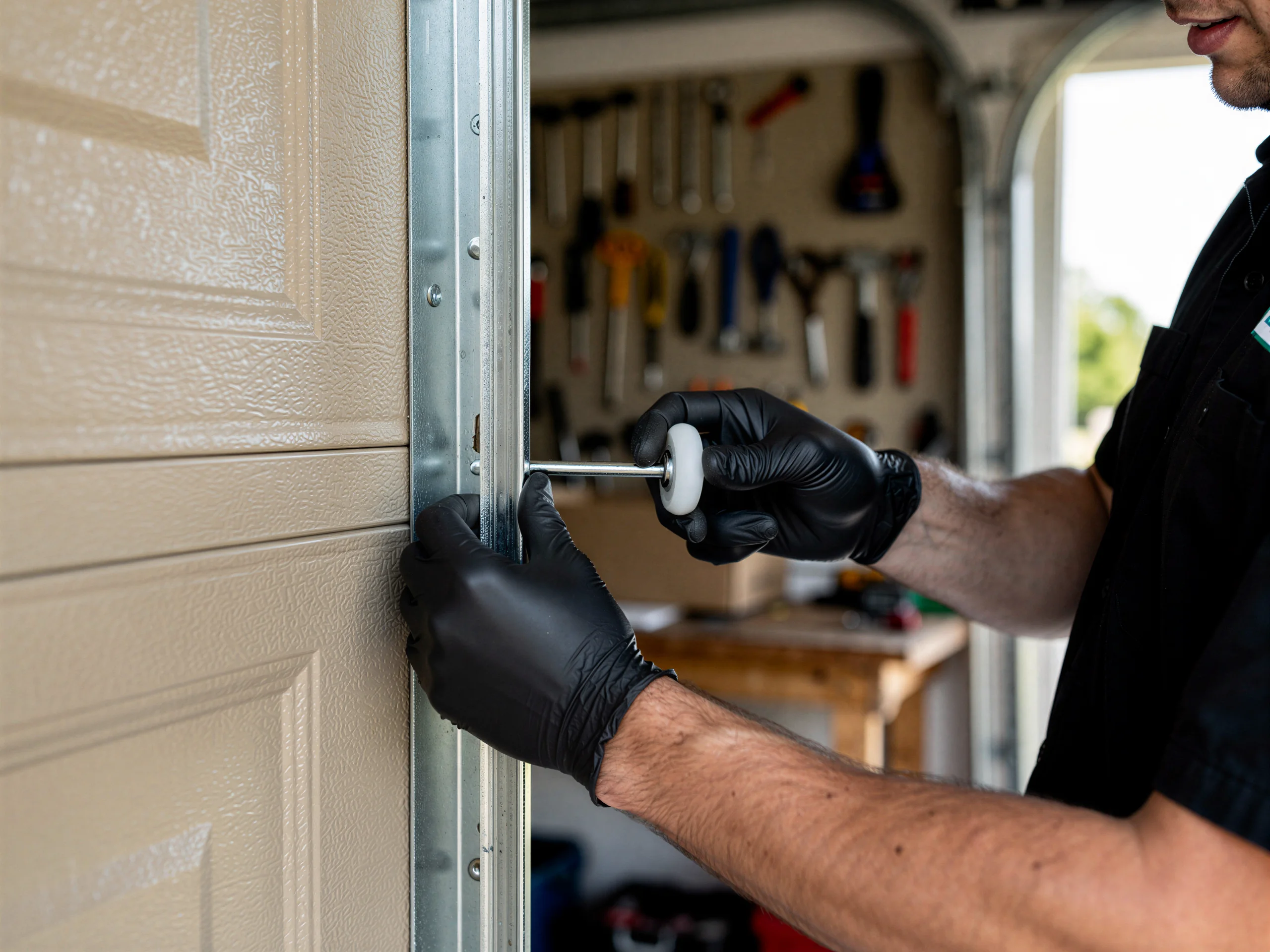
Low-headroom roller track
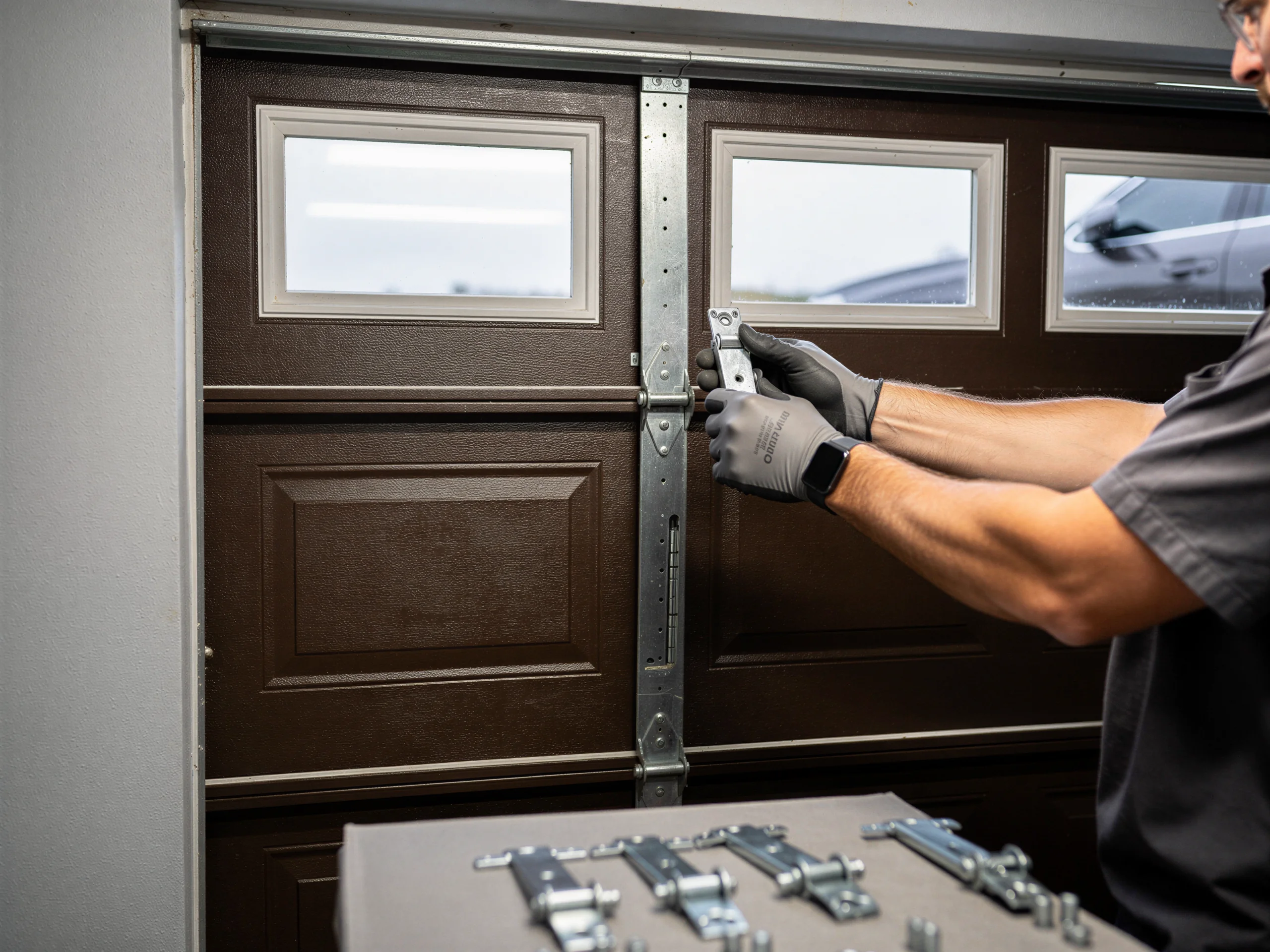
We also carry the steel rollers and track sections that match older low-headroom setups, since a lot of these garages were framed with less ceiling clearance than current code calls for. Cables, drums, and the older style of center-mounted bearing plate are on the truck, not on back order, because we see them often enough to keep stocked.
Uncommon size panels
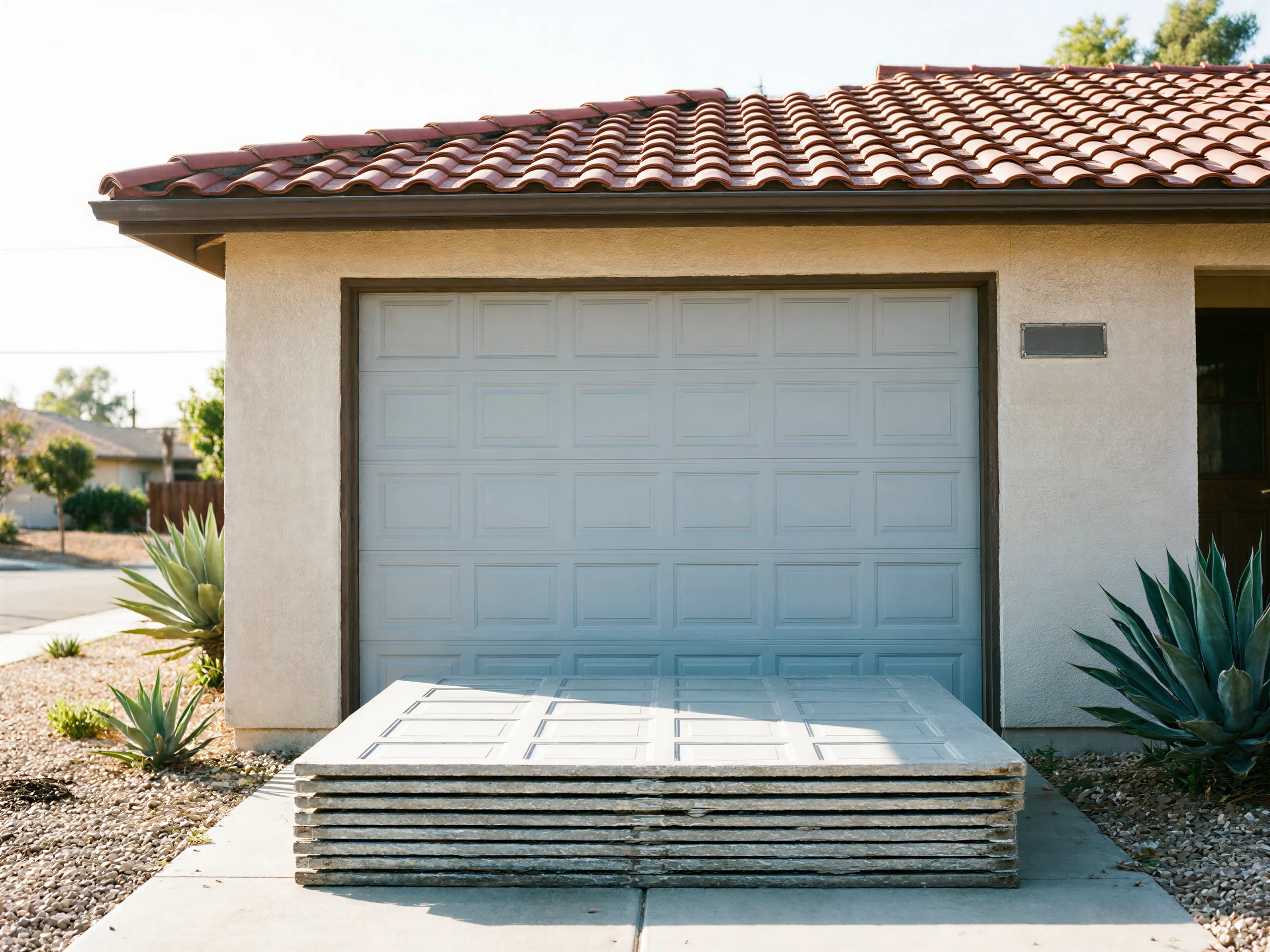
One honest limit: if your door is a less common import size, or a decorative wood door from a custom build rather than tract construction, we may need to order that panel. We'll tell you up front if that's the case rather than quote a job we can't start that day.
How We Fix It
First we identify whether the failure is the spring system, the track and roller assembly, or the opener - three different problems that often get lumped together as "the garage door is broken.
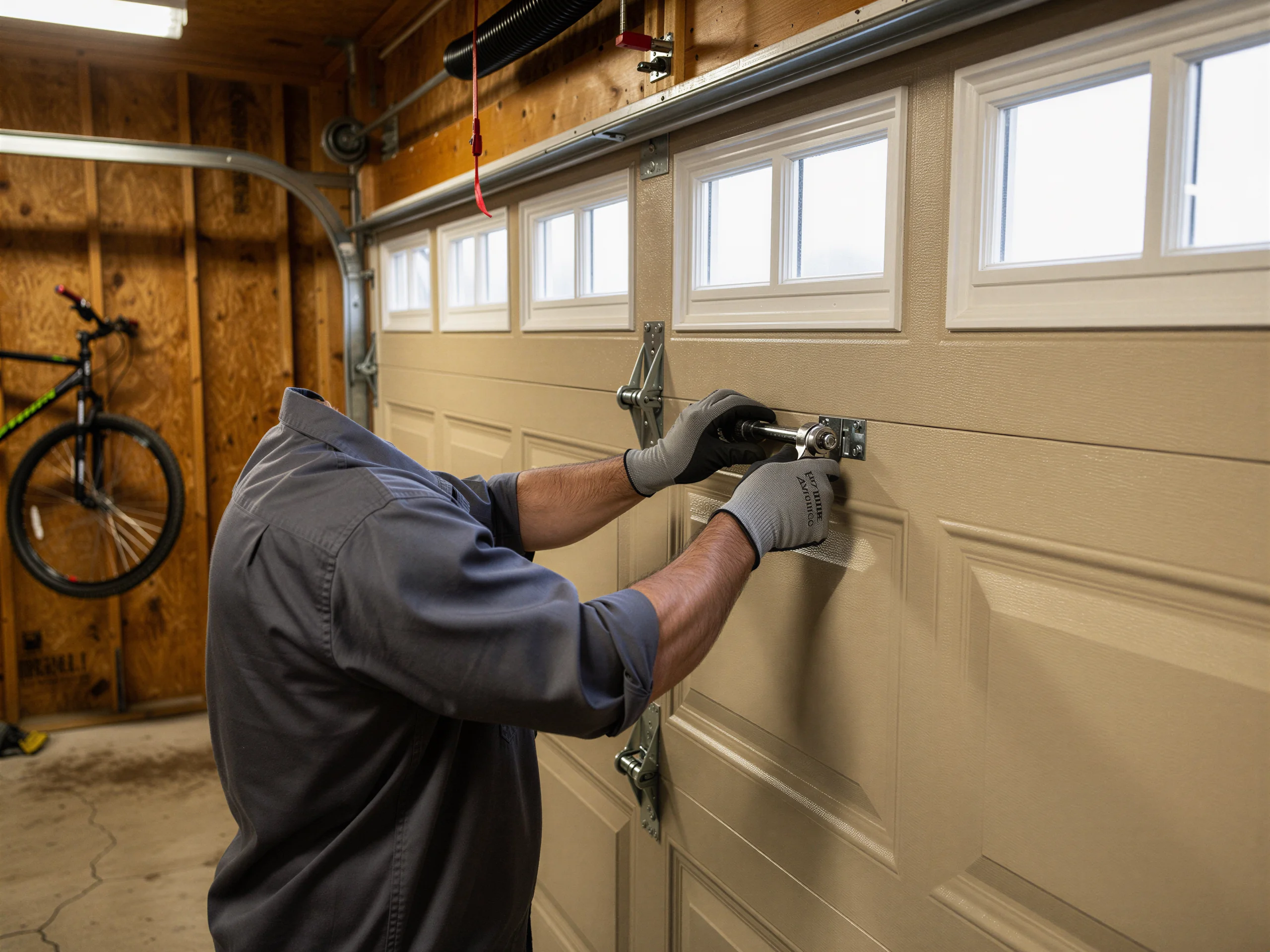
Calibrated winding bar
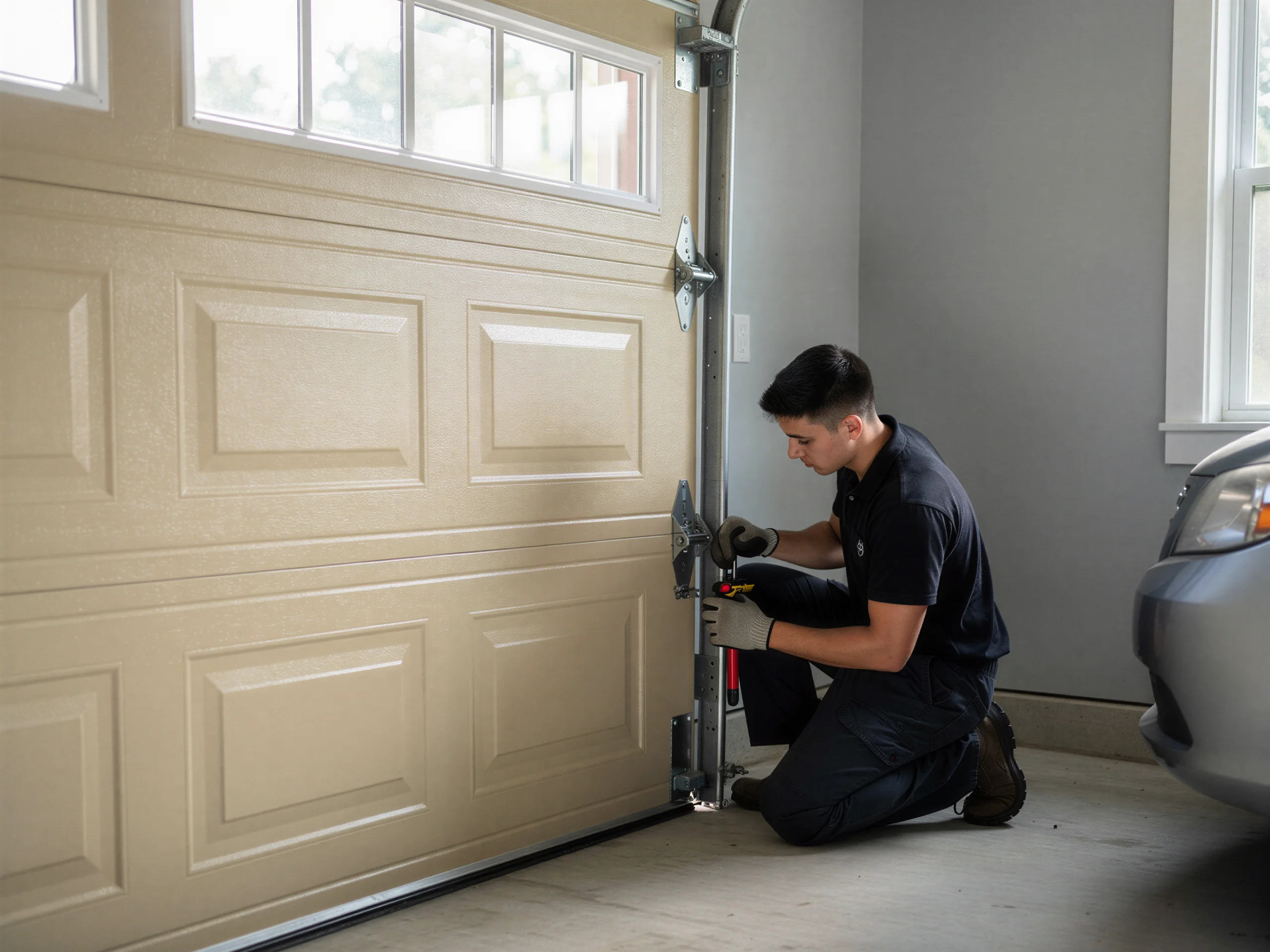
On a torsion spring failure, we unwind and replace the spring under controlled tension using a calibrated bar, not a pipe wrench and a guess, which is how people lose fingers. For doors with the original extension springs from a 1960s or 70s install, we check whether the safety cables are even present, since many of these predate that code requirement.
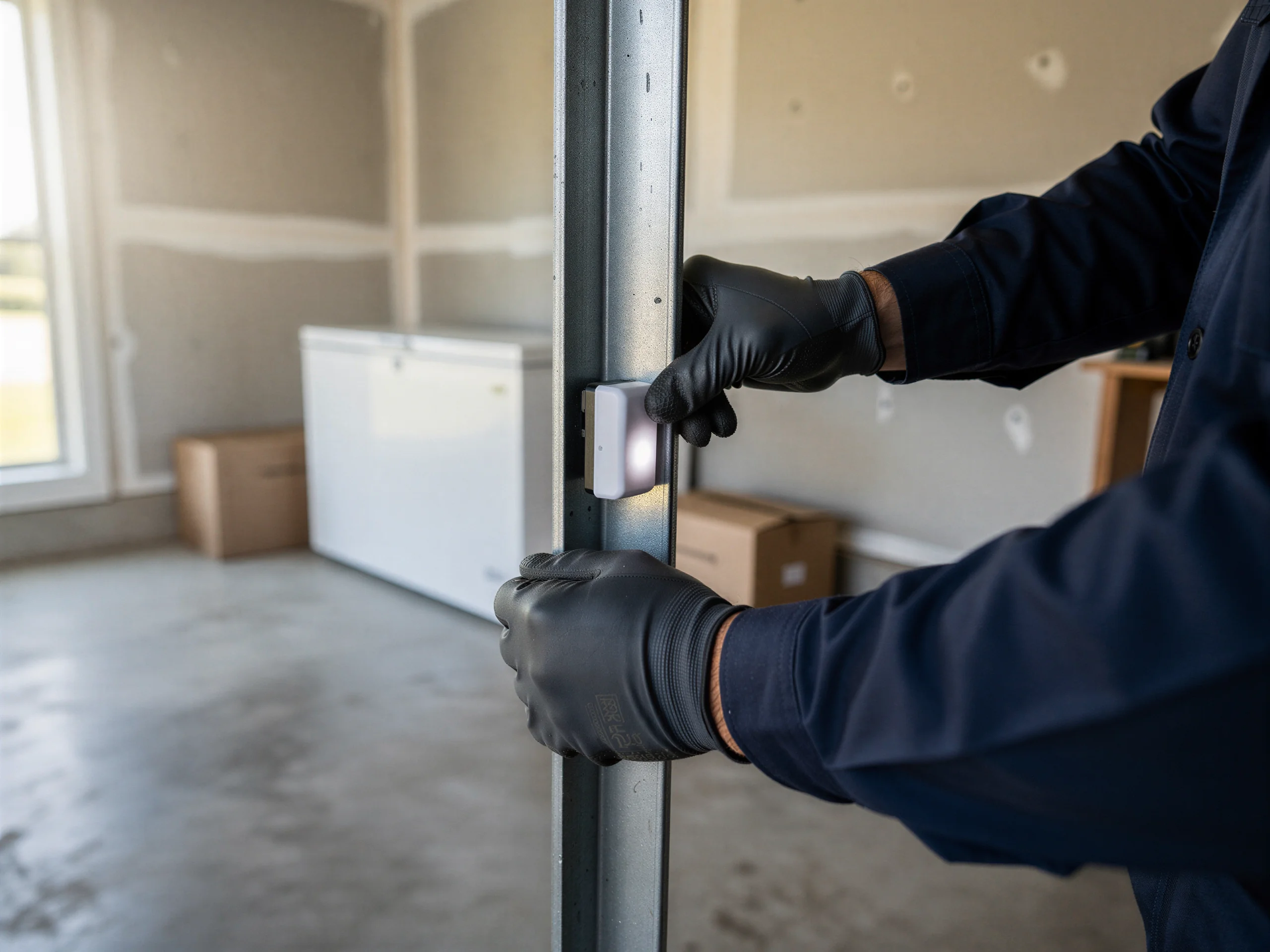
Track plumb and level
If they're missing, we add them as part of the repair rather than reinstall a setup that's one broken spring away from a swinging hazard. Track misalignment gets fixed by resetting the vertical and horizontal sections to plumb and level, not by bending the track back into rough shape, which just moves the failure point.
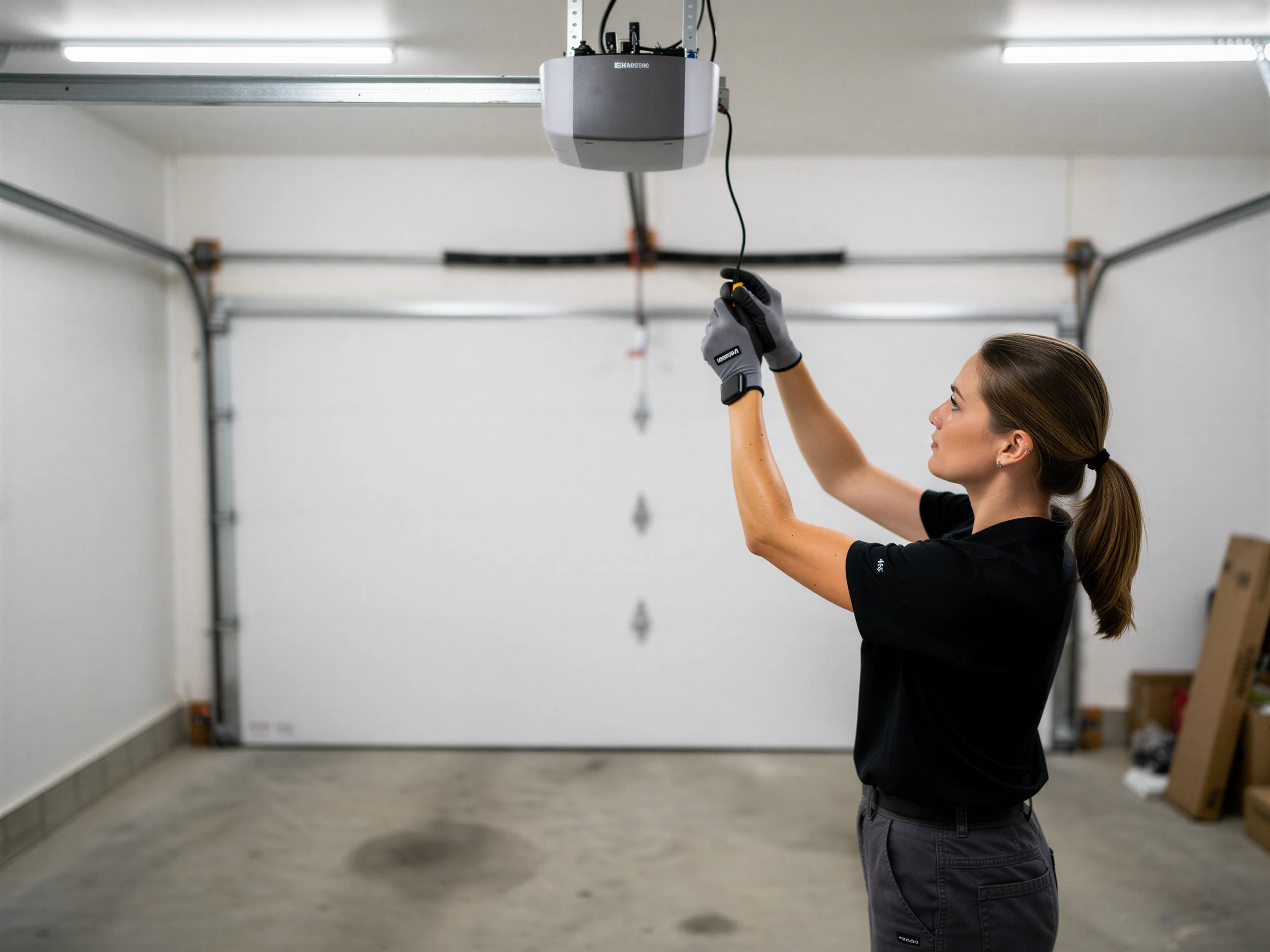
Repair or replace opener
If the opener is original or close to it, we'll tell you honestly whether a repair is worth it versus a replacement unit, since parts for openers that old are getting harder to source.
What You Are Seeing
If your door is one of the many in this area built when the house was, you're probably seeing one of a few things. A door that won't budge, with the opener motor humming but nothing moving, usually means a broken torsion spring - common once a door's spring has logged decades of cycles. A door that slams down the last foot or two, instead of lowering smoothly, points to a worn or failed extension spring that's lost its tension.
Uneven movement, where one side of the door rises faster than the other, usually means one spring or cable has failed while its pair hasn't yet - which means the second one is close behind. Grinding or popping noises from the track area often mean rollers that have outlived their lifespan, which on a house from the 1960s-70s stock is just due.
A door that reverses right before closing, or won't close at all, can be a sensor issue on a newer opener, or on an older one without safety sensors, a sign the whole opener predates current safety standards and should be looked at.
Talk to a local pro
Garage door service in Ventura?
Same-day service with honest, upfront quotes.