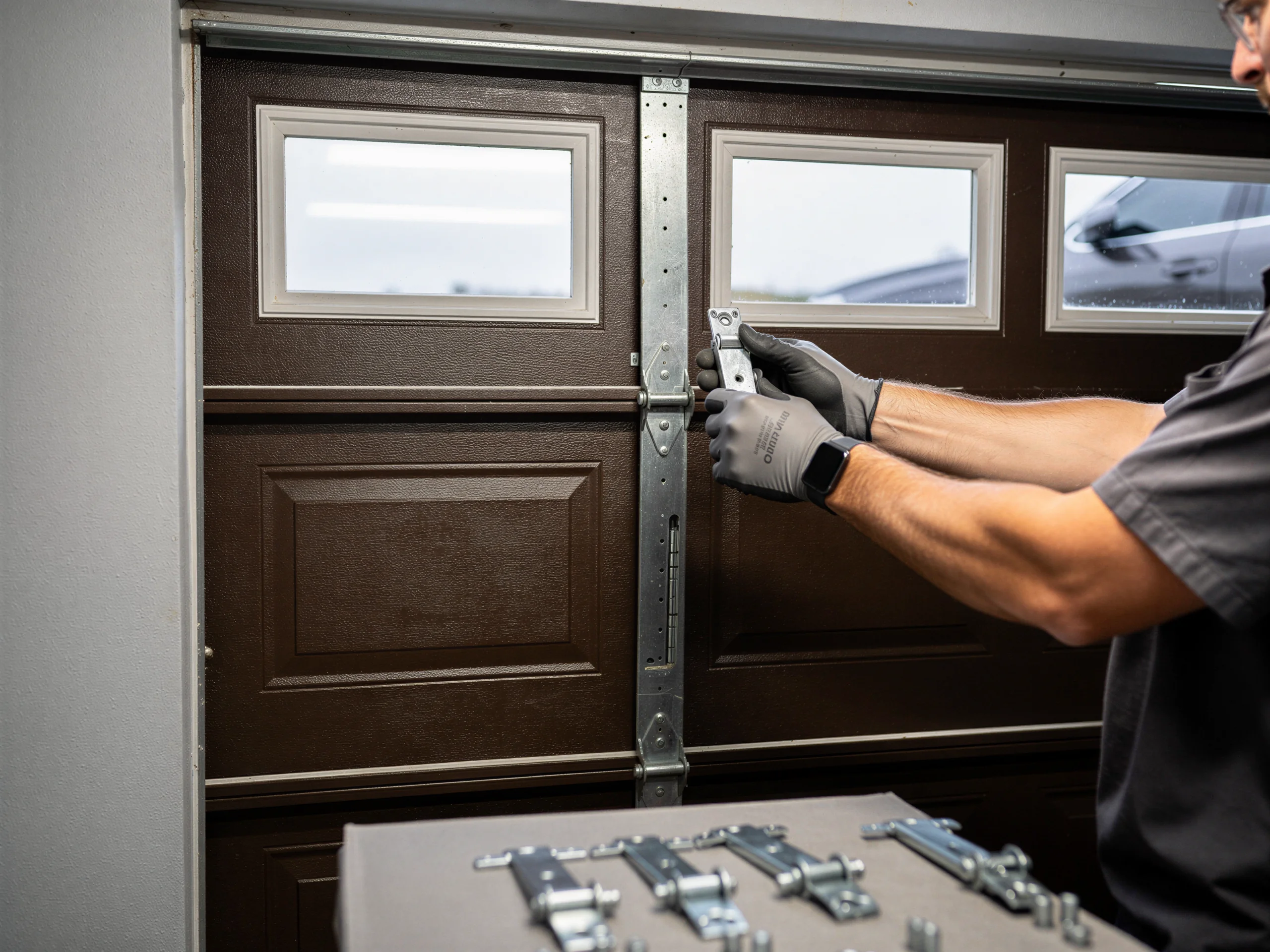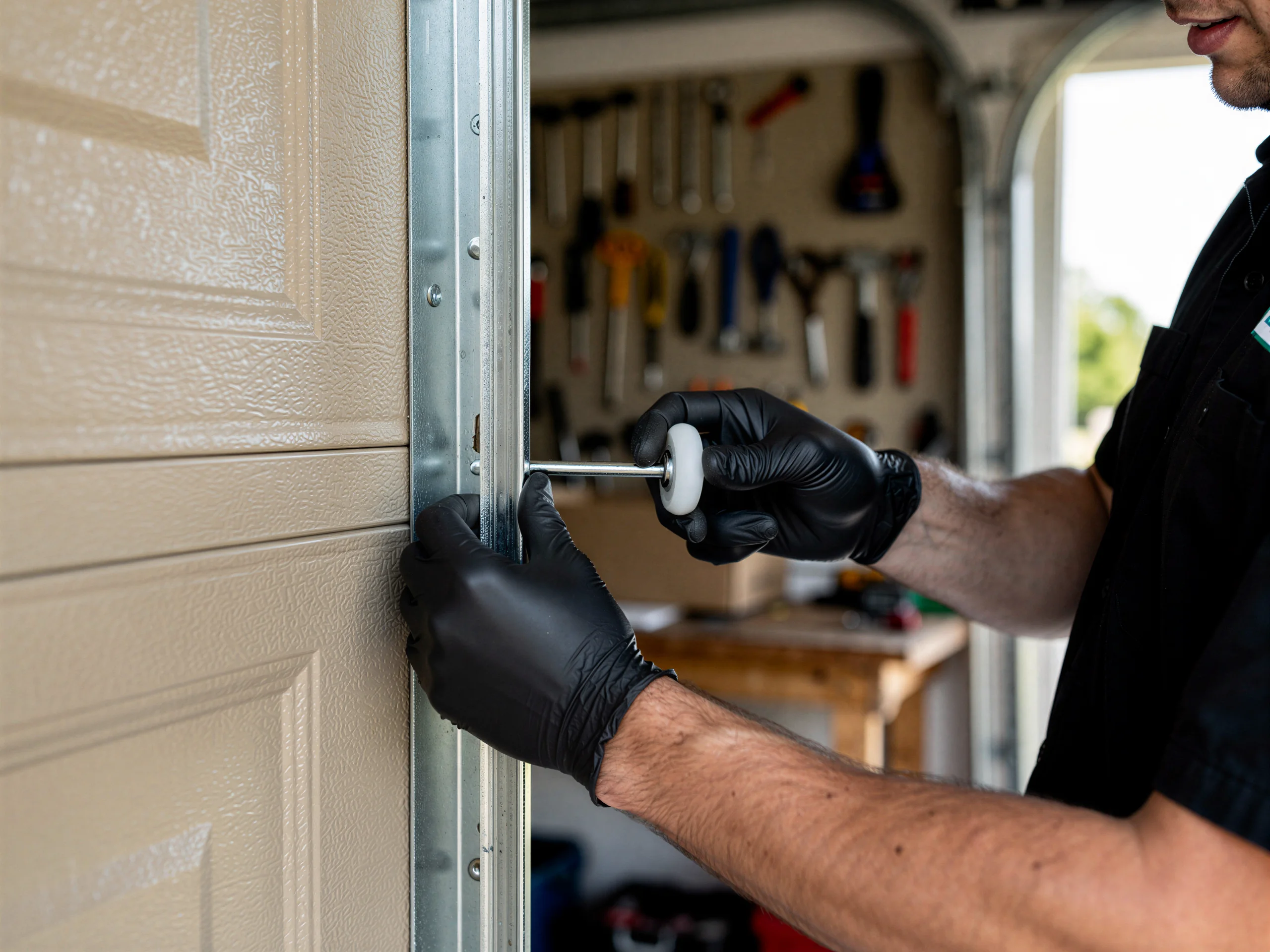
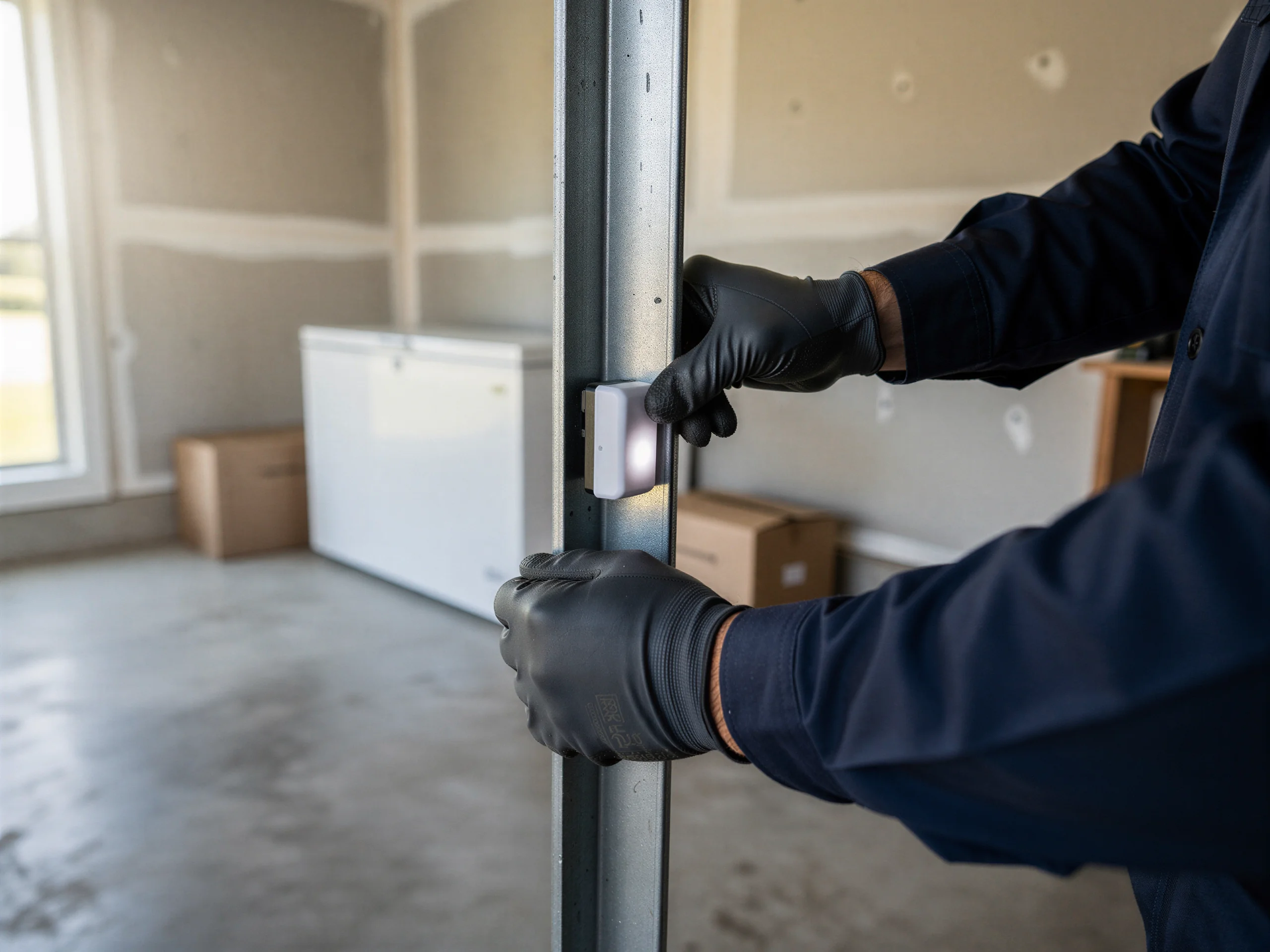
The Complications
Most houses in Fillmore went up around 1975, which means the openers behind a lot of these doors are chain-drive units from that same build window, or a first-generation replacement installed sometime after.
Mismatched sensor kits
These were built before photo-eye safety sensors were standard equipment, so a chunk of the openers we see out here were either never retrofitted with sensors or got a sensor kit bolted on later that doesn't talk cleanly to the original logic board.
Reversing without cause
That mismatch shows up as an opener that reverses for no reason, or one that won't close at all once a sensor ages out. Fillmore sits in the same mild temperate band as the rest of the service area, so we're not dealing with freeze damage to gears or seized bearings from hard winters.
Capacitors and relay contacts
What we do see is sun and age working on the circuit board itself - capacitors drying out, relay contacts pitting - because a board that's been running since the mid-1970s has had forty-plus summers to cook inside a hot garage. The fault is rarely dramatic. It's usually a door that hesitates, or a remote that works from ten feet away but not from the driveway.
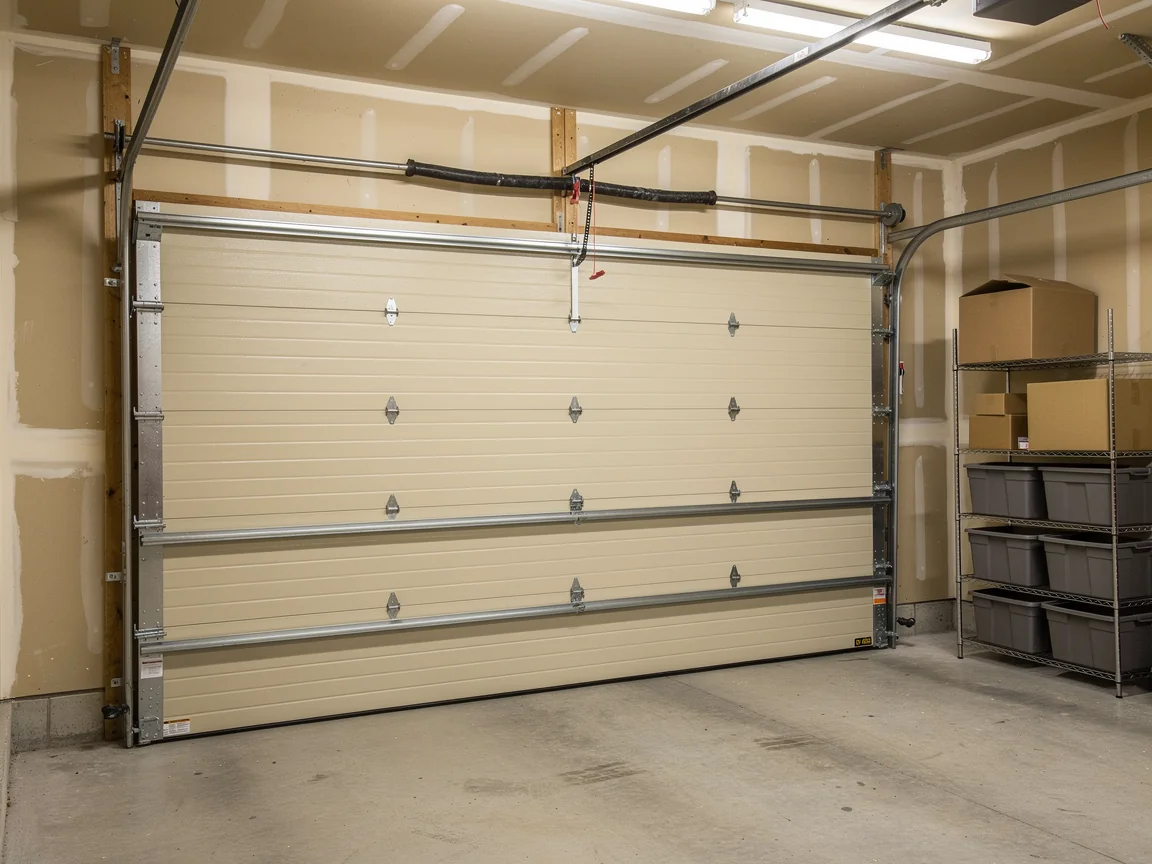
Parts We Carry
Because the opener population out here skews older, we carry logic boards and circuit boards sized for chain-drive units from the 1970s through the 1990s, not just the belt-drive models sold today. We stock replacement photo-eye sensor kits for owners whose openers predate them, universal remotes that can be coded to older receivers, and wall-button controls that match the low-voltage wiring those units use.
We don't stock every board for every opener ever made - some older models used proprietary parts that haven't been manufactured in decades, and if yours is one of those, we'll tell you straight that replacement makes more sense than hunting for a part that may not exist anymore. That's the one place where fixing isn't always the right call, and we'd rather say so up front than order a part that never ships.
Can You Do This Yourself
Some of this is fair game for a homeowner. Swapping a dead remote battery, re-aiming a photo-eye sensor that's been knocked out of line, or cleaning dust off the sensor lenses - all reasonable weekend jobs with a screwdriver and some patience.
Board and limit settings
Where it stops being a good DIY project is anything involving the logic board, the travel limits, or the force settings on an opener from the 1970s or 80s.
Force dial risks
Those units weren't designed with the same tool-free adjustment dials modern openers have, and getting the force setting wrong on an old chain-drive unit can mean a door that doesn't stop when it should.
Hum and blink diagnosis
If your opener hums but the door doesn't move, or the lights blink in a pattern you don't recognize, that's a board or capacitor issue, not a battery issue, and it's worth a call before you start pulling covers off.
Getting It Booked In
We run out of Ventura, and Fillmore is about 23 miles out, so a same-day call isn't something we promise sight unseen - we'll ask what the opener is doing, what year the door and opener were put in if you know it, and whether the sensors are blinking or dark, so the truck that comes out has the right board or sensor kit already on it.
That phone diagnosis matters more here than closer in, simply because the trip is longer and we'd rather not make two of them. Tell us the symptom in plain terms - won't close, closes then reverses, remote dead but wall button works - and we can usually narrow down which part is likely before anyone leaves Ventura.
How We Fix It
On site, we start with the simple stuff: power at the outlet, sensor alignment, travel limits, before we open the opener housing. If the unit is original to a mid-1970s build, we check the logic board for the usual age signs - swollen capacitors, a burnt smell near the transformer, corrosion on relay contacts - because those are the parts that fail first on a unit this old.
If the board's gone but the motor and gears are sound, we replace the board rather than the whole opener, which is the cheaper fix when it's available. If the opener predates photo-eye sensors entirely, we'll talk through adding a retrofit kit so the door meets current safety expectations without replacing a motor that still works fine. When a unit's parts aren't available anymore, we'll say so and walk through what a new opener costs installed, instead of chasing a board that isn't coming.
Talk to a local pro
Garage door service in Ventura?
Same-day service with honest, upfront quotes.