Why This Fails Locally
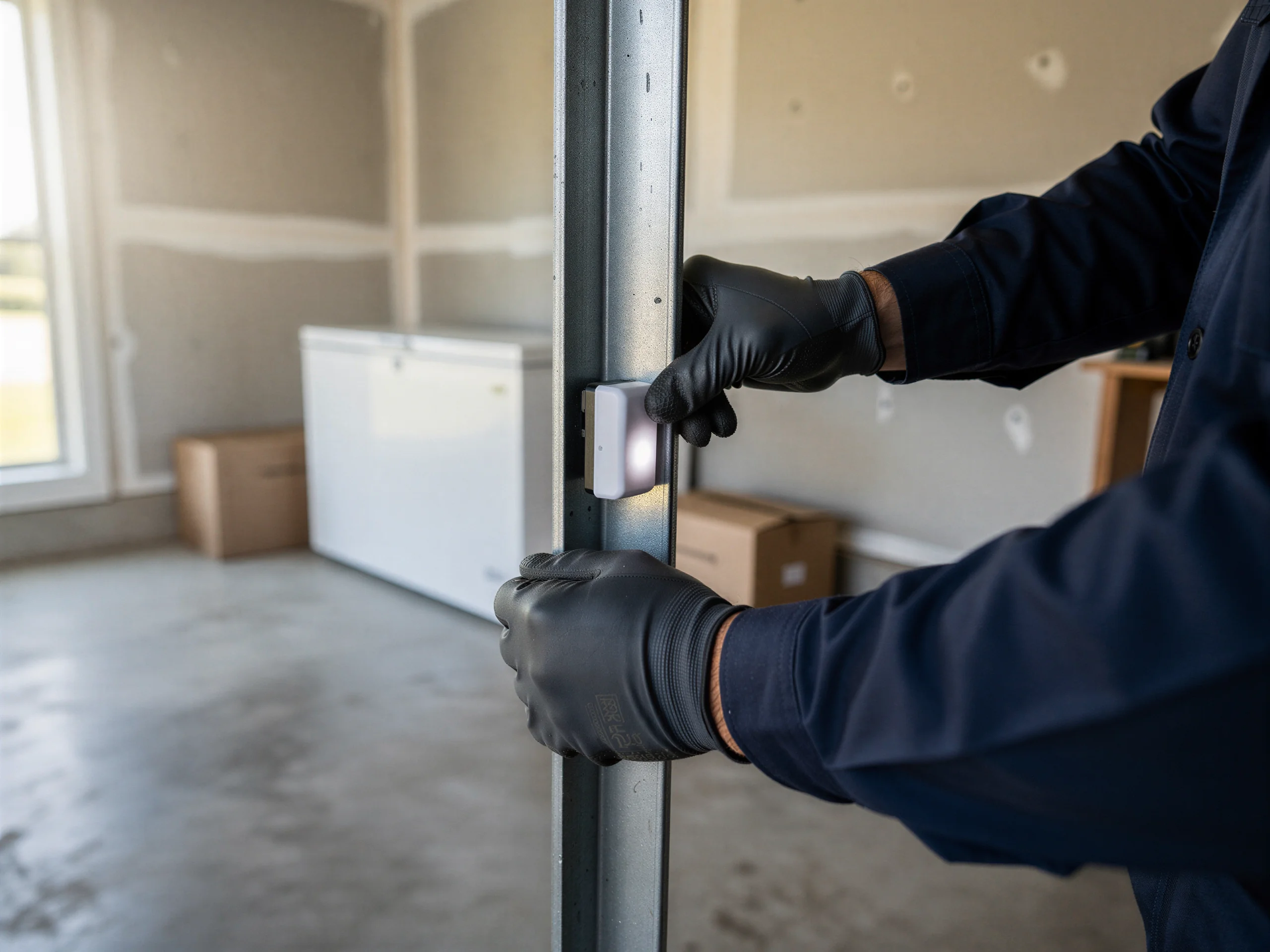
Most houses across the Ventura service area went up between 1956 and 1997, with the bulk of the stock dating to the 1960s and 1970s across all 14 named communities we cover, from El Rio to Piru. That means a lot of doors are still running on the original track geometry and roller stems from the day the house was framed. Steel rollers with no bearing wear out their shafts after tens of thousands of open-and-close cycles, and once the roller stem flattens or the bearing dries out, it starts chewing the edge of the track instead of rolling through it.
Ventura's climate band is mild temperate - we don't get the freeze-thaw cycling that cracks nylon rollers in colder regions, and we don't get the extreme heat swings that warp track in desert climates either. So when a roller fails here, it's almost never a weather story. It's a math story: a door built in 1973 has had fifty years to wear out rollers rated for maybe seven to ten. The hardware doesn't fail dramatically. It just gets louder, then stiffer, then stuck.
One limitation worth saying plainly: if the track itself is bent or the roller has been grinding long enough to gouge the rail, swapping rollers alone won't fix the noise. At that point you're also looking at track replacement, and we'll tell you that before we quote the job, not after.
Parts We Carry
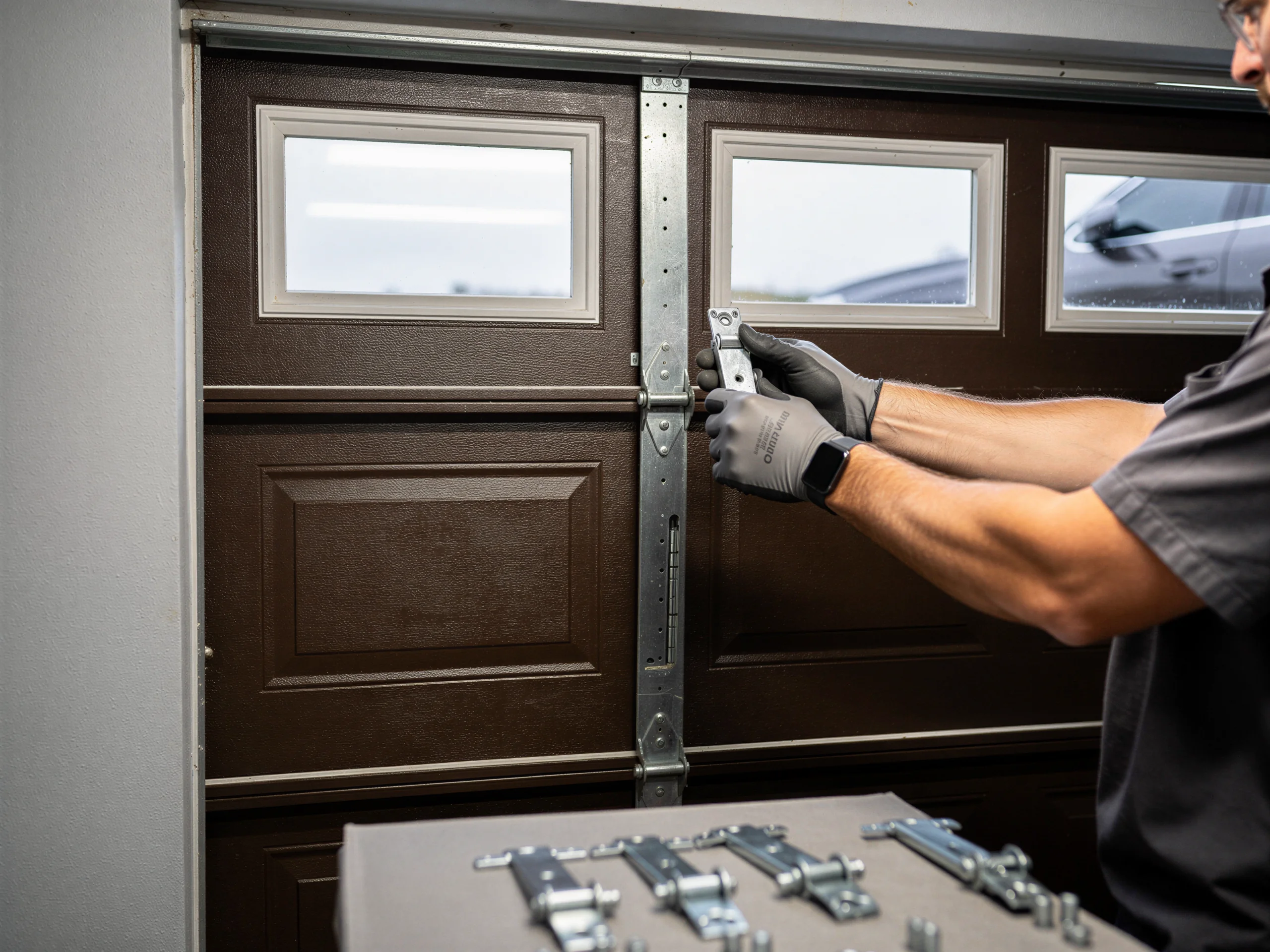
We carry both 7-ball steel bearing rollers and sealed nylon rollers, in the stem lengths and roller diameters that match the torsion and extension hardware common on houses built in that 1956-1997 window - 4-inch and 2-inch stem options, 2-inch and 3-inch wheel diameters, and the shorter stems some of the older side-mounted track setups in this area still use.
Steel versus nylon rollers
Steel ball-bearing rollers run quieter over a longer service life and are the better call for doors that open and close multiple times a day. Nylon sealed-bearing rollers cost less up front and run nearly silent at lower cycle counts, which fits a lot of the two-car household doors common across this part of the service area, where a median household income of $93,554 means most owners are weighing a mid-grade upgrade rather than the cheapest option on the shelf.
No bearingless rollers
We don't carry plastic rollers with no bearing at all - the kind that ship stock on some builder-grade doors. They're cheap, they're loud within a year, and we won't put them back on a door we're already up on a ladder for.
Flagged hinge and bracket
If a full roller set turns up a cracked hinge or a bent bottom bracket, we'll flag it, because rollers alone won't quiet a door with a bent panel underneath them.
How We Fix It
We start by running the door through a full cycle and watching the track, not just listening at the opener. A roller going bad usually shows itself as a specific rattle at one or two points in the travel, right where the stem has worn a flat spot.
Stem and track width
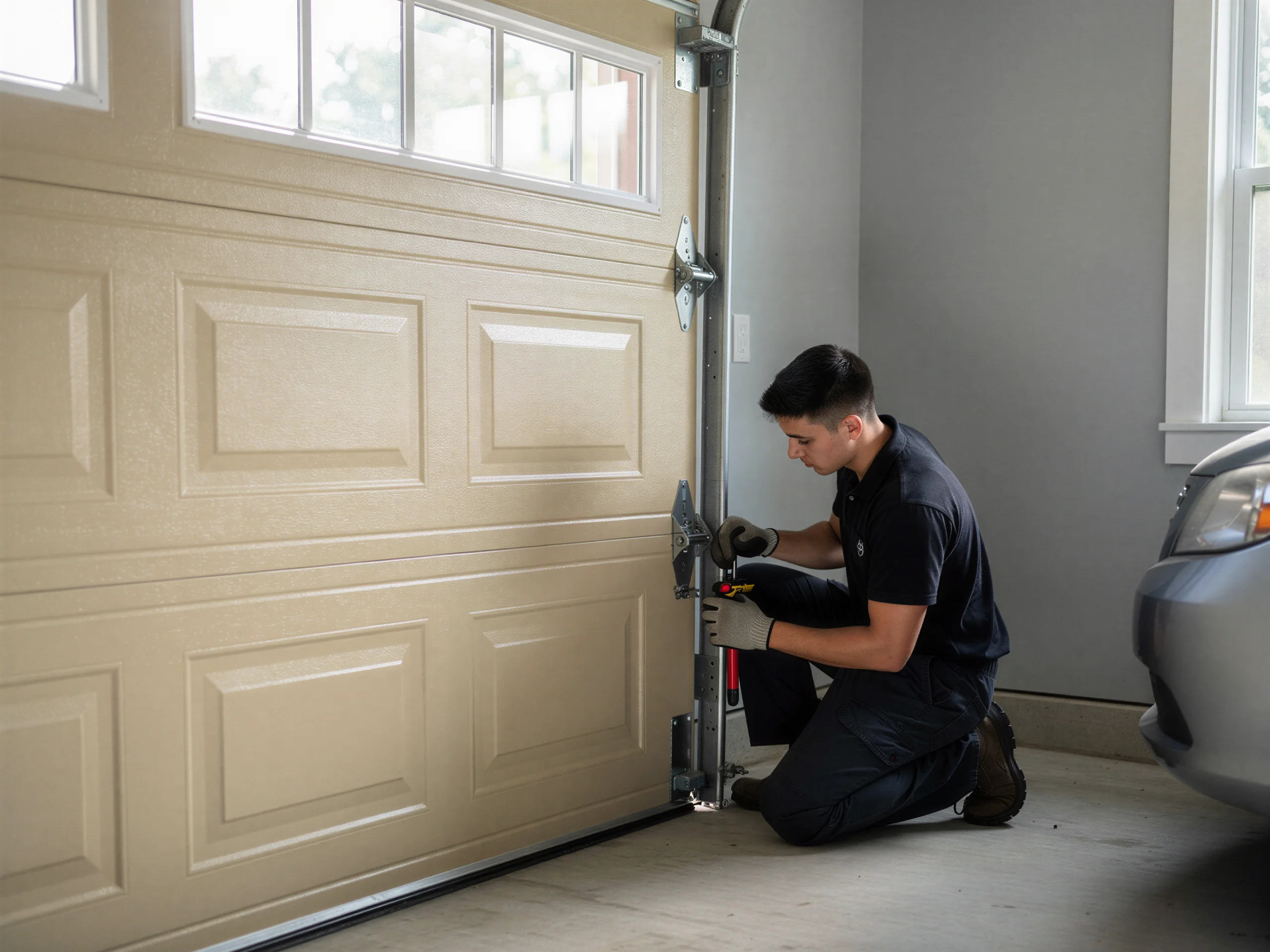
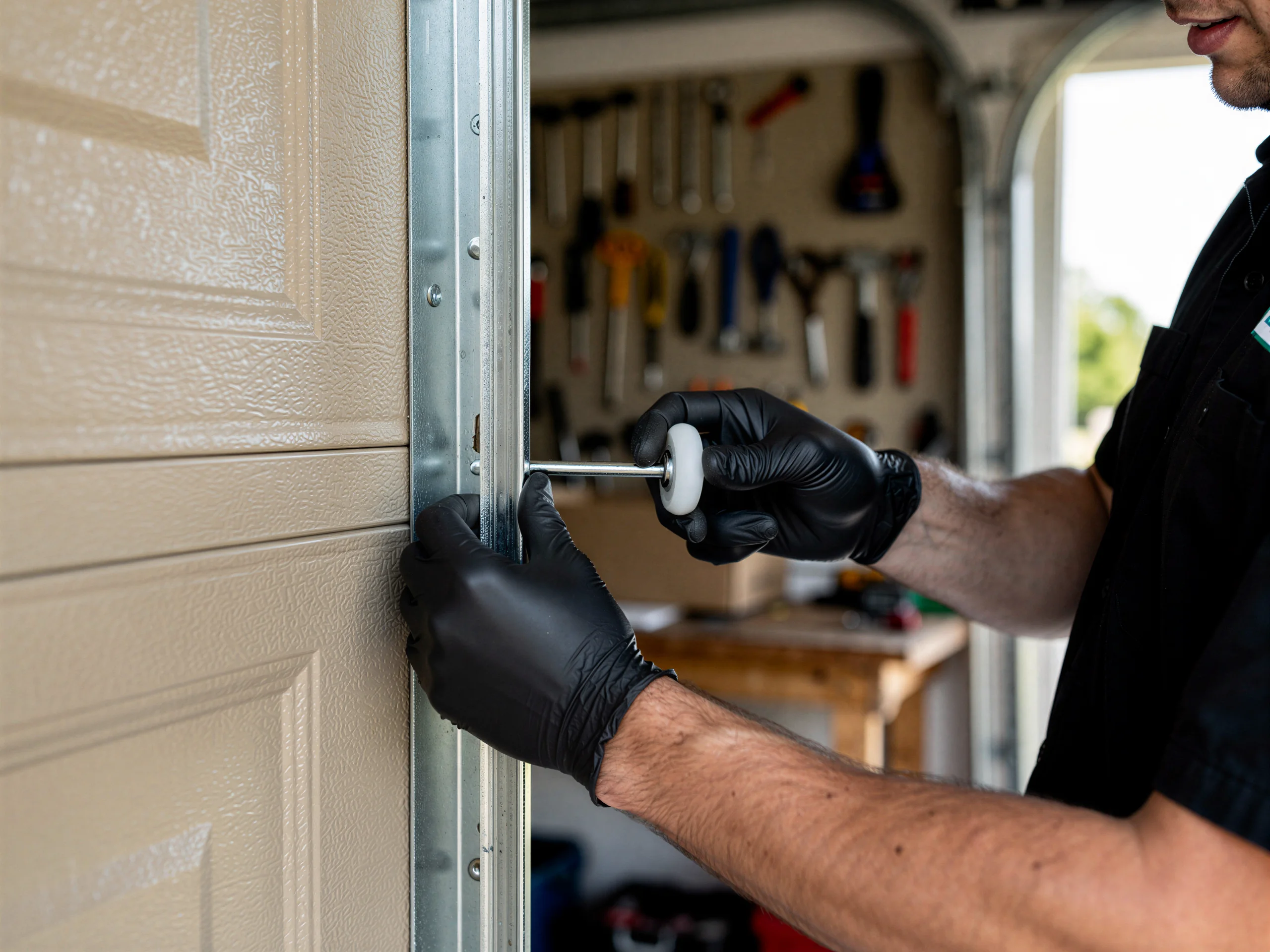
We pull the roller, check the stem for play in the hinge or bracket, and check the track width against the roller size before putting a new one in - on older houses in this service area, torsion hardware from the 1960s and 70s sometimes has a narrower track than what ships standard today, and the wrong roller width will bind on its own.
Safe spring release
With the door under spring tension, we release it safely before pulling any roller near the bottom section, since rollers on the bottom bracket sit closest to the cable drum. Top rollers come out with the door raised and blocked.
Full sets per side
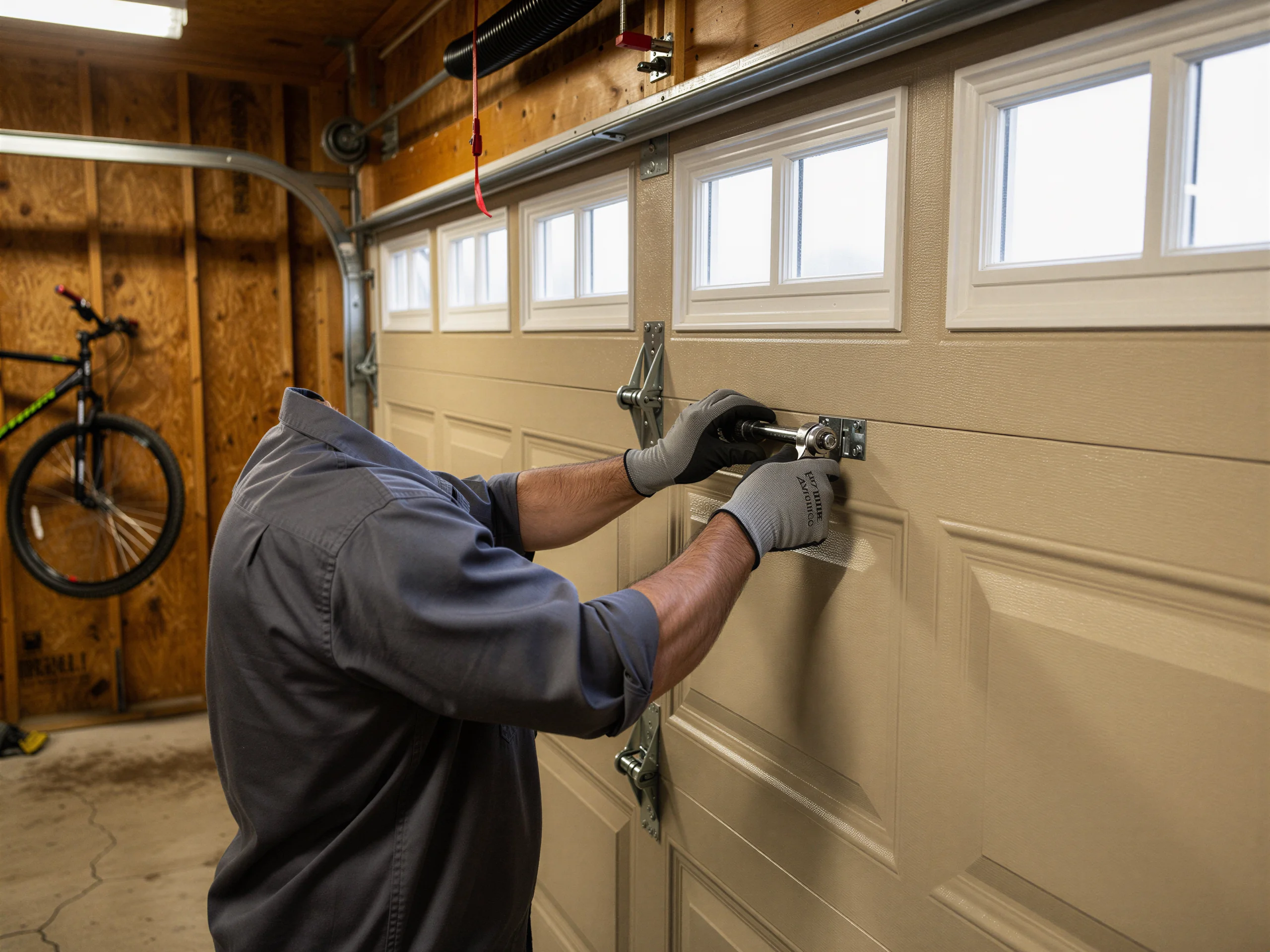
We replace rollers in full sets on one side at a track, not one at a time scattered across the door, because mismatched roller ages on the same track just means you're back out here again in a year for the next one that gives out. Once the new rollers are in, we re-check alignment along the full length of track, tighten any loose brackets we find along the way, and run the door again before we call the job done.
What You Are Seeing
A grinding or rumbling sound that gets louder as the door moves, especially near the top or bottom of travel, is the most common sign.
Metal shavings on track
Rollers that have lost their bearing surface don't roll smoothly anymore - they drag, and you'll often see metal shavings or a fine black dust collecting on the track below the worst spot. A door that jerks or hesitates partway through its cycle, even though the opener sounds fine, points the same direction.
One side lagging
So does a door that looks slightly crooked in the frame when it's down, or one side closing a beat behind the other - that's usually one or two rollers on one track in worse shape than the rest, pulling the door off square as it travels.
Cracked or missing wheel
If you can see a roller that's visibly cracked, missing its wheel entirely, or sitting at an angle in its bracket, don't keep running the door. A roller that jumps the track fully can bind the whole system or drop a panel.
First hardware failure
Across the houses we see in this part of the service area - most built in that same 1956-1997 stretch - worn rollers are usually the first hardware failure, showing up well before springs or cables. Catching it at the noise stage is a lot cheaper than catching it after a roller jumps the track.
Talk to a local pro
Garage door service in Ventura?
Same-day service with honest, upfront quotes.