Local detail
Where People Go Wrong
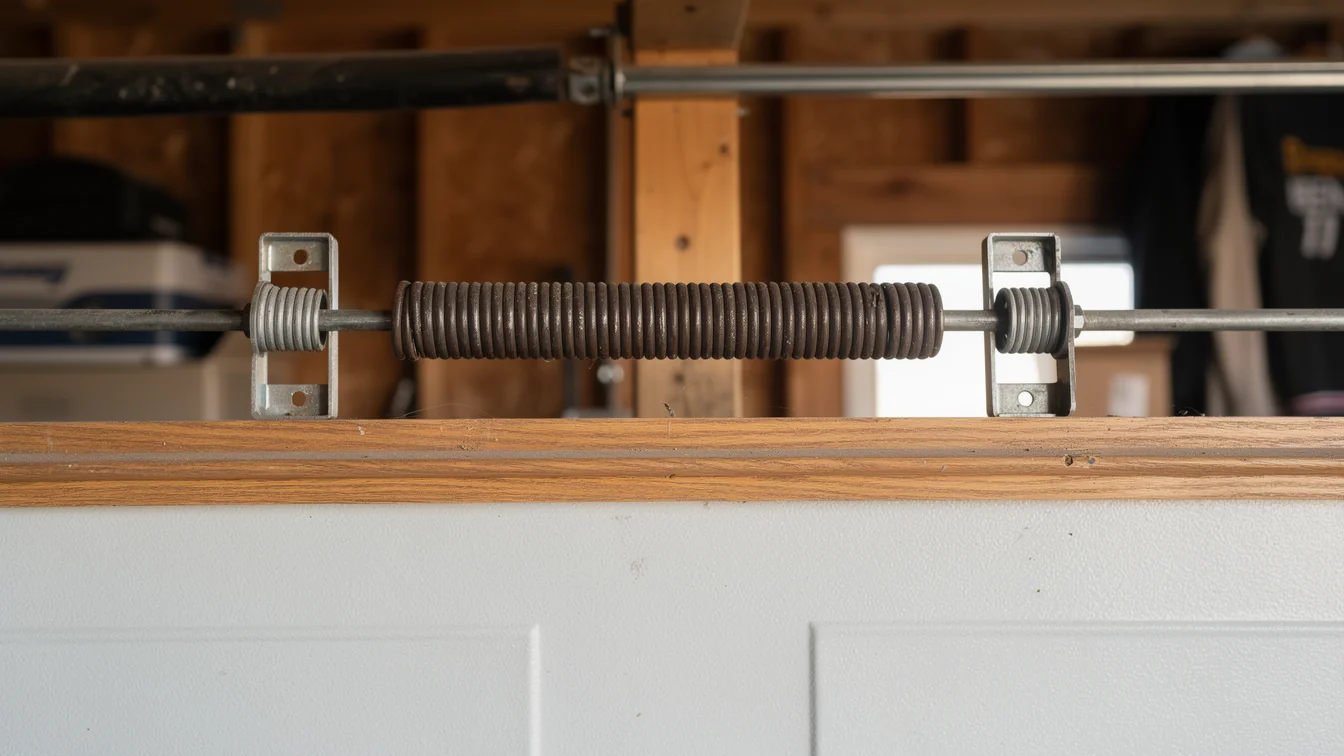
The usual advice is to spray WD-40 on anything that squeaks and call it done. That works for about a week on a door built in the last decade. It does almost nothing on the stock this company actually sees, which skews a lot older. Most houses in this service area went up between 1956 and 1997, with the median build year landing around 1973 - so a lot of the openers and track hardware on the job are pushing fifty years old. Spraying lubricant on a torsion spring that's lost its temper doesn't quiet it down, it just masks the grind for a day or two before it comes back louder.
The other mistake is assuming every noise means the same fix. A chain opener slapping against its rail is not the same problem as a shuddering panel, and neither is the same as a cable that's started to fray against a dry drum. Across the fourteen pockets that make up this area, the bulk of the housing is 1960s and 70s construction, which means steel tracks that were never galvanized to current spec. On that hardware, noise is diagnostic information, not background annoyance. Treating it like background annoyance is how a fifteen-dollar roller job turns into a cable snapping under load.
The area
What Local Conditions Do
Ventura sits in a mild temperate band, and that cuts both ways. You're not getting the freeze-thaw cycling that snaps rollers and tightens springs overnight the way it does in colder inland towns - no ice working into the coil, no sudden contraction that shears a bracket on a cold morning. That's the good news.
The less obvious news is that mild, steady weather doesn't stress hardware fast enough to make failure obvious. In a harsher climate, a bad spring announces itself in one dramatic cold snap. Here, the same spring just loses tension slowly, year after year, and the noise it makes creeps up so gradually that homeowners stop noticing it as change. By the time a door that was speced for the opener horsepower common when the neighborhood went up in the early 1970s is straining audibly under a modern opener bolted on later, the groan under load is coming from hardware that's been quietly losing capacity for decades, not from a sudden event. That's the pattern worth paying attention to: not a single bad noise, but a noise that's gotten a little worse every month.
What we find
Checking It Yourself
Before you call anyone, watch the door run one full cycle with the light off and the radio off. A clean rolling sound with an occasional rattle near the rollers usually means exactly that - rollers, not springs. A rhythmic thump once per rotation often points to a flat spot on a roller or a bent track section, both cheap fixes if caught early.
The sound to take seriously is a sharp metallic bang at rest, with the door sitting still and nobody touching it. That's consistent with a torsion spring letting go, and on hardware this age it's common enough that it's the single biggest category of call this company gets, drawn from a service area with close to 25,000 owner-occupied houses built across that same 1956-1997 stretch. If you hear that bang, don't run the opener again to see what happens. Leave the door where it is and get it looked at before anyone tries to open it by hand or by motor.
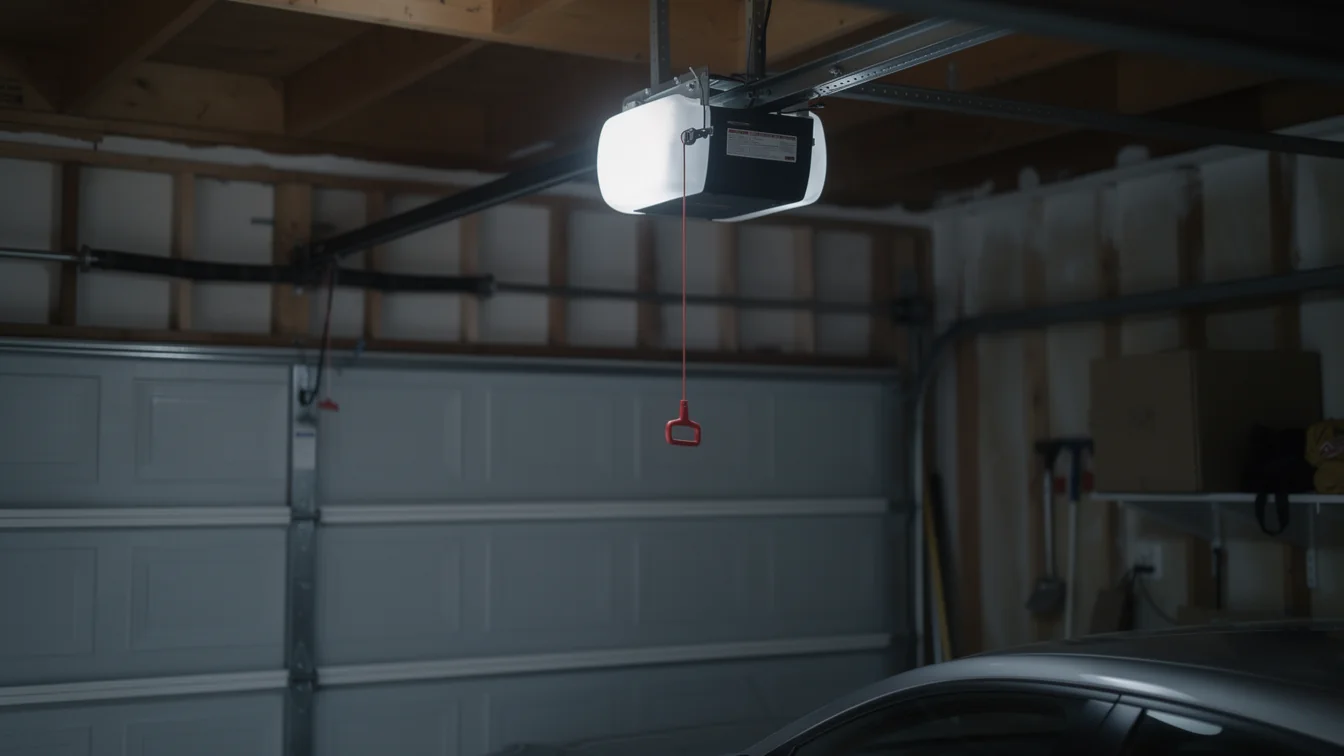
A grinding whine that rises in pitch as the door opens is usually the opener's gears, not the door itself - worth noting separately since it changes who you call and what gets replaced.
How we work
The Problem
Here's the part that's honest rather than reassuring: on a door old enough to have come up with the rest of the neighborhood decades ago, a new noise is rarely a one-part fix. Springs, cables, and rollers on the same system wear on roughly the same timeline, so replacing the one that's loudest often just moves the next failure a few months down the road.
With median household income in this area at $93,554, a lot of owners can absorb a full hardware replacement rather than chasing parts piecemeal, and for a door built in the early-to-mid stretch of that 1956-1997 window, that's usually the better math - one job instead of three service calls over a year. That's not a sales pitch, it's just what the parts do at this age.
What this company won't do is replace a spring that's still within its working life just because it's making noise. If the noise is rollers or lubrication, that's what gets fixed, and that's the whole job.
Talk to a local pro
Garage door trouble in Ventura?
Same-day service with honest, upfront quotes.