Why This Fails Locally
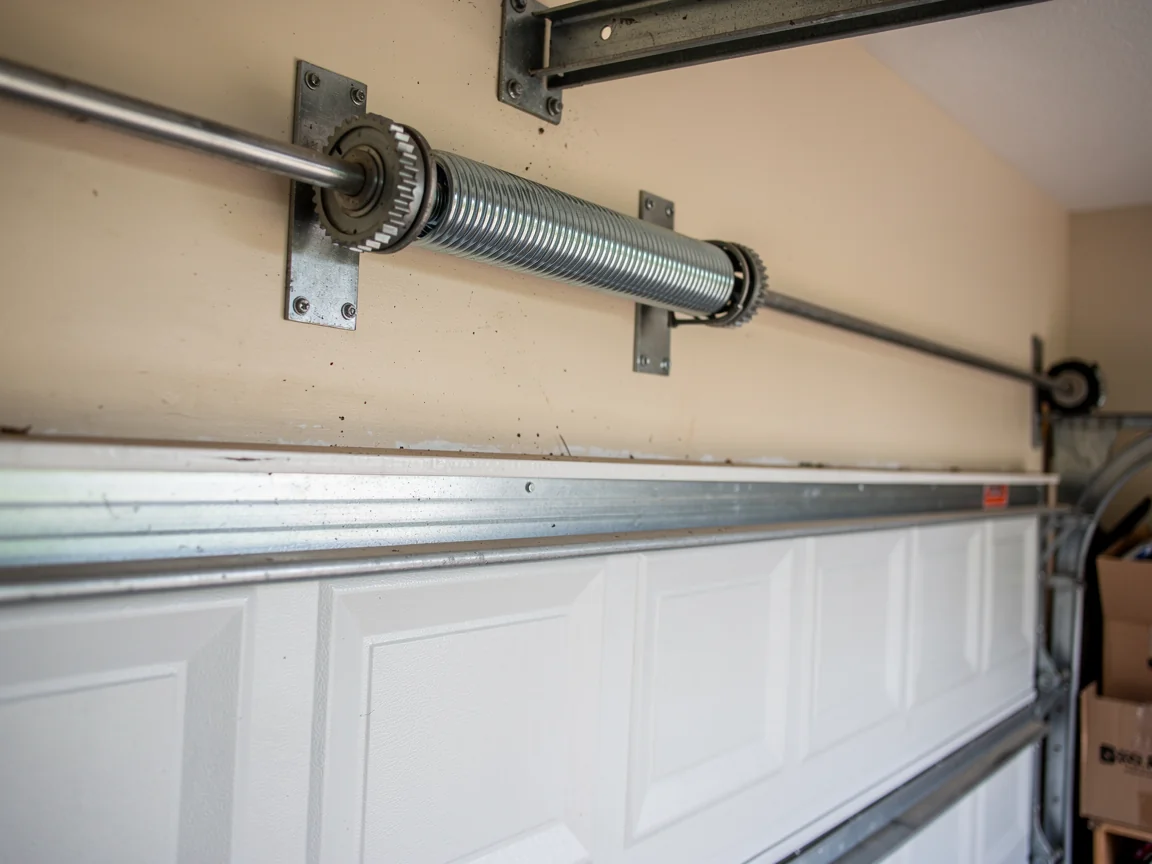
Most of the houses we work on in Ventura went up between 1956 and 1997, with the median build year sitting around 1973. That means a huge share of the doors in this city are original or close to it - torsion springs, rollers, and cable drums that have been cycling for three, four, five decades. A torsion spring is rated for a set number of open-close cycles, not years, but in a house built in 1973 that spring has likely seen more cycles than it was ever designed for, and it doesn't give much warning before it lets go.
Ventura's mild temperate climate actually works in homeowners' favor here - no deep freeze-thaw cycles, no extreme heat swings that warp panels or seize hardware early. That's part of why so many of these original systems lasted this long in the first place. But mild weather doesn't stop metal fatigue. The spring that's lasted 45 years in good weather is still a 45-year-old spring, and when it goes, it usually goes without much notice.
We see the same pattern across the areas we cover near Ventura too - El Rio, Oak View, Mira Monte - neighborhoods built in that same postwar-through-70s window, with the same aging torsion setups now reaching the end of their service life at roughly the same time.
Parts We Carry
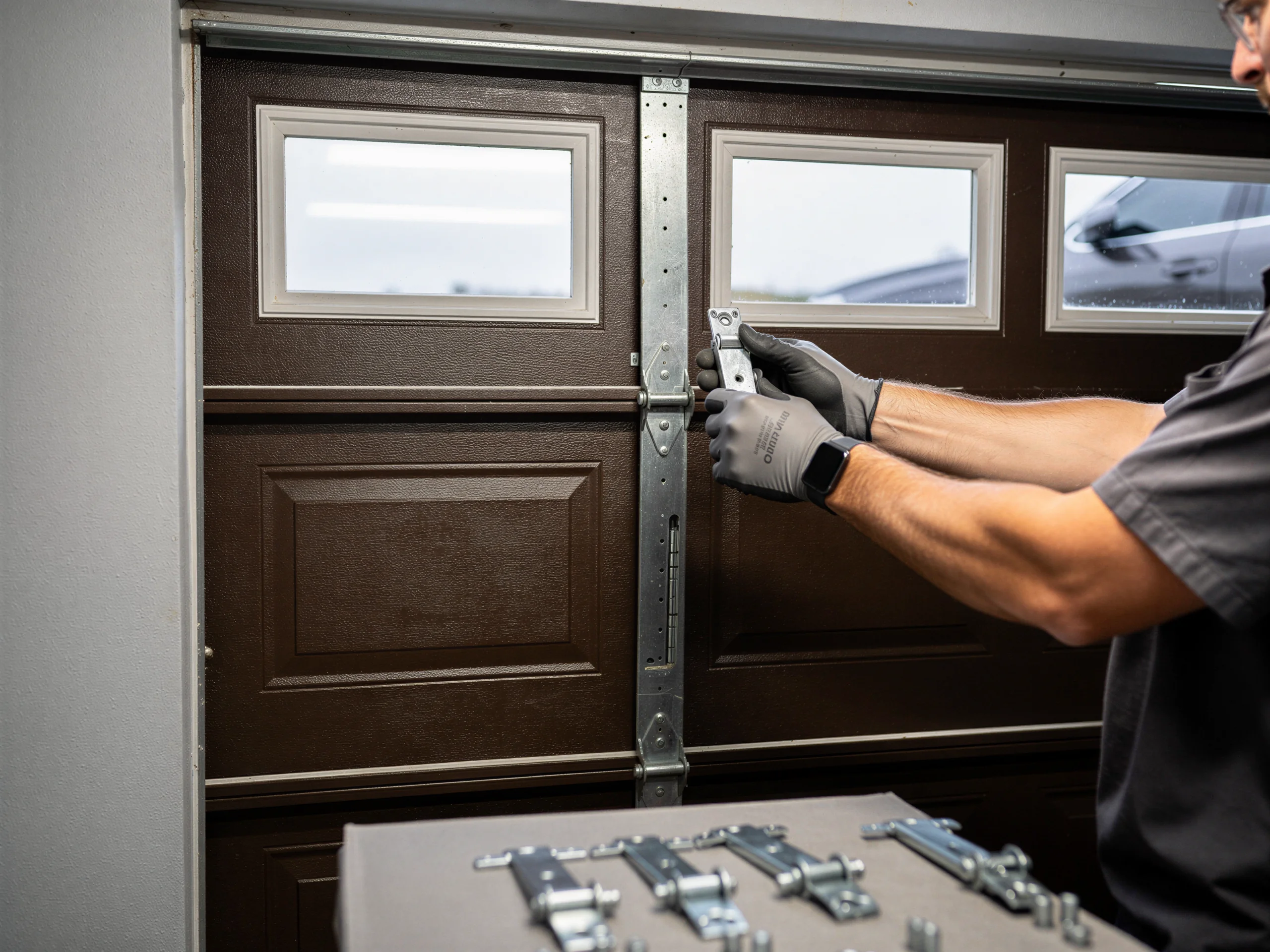
We stock the torsion springs, extension springs, rollers, cables, and hinges sized for the side-mounted and standard overhead systems that were installed across Ventura's 1960s and 70s building boom.
Standard same-visit hardware
Most of what fails on a house from that era is standard hardware - galvanized torsion springs in common wire gauges, steel rollers, lift cables - and we carry those on the truck for same-visit replacement. Where it gets slower is original wood panel sections and some of the older track hardware specific to a handful of early builds.
Special-order matched panels
If a door from that 1956-1973 range needs a matched panel instead of a hardware swap, that part sometimes has to be special-ordered, and we'll tell you that up front rather than promise a same-day fix we can't deliver.
Current opener units
For openers, we carry current chain and belt-drive units and the hardware to mount them on older rail systems. We don't try to force a modern opener onto track that's too far gone - if the track or header bracket won't support it safely, that gets replaced first.
How We Fix It
We start by checking the age and type of hardware against what we'd expect for a house of that vintage - a 1973-built home usually tells us what we're going to find before we even open the panel.
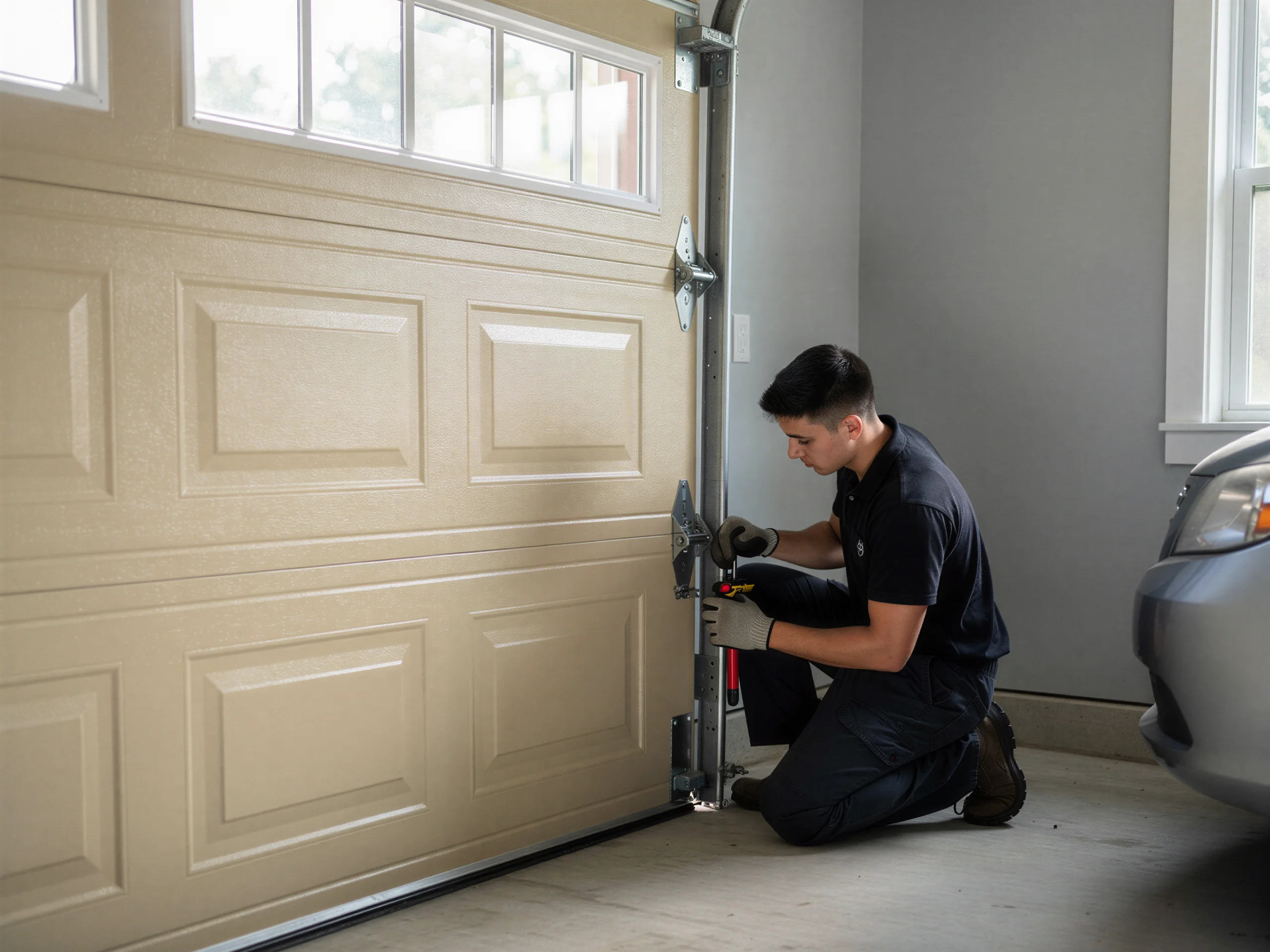
Paired torsion spring swaps
Torsion spring replacement means unwinding the old spring safely, matching wire size and wind direction, and replacing both springs on a double door even if only one broke, since the other is the same age and under the same stress.
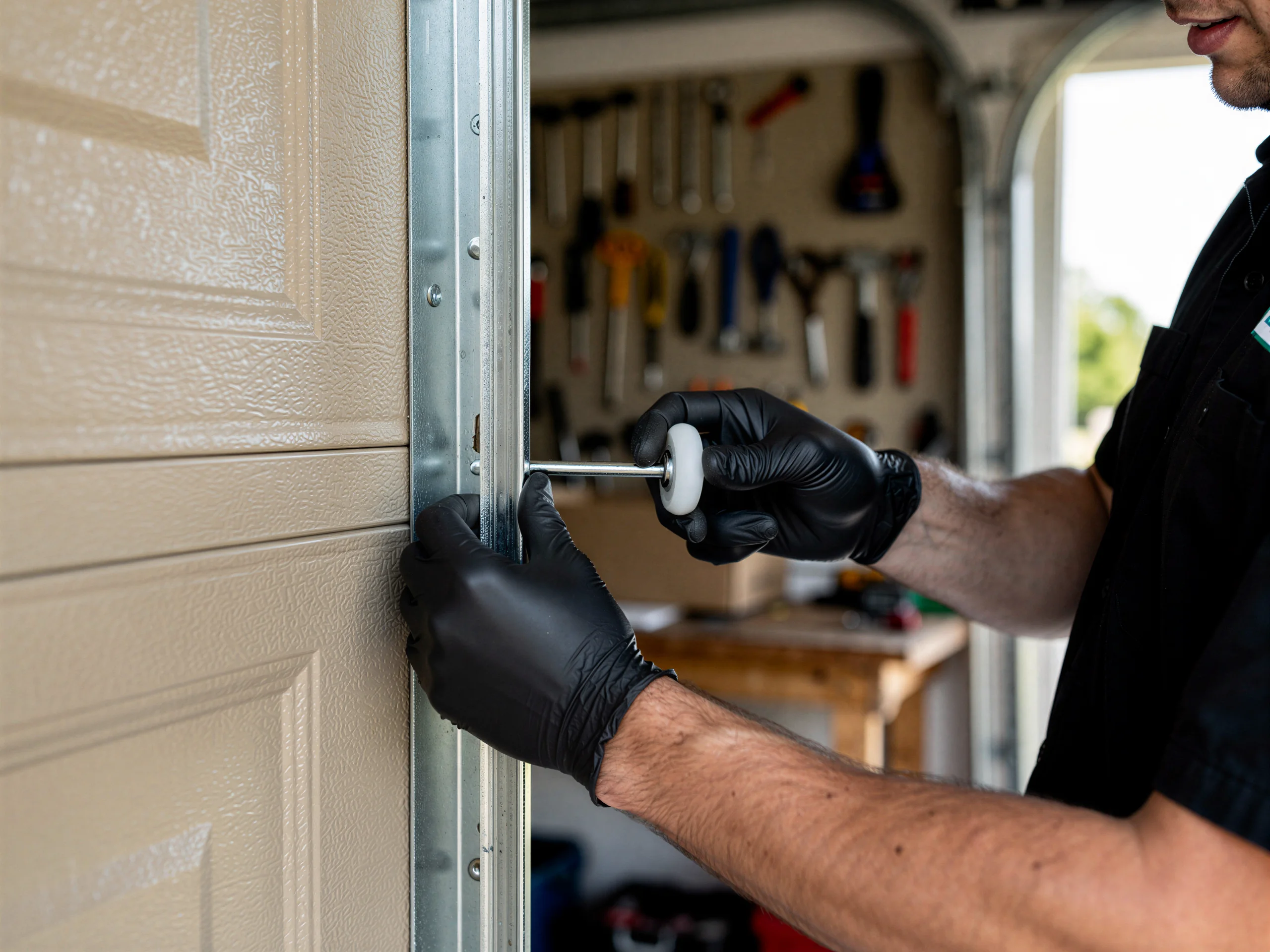
Cable and roller swaps
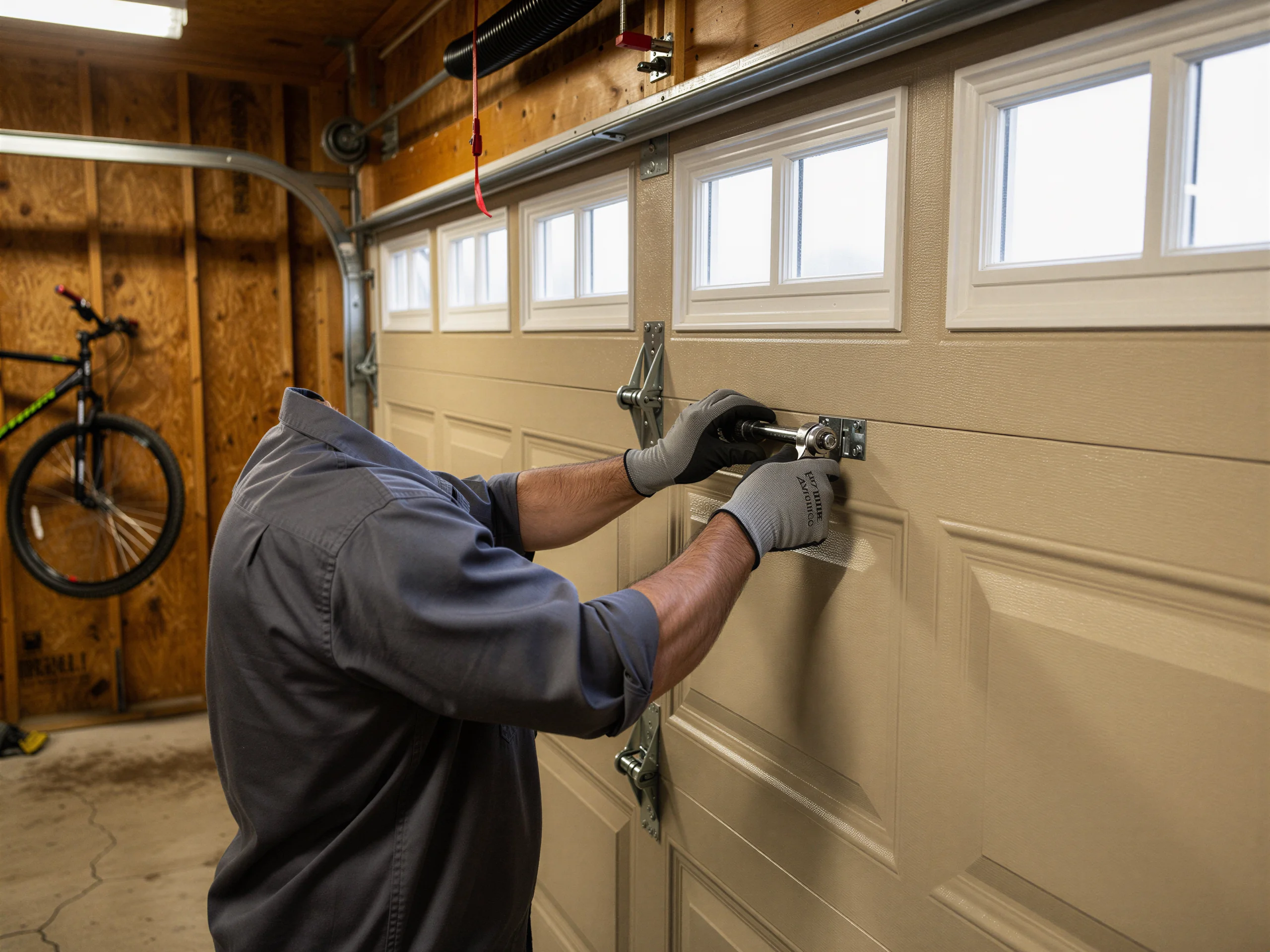
Cable and roller replacement is more straightforward - swap, lubricate, test travel and balance. Balance matters more on older doors than people expect: a door that's been slowly going out of balance for years puts extra load on the opener motor, which is often the second failure after the first one.
Opener diagnostics first
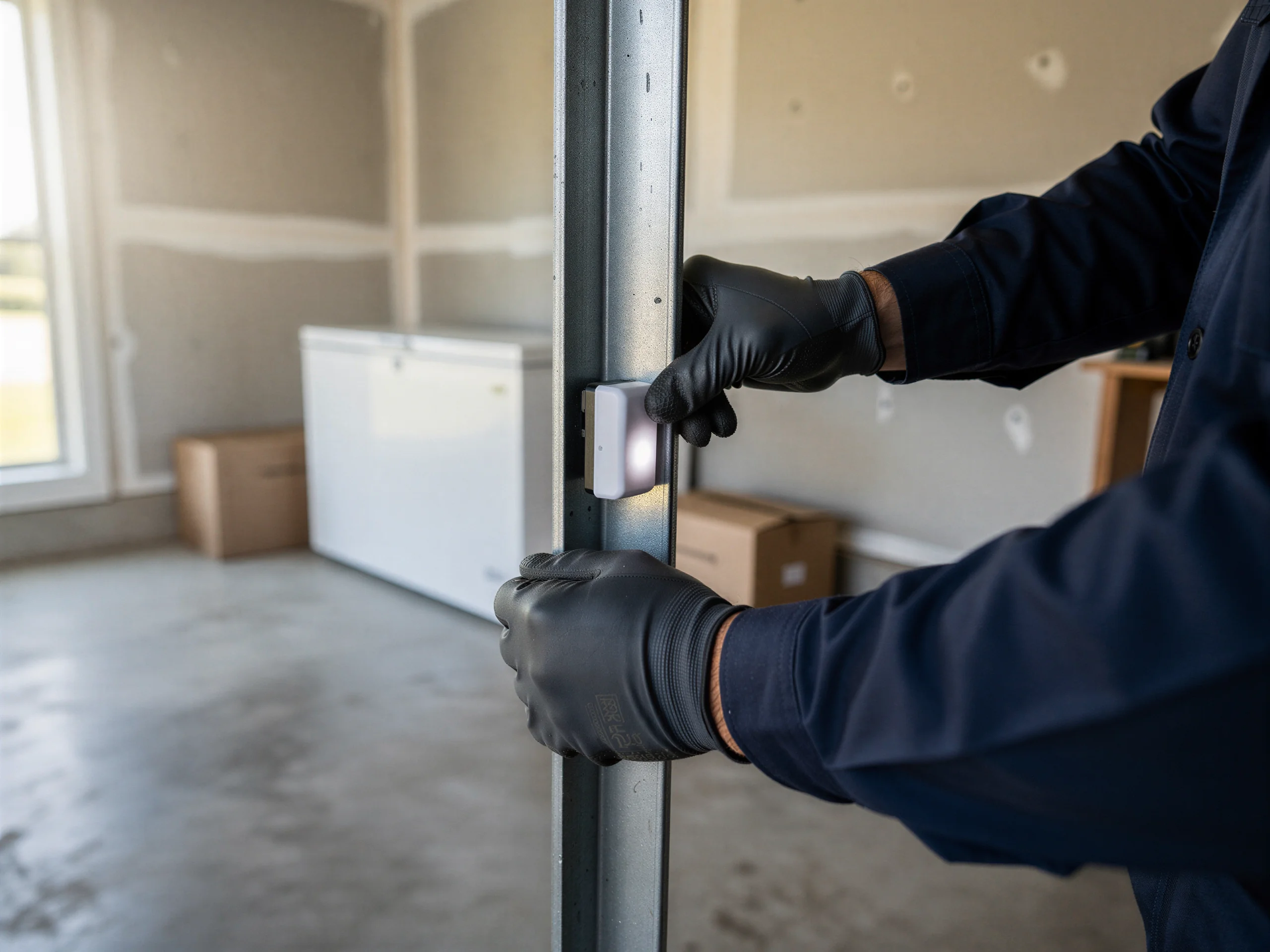
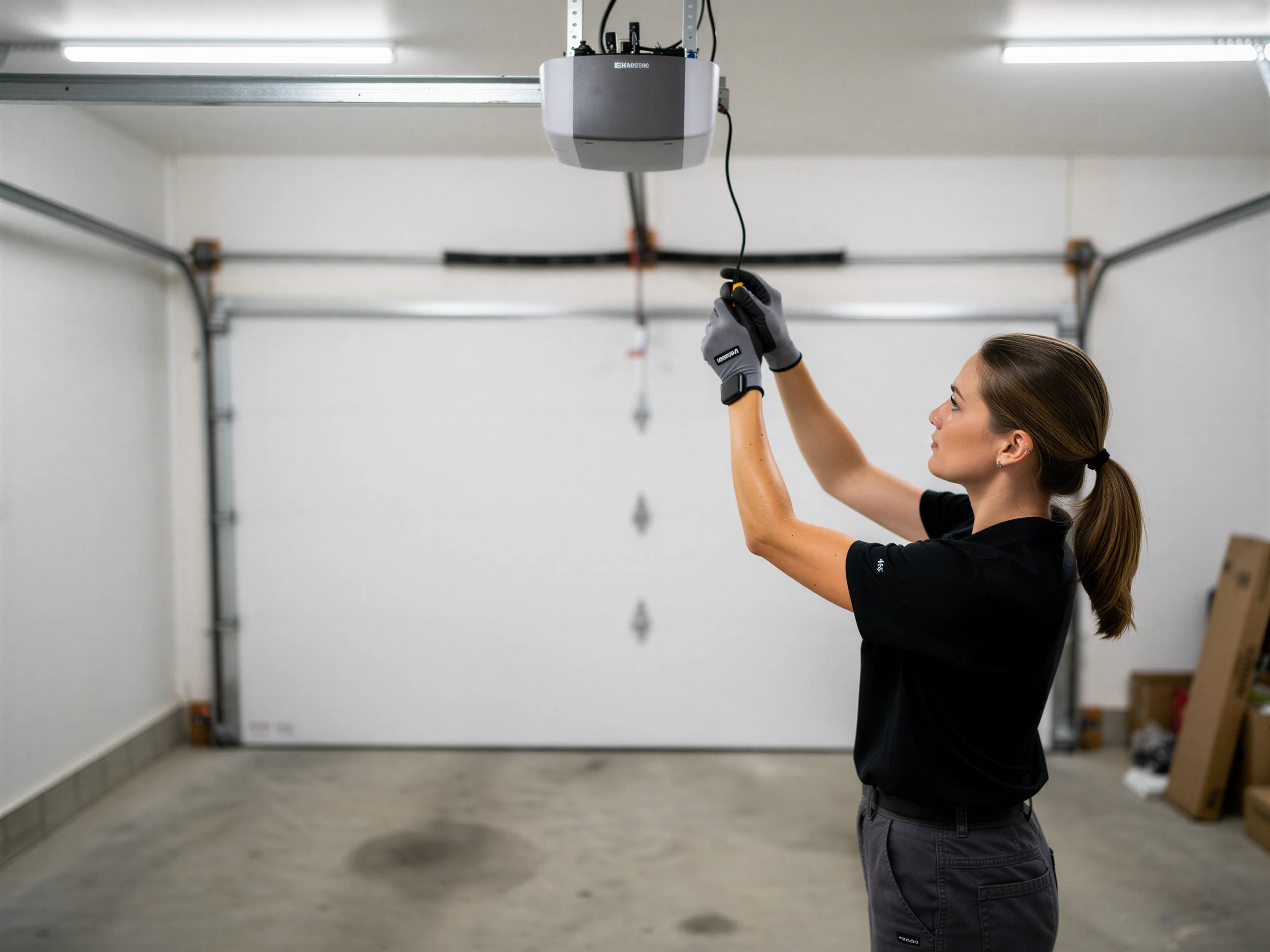
For opener issues, we test the logic board, travel limits, and safety sensors before replacing anything, since a bad sensor or a misaligned bracket gets blamed on the motor more often than it should be. We give you the diagnosis before we start work, not after.
What You Are Seeing
If your door is loud, slow, or uneven when it opens, and your house dates from that 1950s-through-90s wave of Ventura construction, odds are you're looking at age-related wear rather than a one-off accident.
Sudden drop warning
A door that drops suddenly or won't budge is often a broken torsion spring - don't try to lift it manually, the spring under tension is the dangerous part, not the door itself.
Frayed cable signs
Fraying on the cables, a popping or snapping sound from above the door, or one side sagging lower than the other usually points to a cable or drum issue. A door that reverses right after it starts closing is almost always a sensor or limit problem, not a structural one, and that's often a cheaper fix than people assume.
Manual release cord
If the opener runs but the door doesn't move, check the manual release cord isn't engaged before calling anyone - it happens more than you'd think in houses that have had the same opener since the 80s or 90s.
Talk to a local pro
Garage door service in Ventura?
Same-day service with honest, upfront quotes.