Why This Fails Locally
Most of the housing stock across this service area went up between 1956 and 1997, with the median build year landing around 1973. That means a lot of doors, tracks, and openers in Ventura and the fourteen communities we cover are running on hardware that predates the lubricants, sealed bearings, and galvanized cable most new installs ship with today. A door from that era wasn't built to go forever without attention - it was built to be serviced on a schedule, and a lot of them haven't been.
The climate here doesn't help the way people assume it does. Mild coastal air sounds gentle, but it carries salt and moisture that settle into exposed hardware day after day, year after year, with no hard freeze to ever dry things out completely. On a torsion spring or an unlubricated roller track, that's a slow corrosion clock that never resets. Homeowners inland get a harsh winter that forces maintenance. Owners here get decades of quiet wear instead, until a cable frays or a spring that's lost half its coating finally lets go.
This isn't a problem unique to one street or one neighborhood. It's the shared condition of a service area where the bulk of the stock is the same age and sees the same air.
Parts We Carry
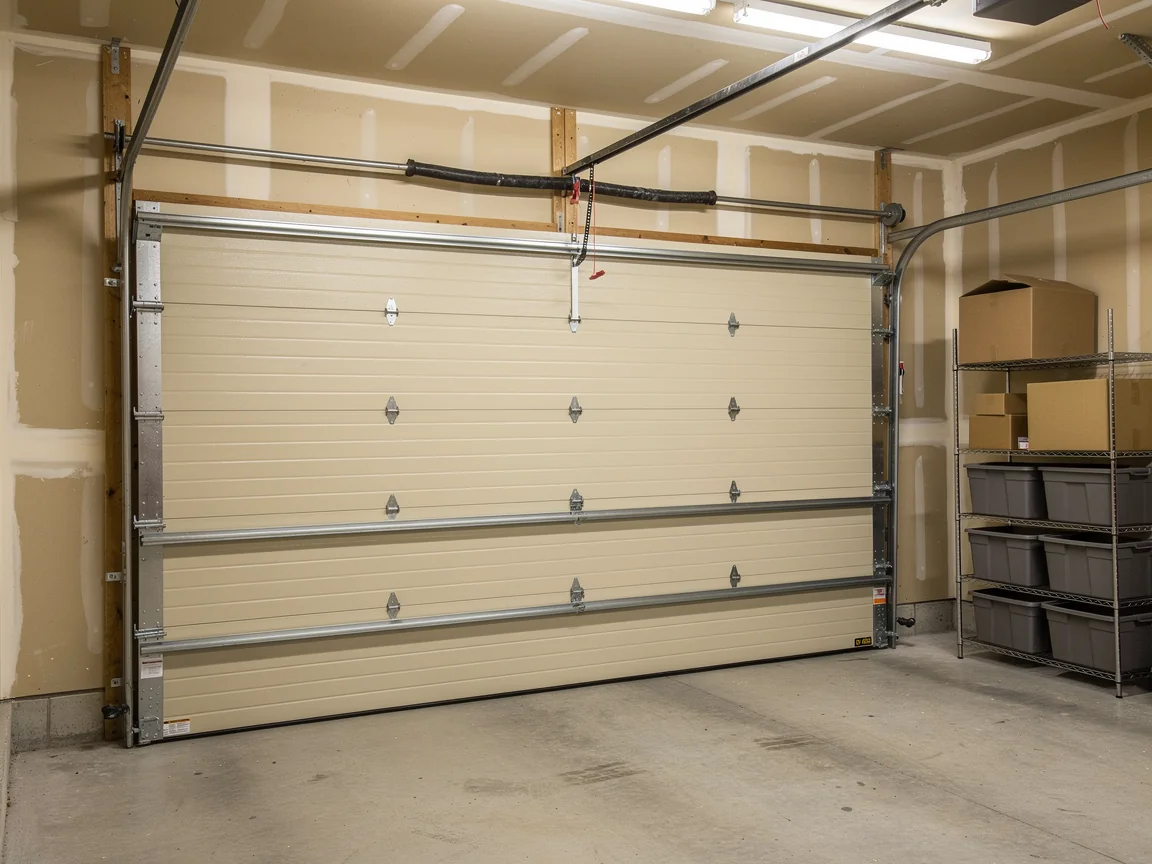
We stock the parts that actually fail on 1960s-70s doors: torsion springs sized for the heavier wood and early steel sections common in that era, galvanized lift cables rated for salt-air exposure, and nylon rollers to replace the steel ones that were standard before quieter hardware became the norm.
Hinges and bearing plates
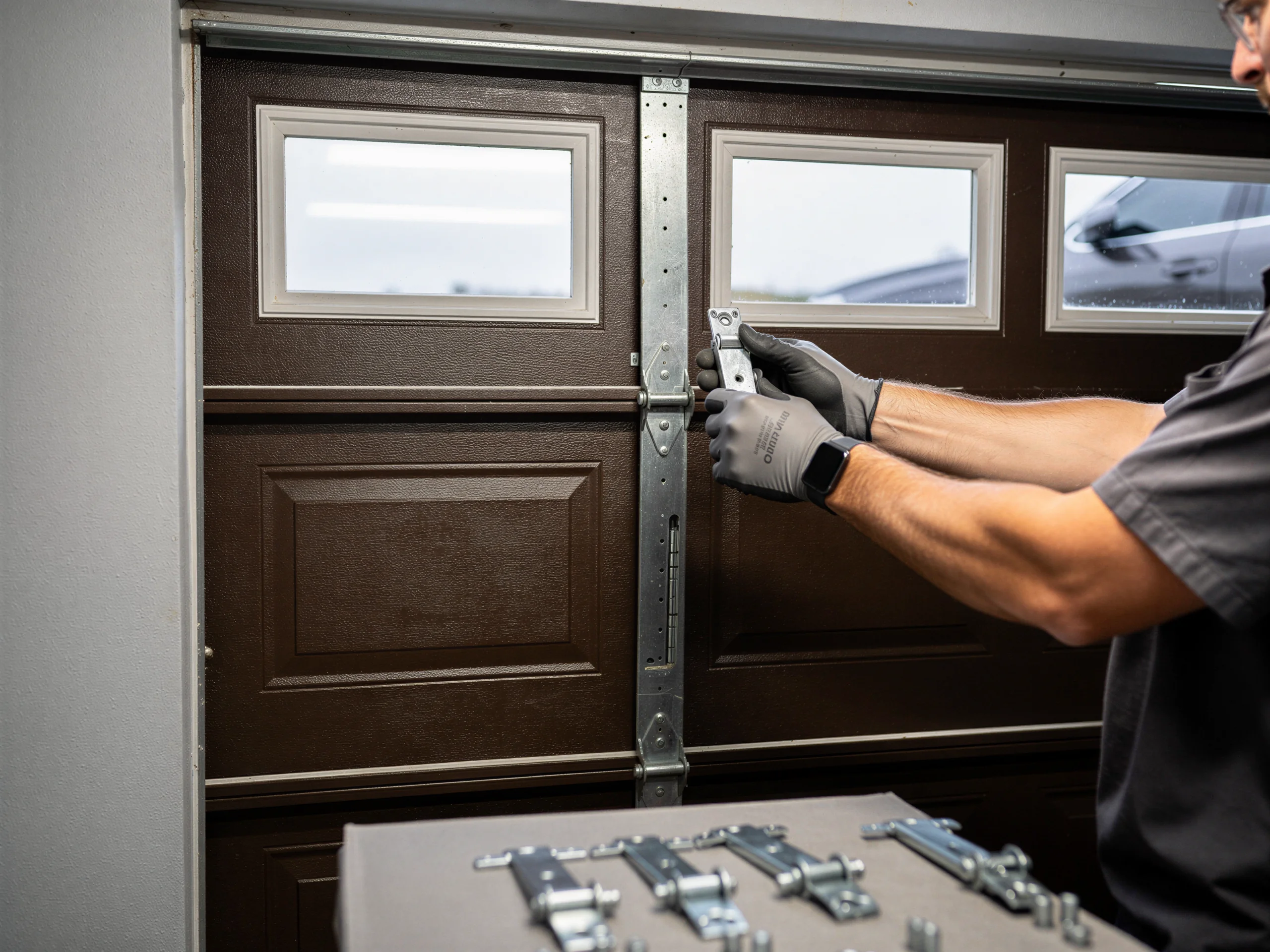
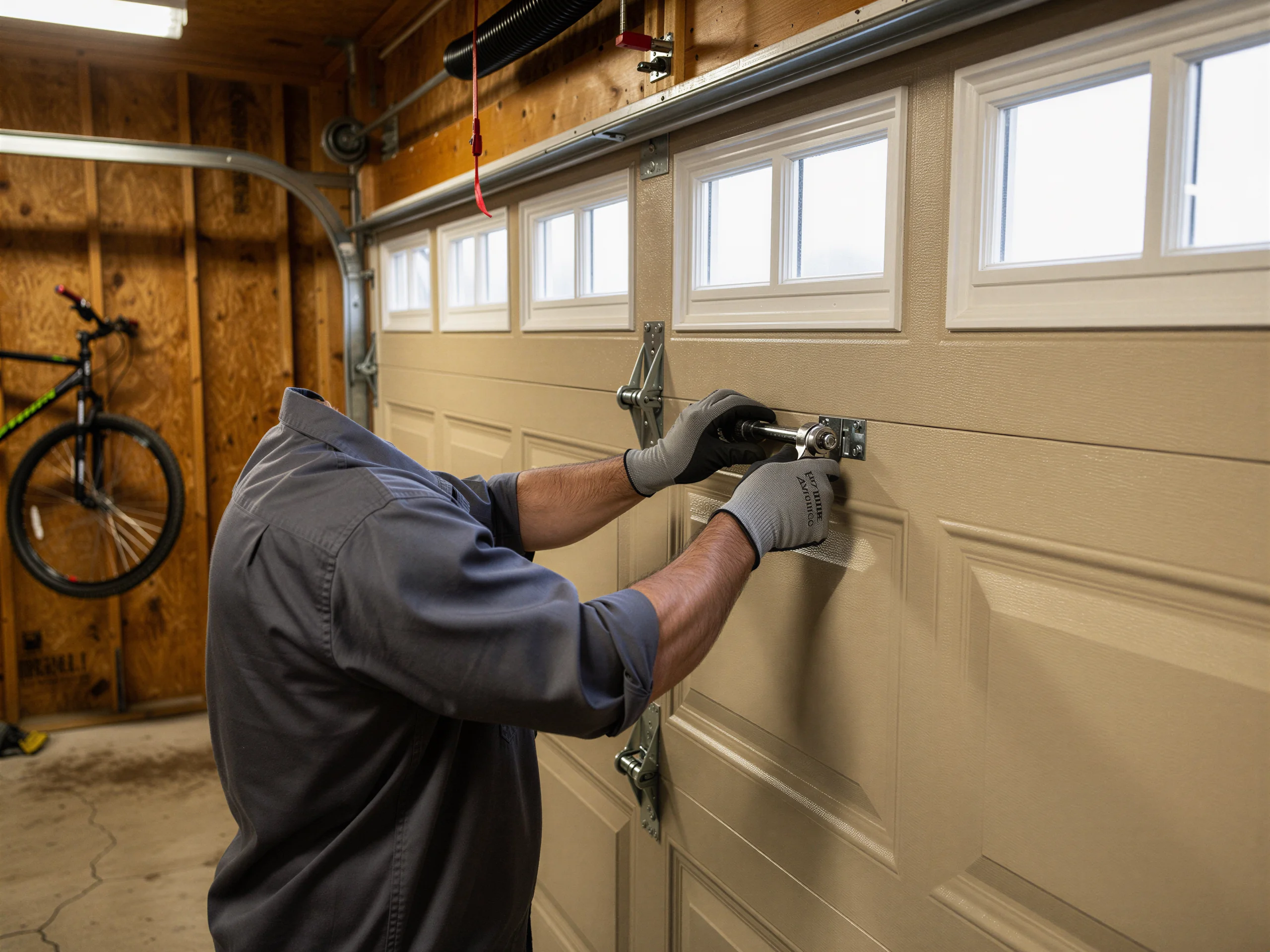
We carry standard-size hinges and center bearing plates that fit the track spacing used across most of these older installs. What we don't stock on the truck is anything proprietary to a specific opener brand's newer electronics - those parts are special order, and if your opener logic board needs replacing, that's a lead-time item, not a same-visit fix.
Retrofit track brackets
We'll tell you that up front instead of promising a part we don't have in hand. For doors still running original 1970s track hardware, we carry retrofit brackets that let us upgrade to current roller and bearing standards without replacing the whole track assembly, which keeps the job a maintenance call instead of a full system swap.
How We Fix It
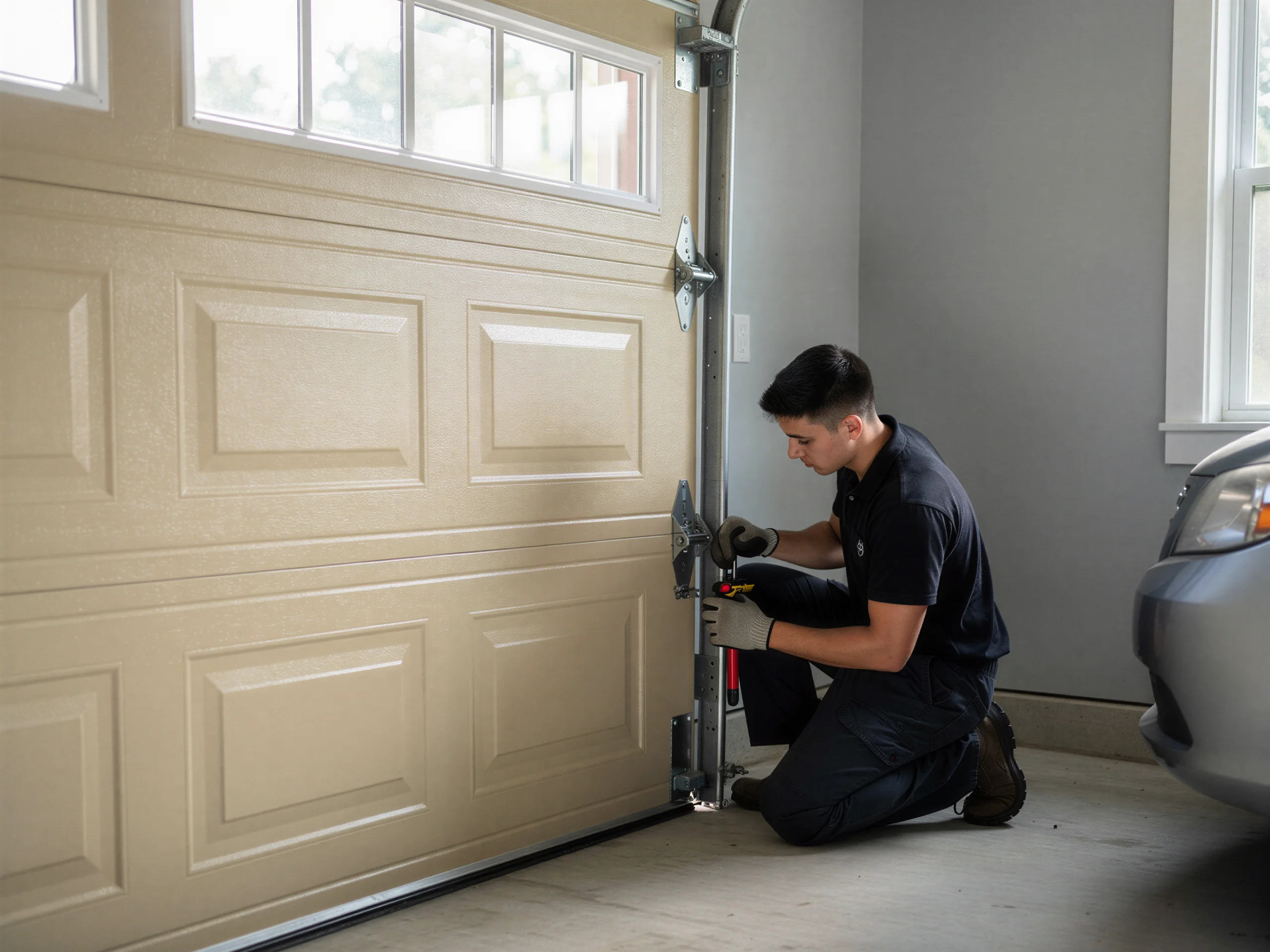
A maintenance visit on a house from this build window starts with the spring. We check wind count and coating wear, because a 50-year-old torsion spring showing surface pitting is a countdown, not a repair candidate - we'll tell you when it's close to end of life rather than just lubricate around it. Cables get inspected strand by strand at the drum and the bottom bracket, since that's where salt-air corrosion concentrates first.
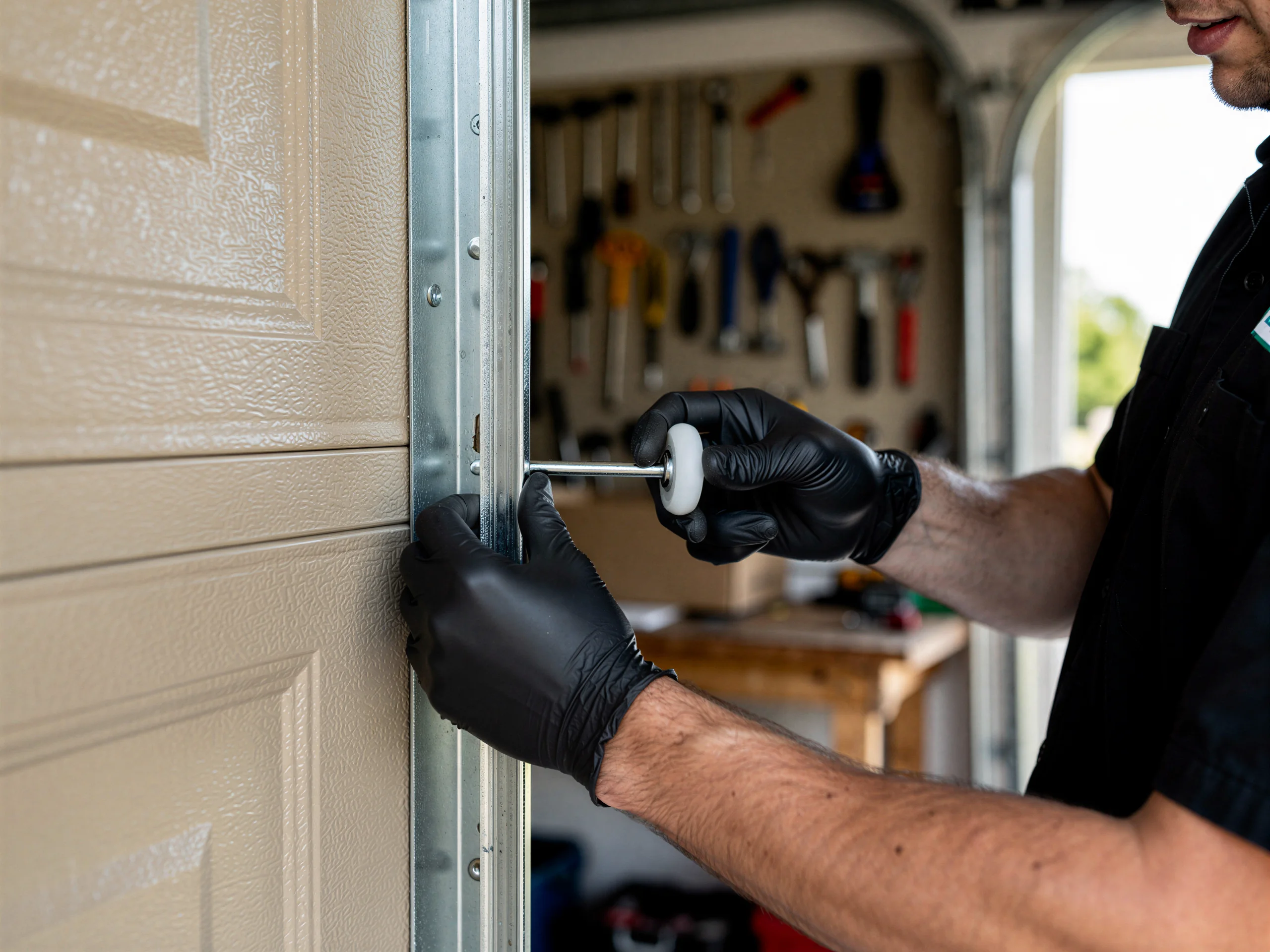
Next is the track and rollers. On original installs we're often resetting track spacing that's shifted slightly over decades of settling, then swapping worn steel rollers for nylon ones, which cuts noise and reduces the load on hinges and bearing plates. We lubricate every moving metal point with a silicone-based product suited to coastal humidity, not a general-purpose oil that gathers grit.
Last, we test balance and auto-reverse. A door that was balanced for 1970s-weight wood panels can drift out of spec if panels were ever swapped for lighter steel, and that imbalance is what burns out openers early. We adjust spring tension to match the actual door hanging on the track today, not the one the original builder installed.
What You Are Seeing
If your door is loud going up - a grinding or rattling that wasn't there a year ago - that's usually corroded or flat-spotted steel rollers from original 1960s-70s hardware, not a motor problem.
Spring losing tension
If the door feels heavier than it used to, or the opener strains and reverses partway up, that's a spring losing tension from age and salt exposure, and it's worth a check before it snaps under load.
Rust streak warnings
Rust streaks at the bottom corners of the track or on the spring coils themselves are a direct sign of the mild coastal air doing its slow work - not a sign you did anything wrong, just the baseline condition for hardware this age in this location.
Crooked closing drift
A door that drifts crooked as it closes usually means a cable has stretched or frayed on one side, which is common once lift cables pass the couple-decades mark untouched. None of these are emergencies on day one. They're warnings. Caught during a maintenance visit, each one is a part swap. Ignored, most of them end as a spring failure or a cable snap with the door stuck halfway.
Talk to a local pro
Garage door service in Ventura?
Same-day service with honest, upfront quotes.