The Complications
Most houses in Ojai went up around 1969, which puts this town squarely in the same build wave as the rest of the service area but on its own clock.
Lightweight 1969 track
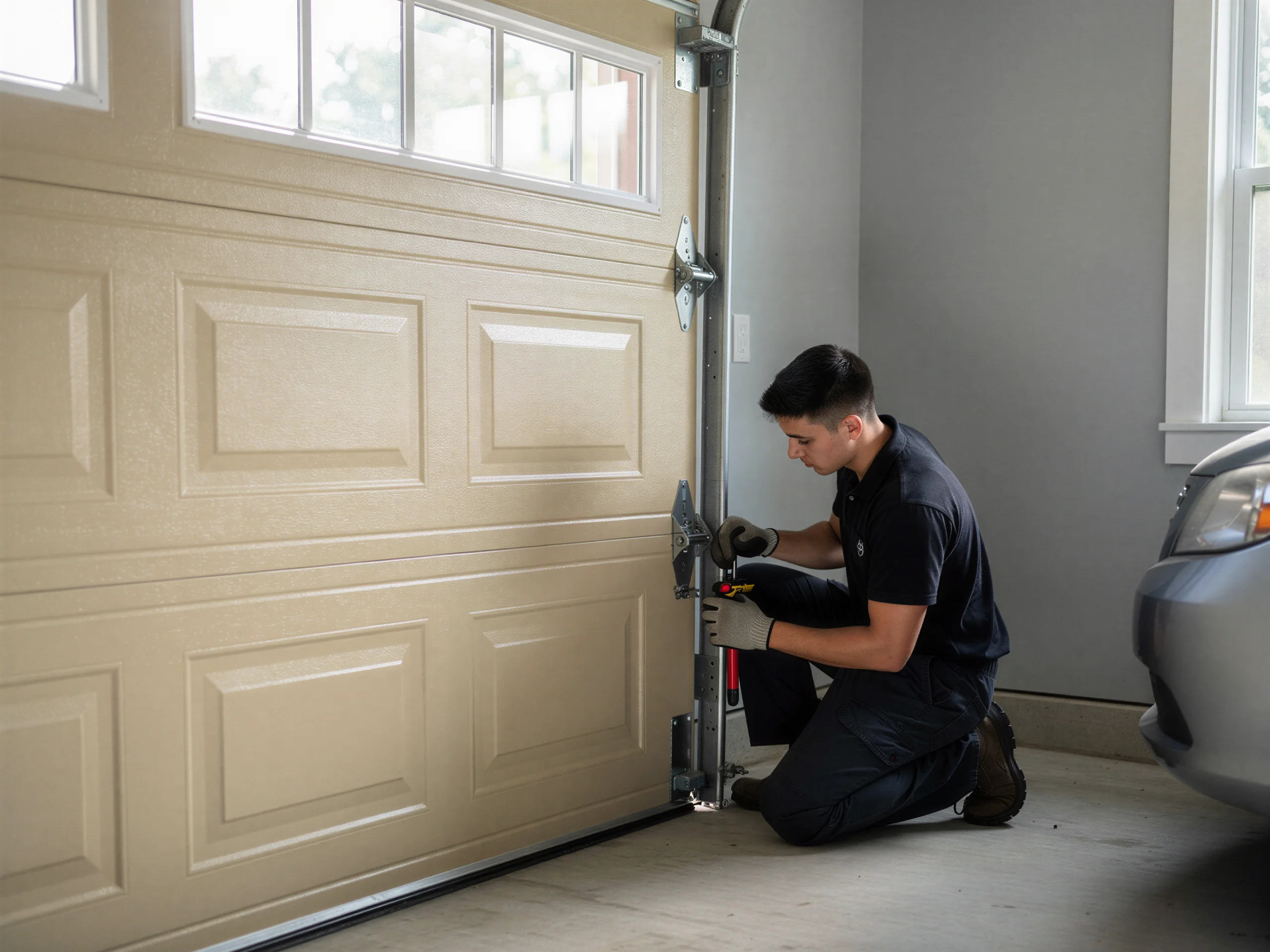
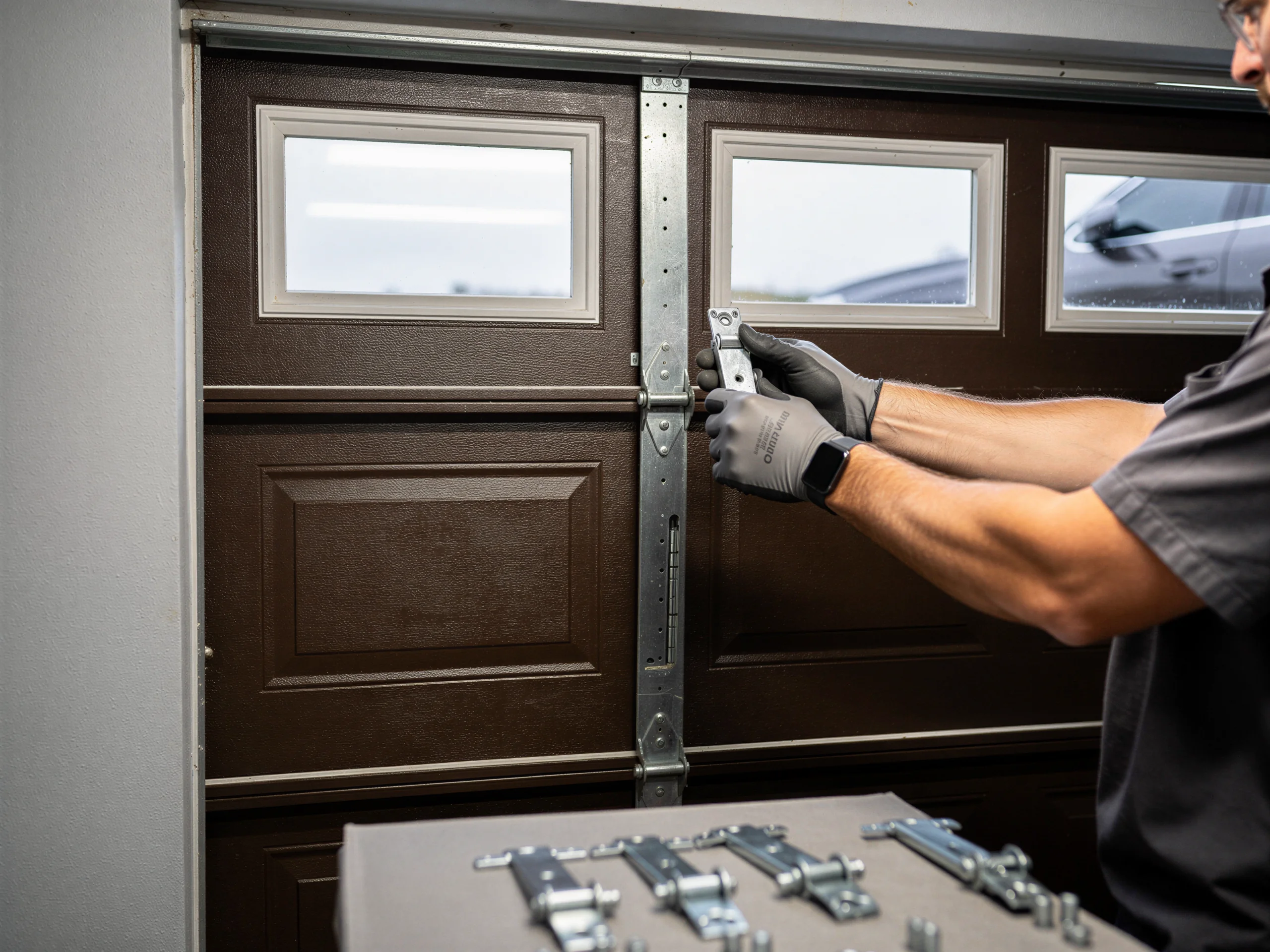
A door installed when a house goes up in 1969 almost always shipped with a basic extension spring setup and a lightweight steel track, because that's what a builder put in by default that year.
Mismatched swapped parts
Fifty-plus years later, that hardware is either original and tired or it's been swapped once already by a previous owner with whatever was cheap at the time. Either way, the parts don't match what's on the shelf at a big box store today, and a tune-up on a door this old means checking tolerances that newer doors don't have.
Standalone maintenance trip
We come out from Ventura, about 12 miles, so a maintenance visit here isn't a same-day add-on to some other job in town - it's its own trip, which is part of why we try to get everything checked in one pass rather than call you back out for something we should have caught.
Why This Fails Locally
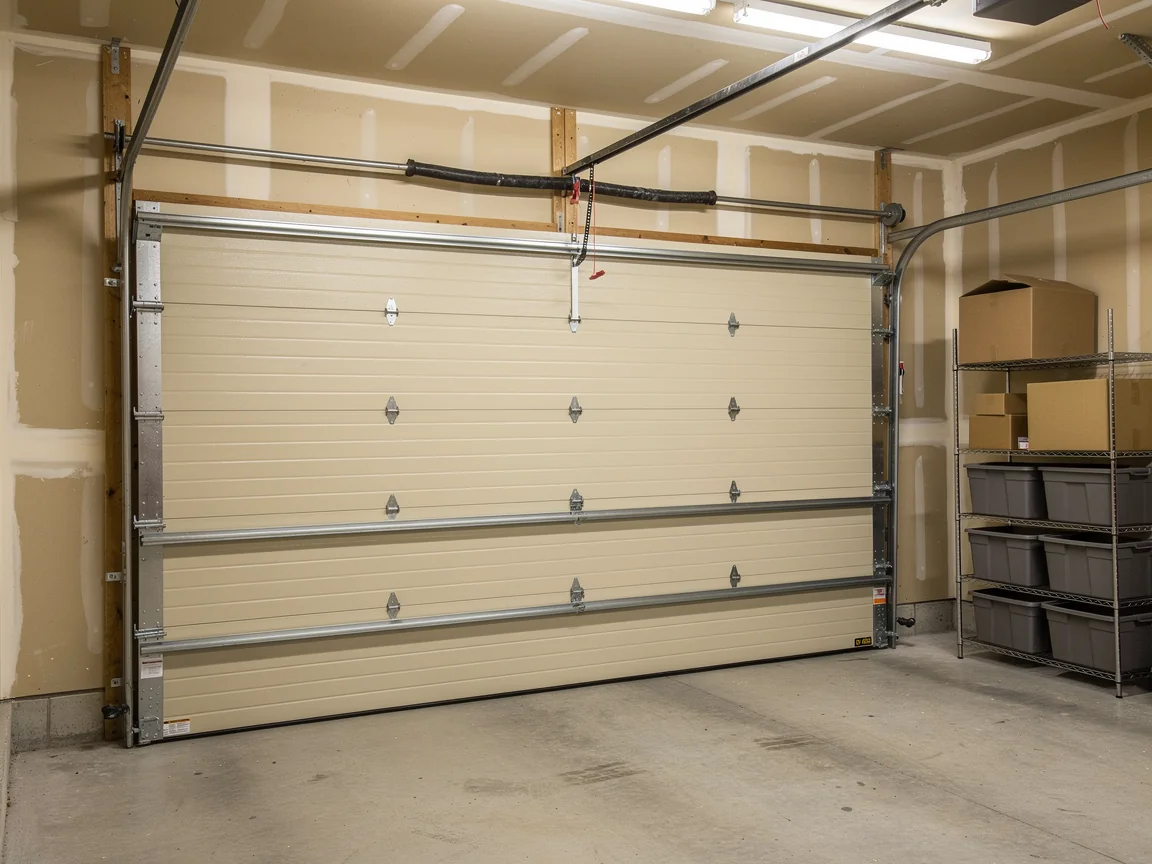
Ojai sits in the same mild temperate band as the rest of the area, so you're not dealing with the freeze-thaw cycles that crack hardware in colder climates. That's good news for the metal, but it means when a door here fails, it's almost never weather-driven - it's wear. A spring rated for a certain cycle count on a 1969-built door has had five decades to hit that number, and nobody's been counting. With roughly 3,029 households in Ojai and a good share of them owner-occupied housing from that same era, we see the same failure pattern over and over: a spring that's lost tension gradually rather than snapped, so the opener strains to compensate for months before anyone notices. By the time it's loud, it's usually overdue.
What You Are Seeing
If your door's from the original 1969-era build, look for a door that lifts unevenly, one side rising faster than the other, or a door that drops the last six inches instead of settling.
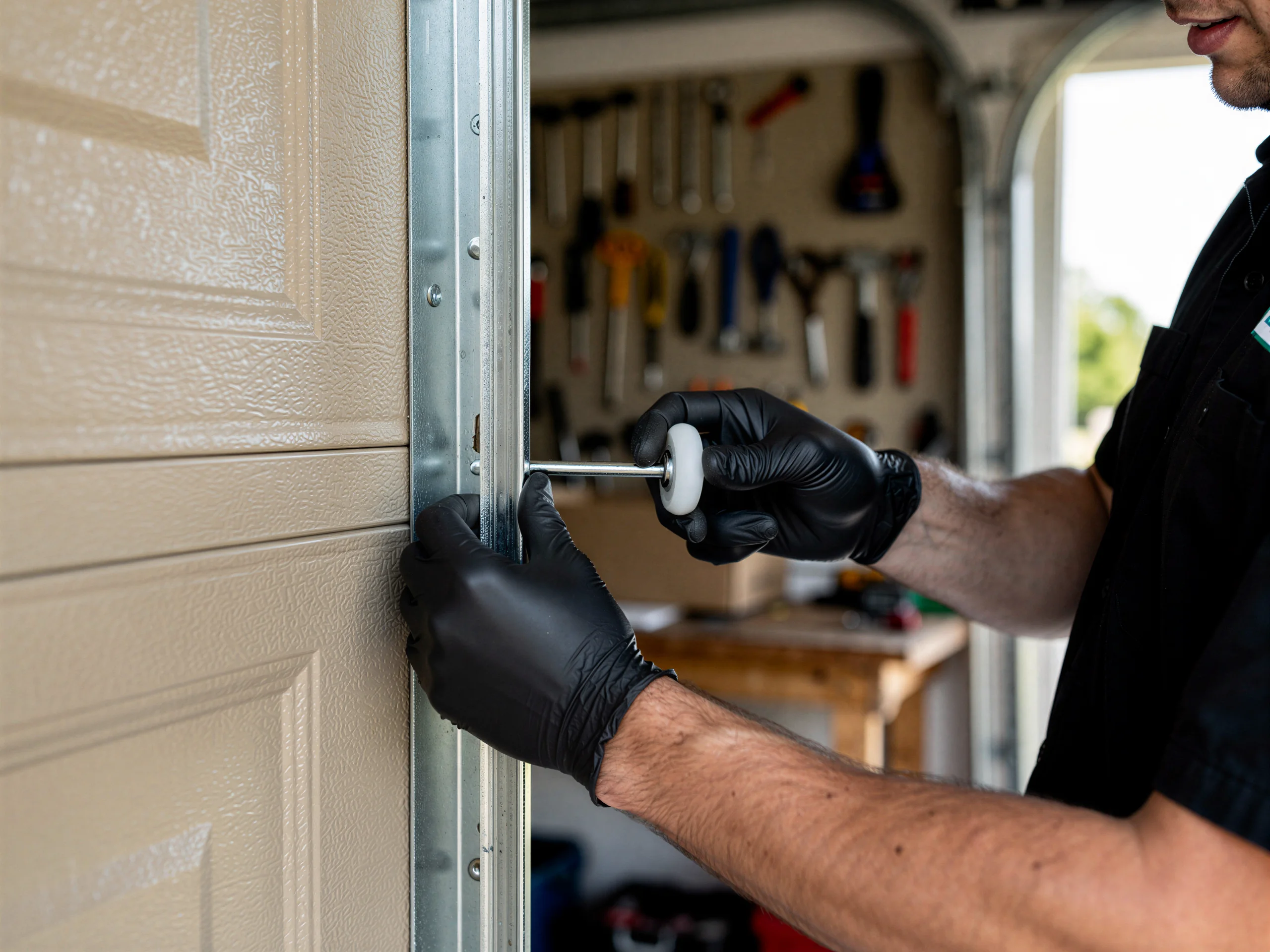
Flat-spotted rollers
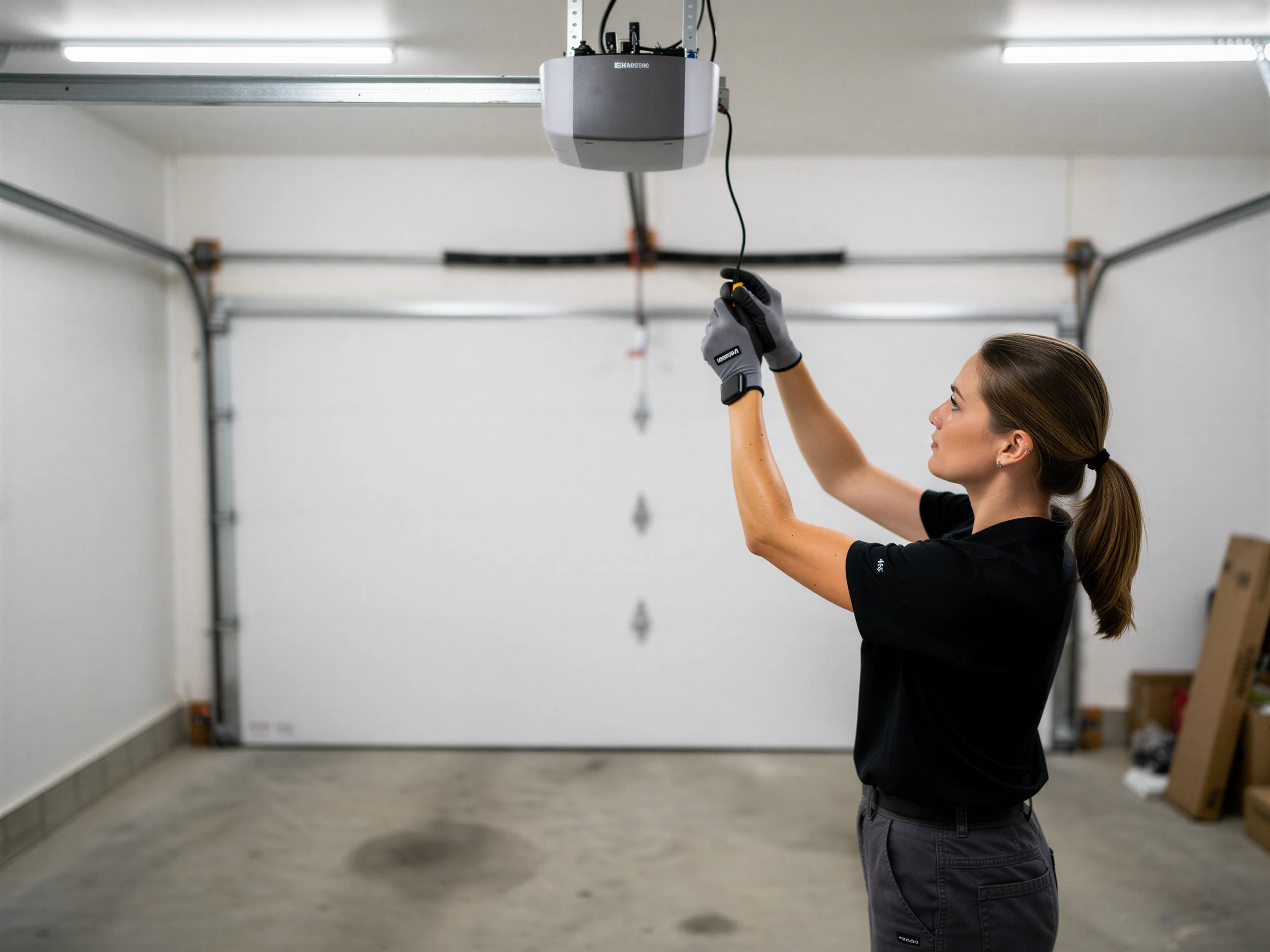
That's a spring losing balance, not an opener problem, even though the opener usually takes the blame first. Rollers on original track tend to flat-spot rather than wear round, which shows up as a rhythmic thump as the door travels.
Original-length cables
We also see a fair number of cables here that are original-length and starting to fray at the drum, especially on doors that haven't been serviced since they were installed. None of this is urgent until it is - a flat-spotted roller doesn't strand your car, but a fraying cable can let a panel drop without warning.
How Long It Takes
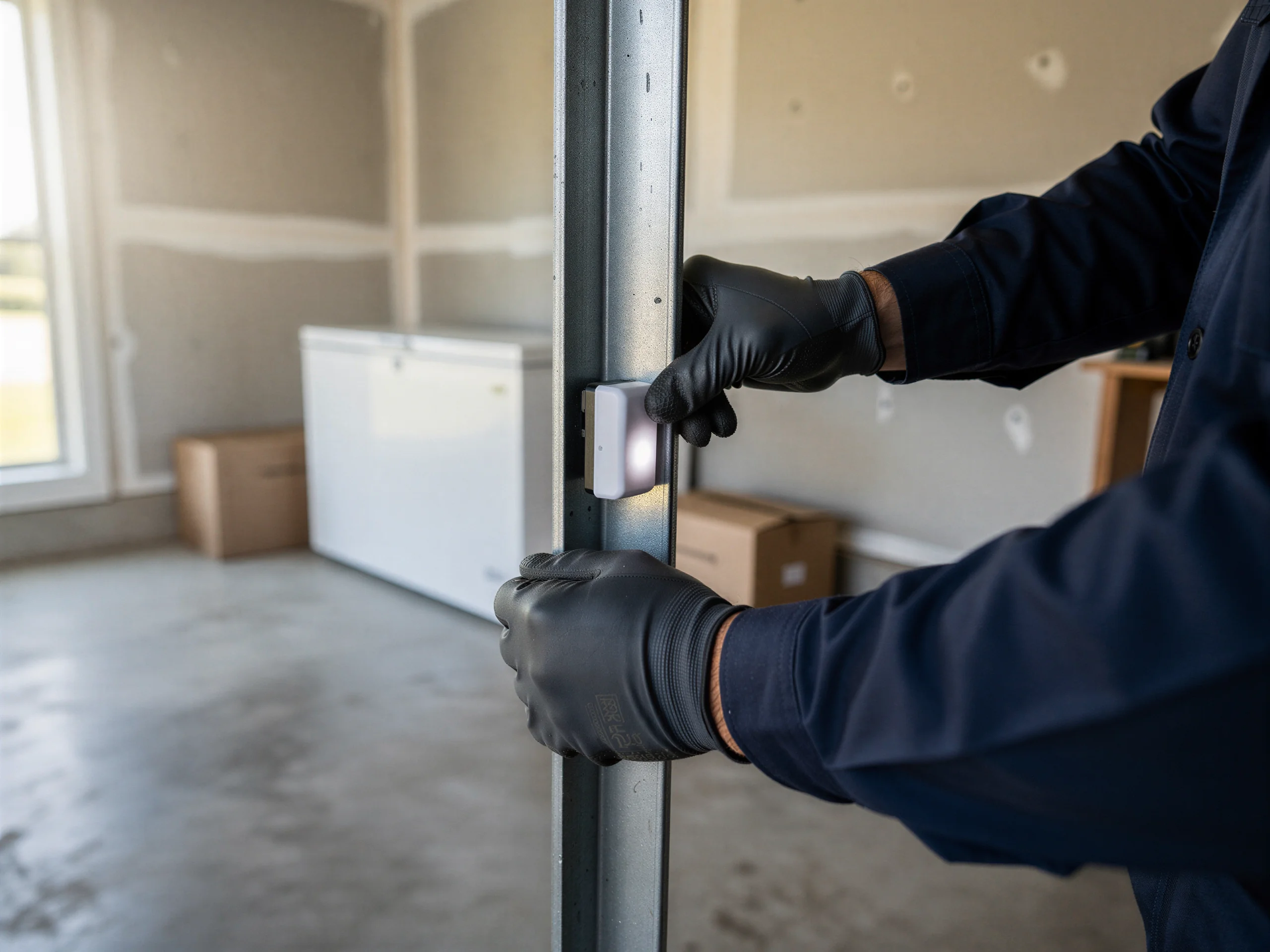
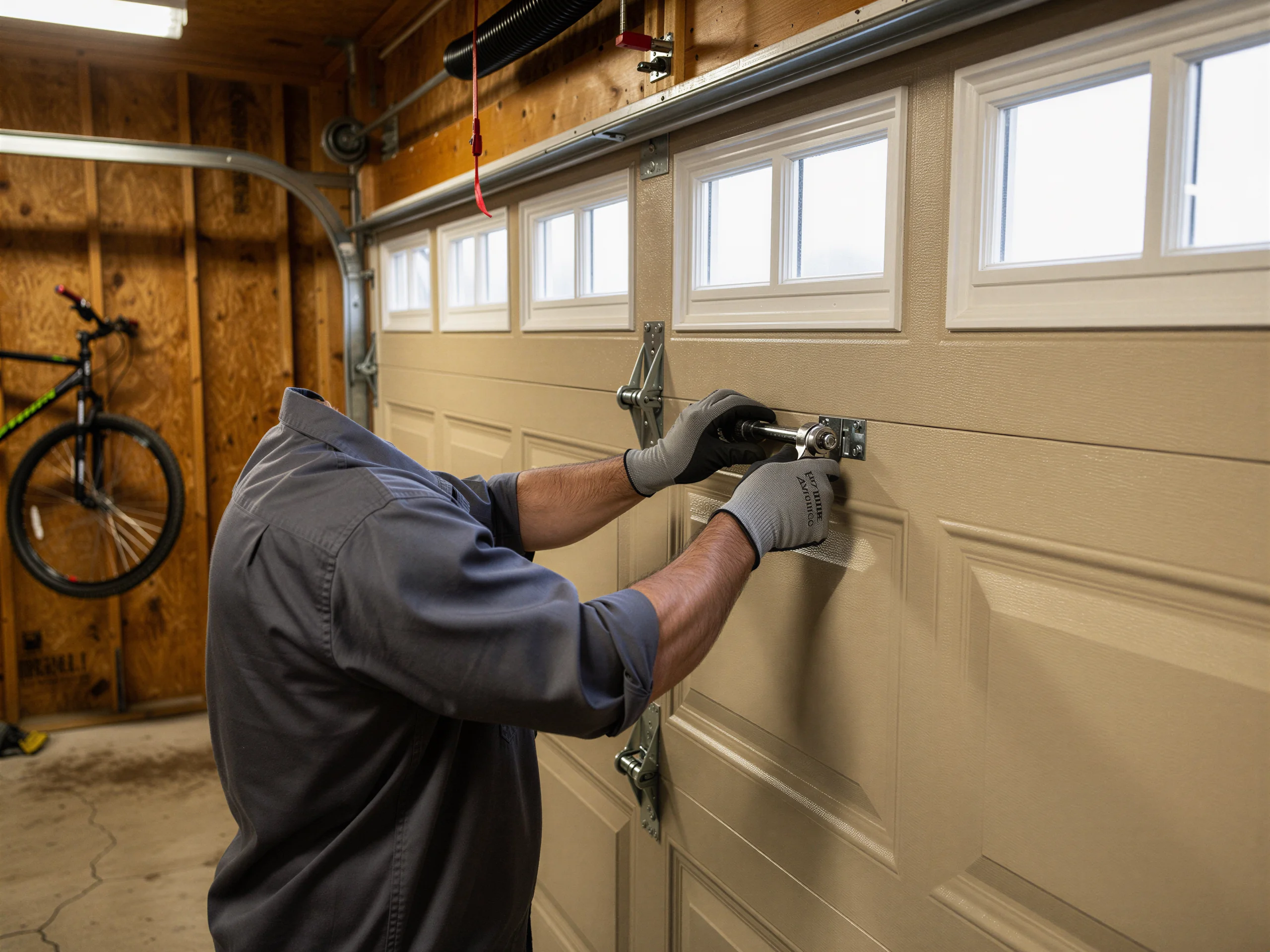
A standard maintenance visit on an Ojai door - lubrication, hardware tightening, spring tension check, track alignment, cable inspection - runs about what it would on any door this age, but older hardware sometimes takes longer to adjust safely because the tolerances were looser to begin with. If a part needs replacing rather than adjusting, that's a separate conversation; we don't carry every obsolete bracket on the truck, and matching 1969-era hardware sometimes means ordering rather than swapping on the spot. We'll tell you on site if that's where you're headed instead of guessing over the phone.
Getting It Booked In
Because Ojai is about 12 miles out from our Ventura base, we schedule maintenance visits here rather than fit them in as a drop-by, so booking ahead gets you a tighter window than calling same-day. Given the median income in this area runs lower than some of the surrounding towns we cover, we try to be straight about what's a real fix versus what's a part that's still got life in it - a tune-up shouldn't turn into an upsell. You can see the other towns we reach from Ventura on our nearby service area page, and if you're after the full list of what we handle beyond maintenance, that's covered on the Ventura maintenance page.
Talk to a local pro
Garage door service in Ventura?
Same-day service with honest, upfront quotes.