The Complications
Moorpark has 11,157 households, which makes it one of the smaller stops we cover out of Ventura, and it shows in the kind of calls we get.
Single-era Moorpark doors
You don't see the scattered mix of eras you get in bigger towns. Most of the housing here went up in a tighter window, with a median year built around 1987, so a lot of garages share the same door hardware, the same panel sizes, and often the same failure points within a few years of each other.
Galvanized bottom panel rot
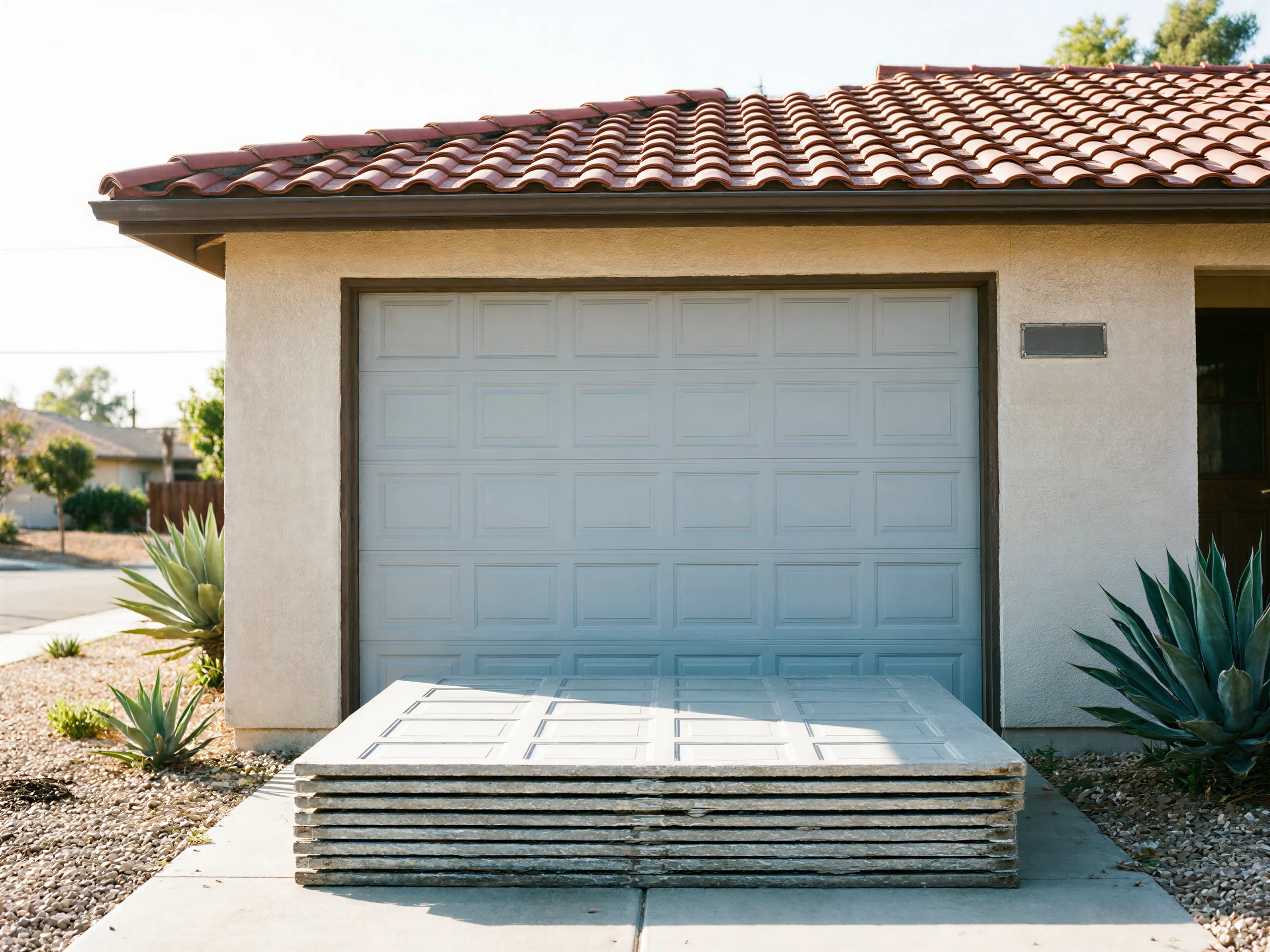
The complication isn't variety, it's volume of one type. When a batch of doors from the same builder era starts hitting 35-plus years old, the galvanized skin on the bottom panel is usually the first thing to go, especially where sprinklers or hose runoff hit it.
Thin-gauge steel impacts
Steel sectional panels from that period also used thinner gauge steel than what's sold today, so a cracked panel from an impact (a trailer hitch, a bike, a basketball) often can't be patched with a filler kit the way newer doors can. The area sits in a mild temperate climate band, so we aren't fighting the panel warping and insulation failure you'd get from freeze-thaw cycles. The wear here is mechanical and UV, not weather extremes, which changes what we look for on a quote.
Getting It Booked In
We run this job out of Ventura, about 24 miles from Moorpark, so there's no local branch or drop-in counter here. Booking a panel job means a call or a request through our site, a look at photos of the damaged section if you can send them, and a scheduled visit rather than a same-day walk-in.
Because panel replacement depends on matching an existing door rather than installing new, the more you can tell us up front, the better the first visit goes: the brand if it's on a sticker near the top bracket, the approximate installation year, and whether it's a single or double door. For a neighborhood built mostly in one era, a lot of these details turn out to be shared across several houses on the same street, which helps us bring the right stock the first time instead of guessing.
How Long It Takes
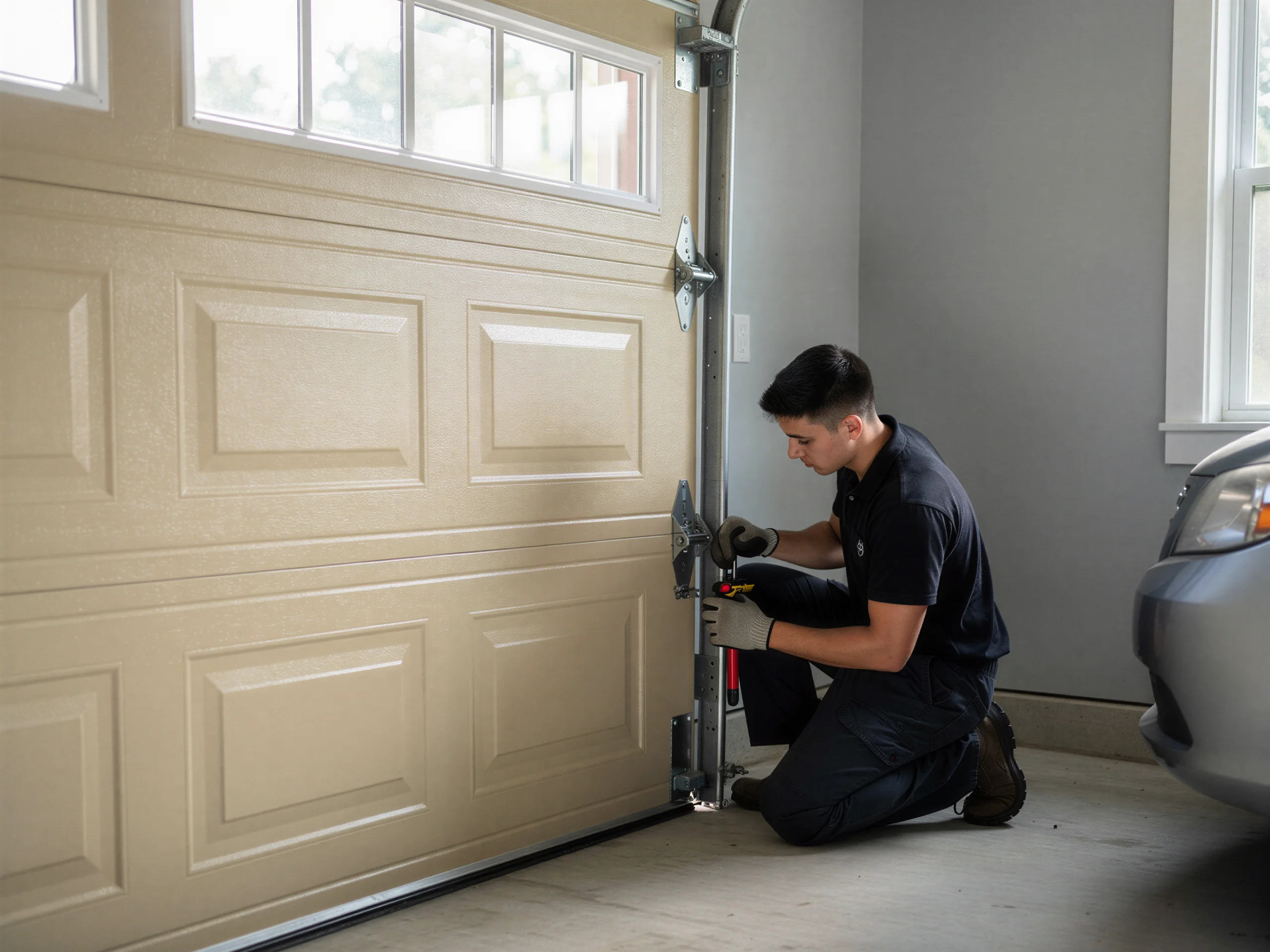
A single replacement panel on a door in otherwise good shape is usually a one-visit job once the part is in hand.
Profile and color matching
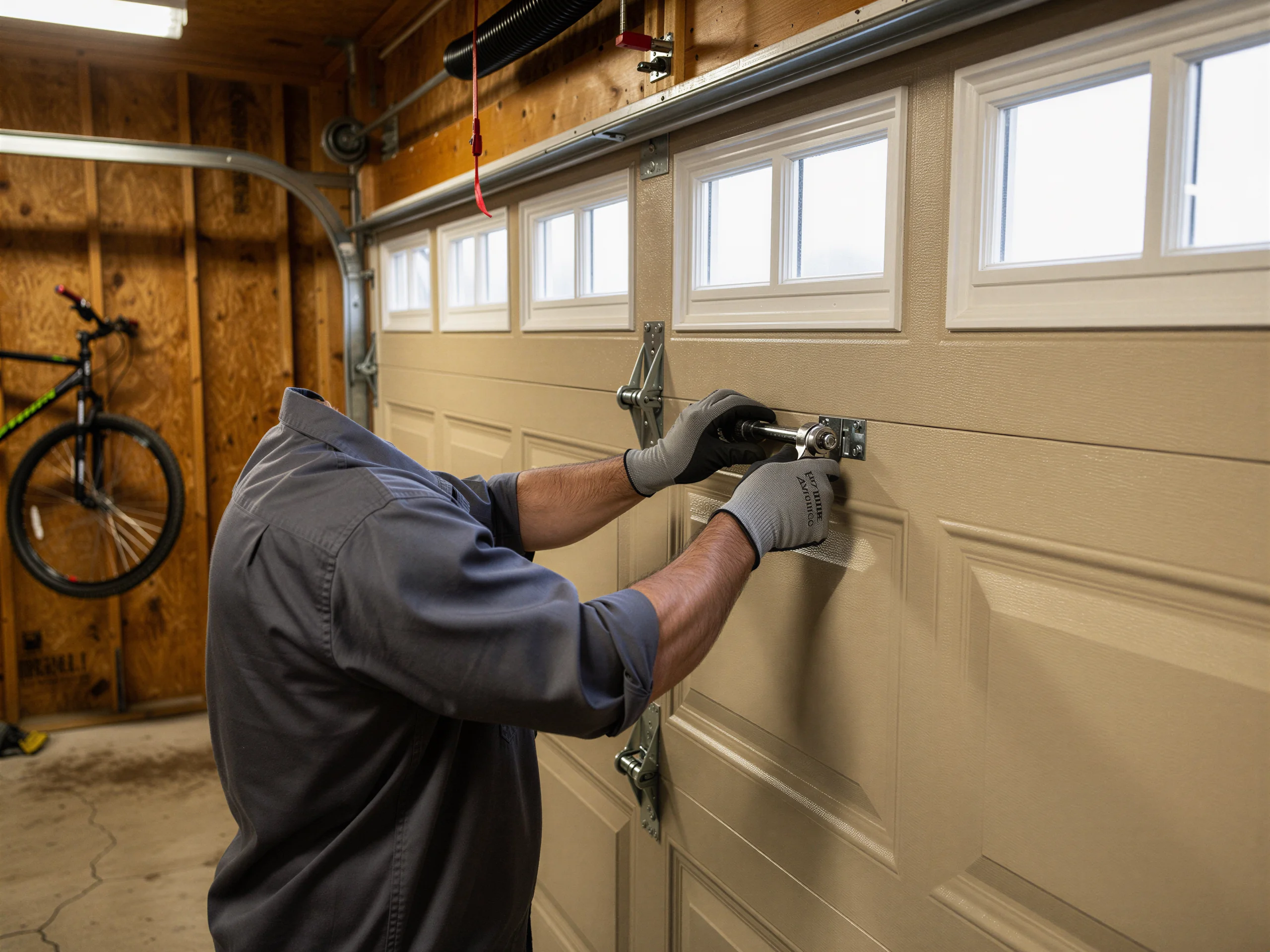
Matching a panel to a 1980s-era door is the slower part of the process, not the install itself: finding a profile and color match for a 35-plus year old sectional can take longer than the repair. If we have the right panel on the truck or can source it quickly, the physical swap, re-hanging, and balance check typically runs under two hours.
Bent track and hinges
If the track or hinges on that section are also bent or rusted through, add time for those repairs, since a new panel bolted to warped hardware won't sit right and will throw the door's balance off again within months.
Can You Do This Yourself
Swapping a single bottom panel on a lightweight door with the opener disconnected and the door manually propped is within reach for someone comfortable with hand tools, if you can find the exact matching panel. That's the hard part. Builder-grade doors from the 1980s often aren't a stock item at hardware stores anymore, and mismatched panels are visible even to a casual look.
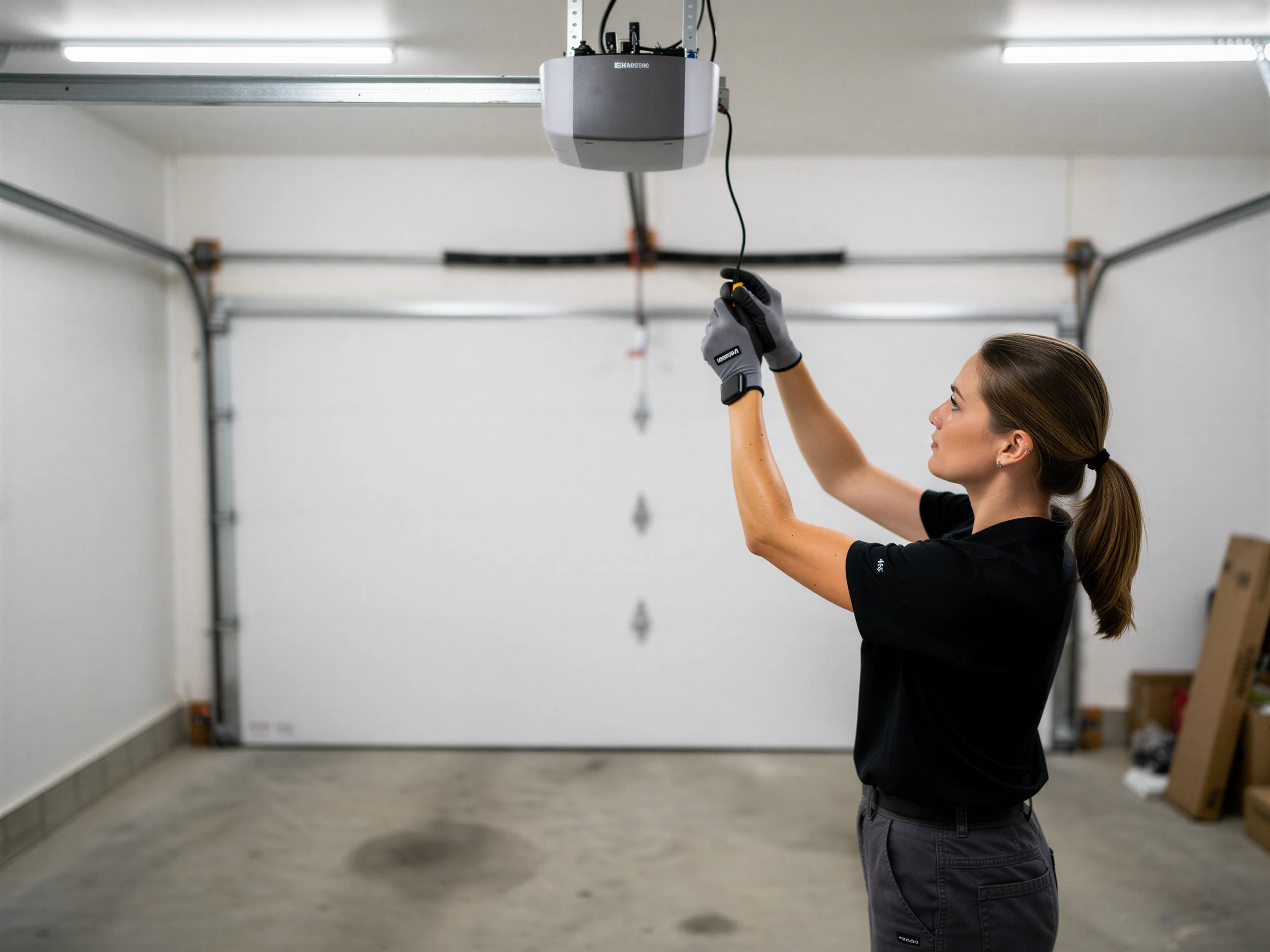
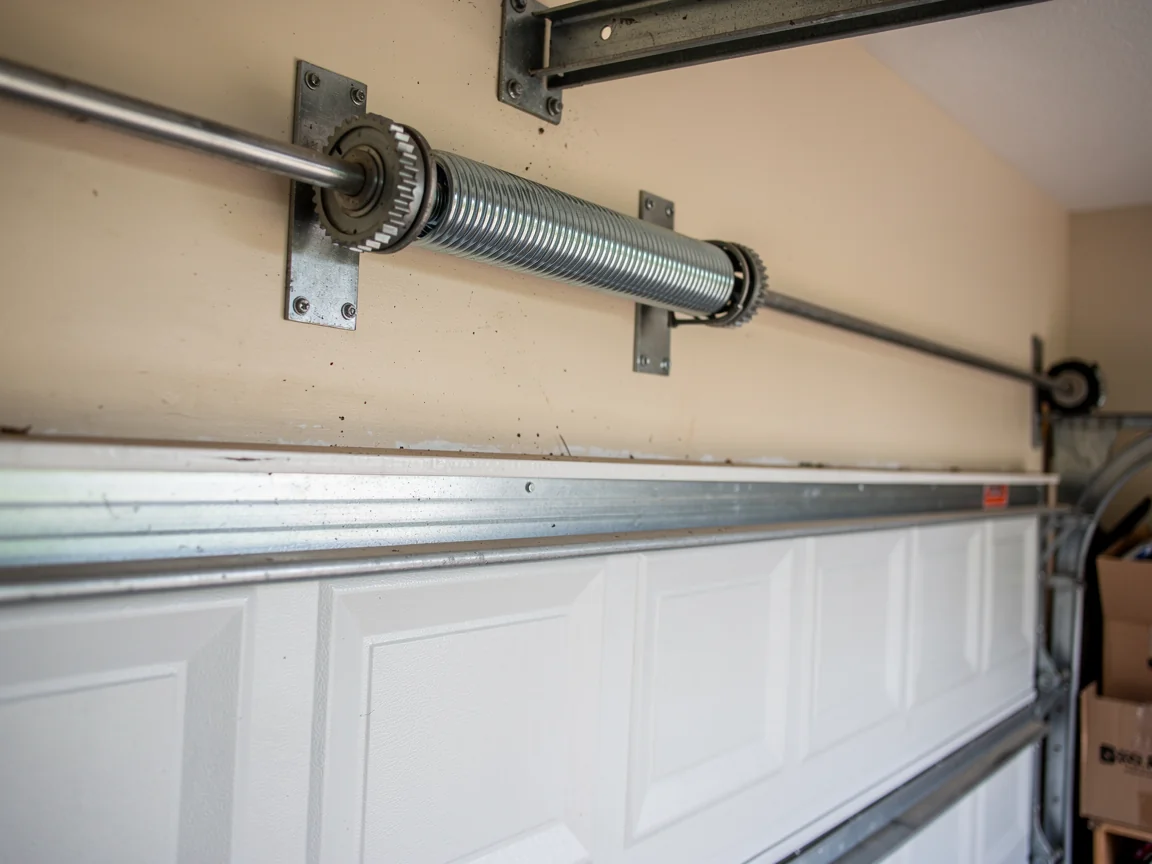
Where we'd tell you to stop and call someone: any panel on a section that also carries the torsion spring mounting, any job where the door won't come off track cleanly, or any door where more than one panel shows the same rust or impact pattern, which usually means the whole door is near the end of its life rather than needing a single part.
What You Are Seeing
On a door built around the median year here, 1987, the most common panel problem is rust-through along the bottom edge where water sits after irrigation or rain runs across the driveway apron.
Bubbling paint and soft spots
You'll see bubbling paint first, then a soft spot you can push a finger through. The second most common is a cracked or caved panel from a direct hit, usually mid-height rather than the bottom, since that's where a car bumper or a dropped ladder lands.
Dents through hinges
On steel doors from that era the gauge is thin enough that a solid impact dents rather than flexes back, and the dent telegraphs into the next panel section over through the hinges.
Chalky panel color
Less common but still a call we get: faded or chalky panel color where one side of the door gets more direct sun than the other, which isn't a structural issue but makes a single replacement panel stand out badly once it's installed, something worth mentioning before you commit to a one-panel fix.
Parts We Carry
For the builder-grade steel sectional doors common to Moorpark's 1980s housing stock, we stock standard raised-panel and flush-panel sections in the sizes that match that era's typical door widths. What we don't keep on hand is an exact color and texture match for every discontinued builder line from that period; some of those have to be special-ordered, and that can add a few days to a job that otherwise would've been same-visit.
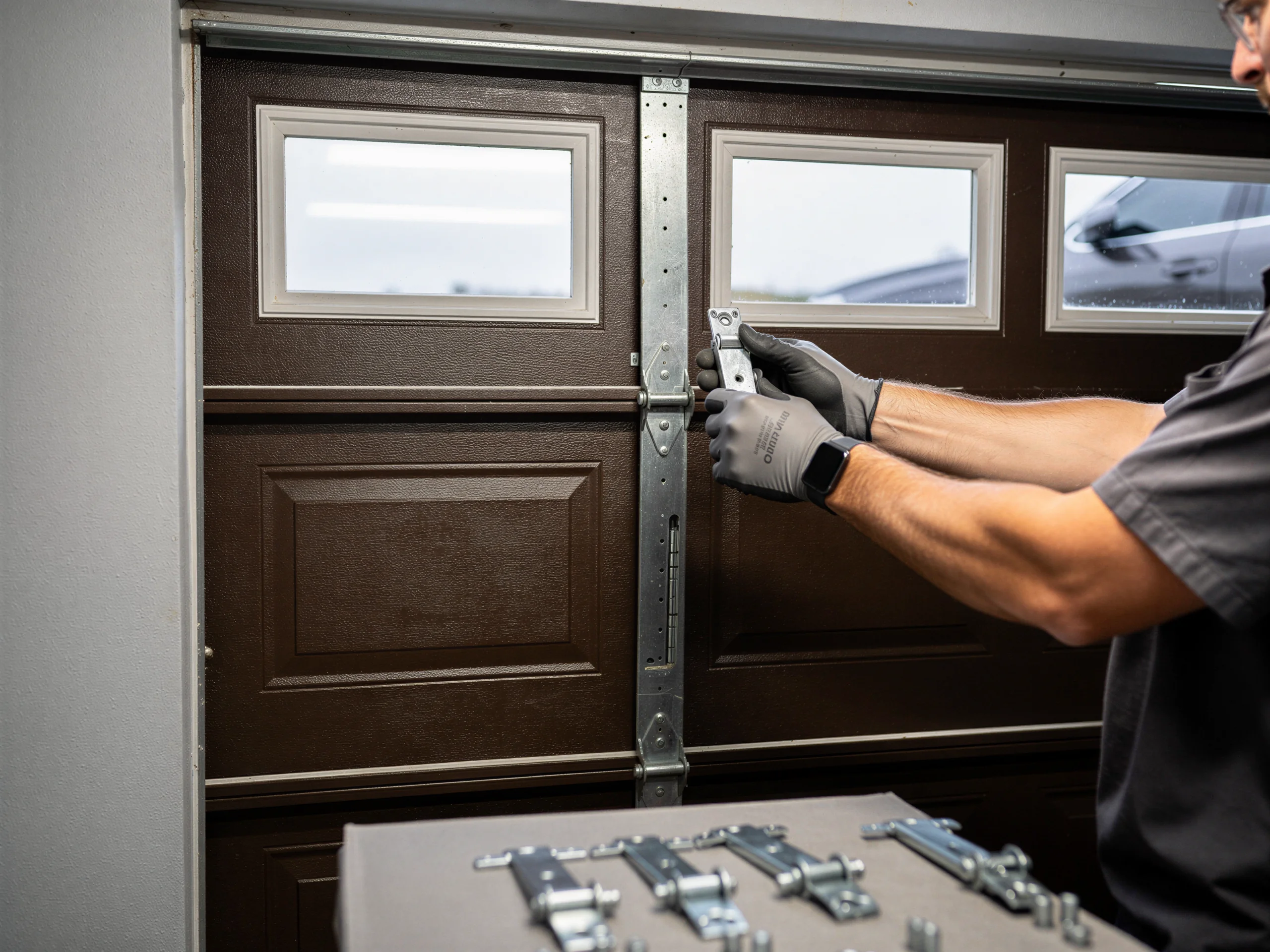
We also carry the matching hinges, rollers, and end stiles that pair with those panels, since a mismatched hinge gauge is one of the more common reasons a replacement panel doesn't sit flush. If your door predates that era or is a custom or wood door, let us know before the visit so we can check on sourcing rather than showing up with the wrong stock.
Talk to a local pro
Garage door service in Ventura?
Same-day service with honest, upfront quotes.