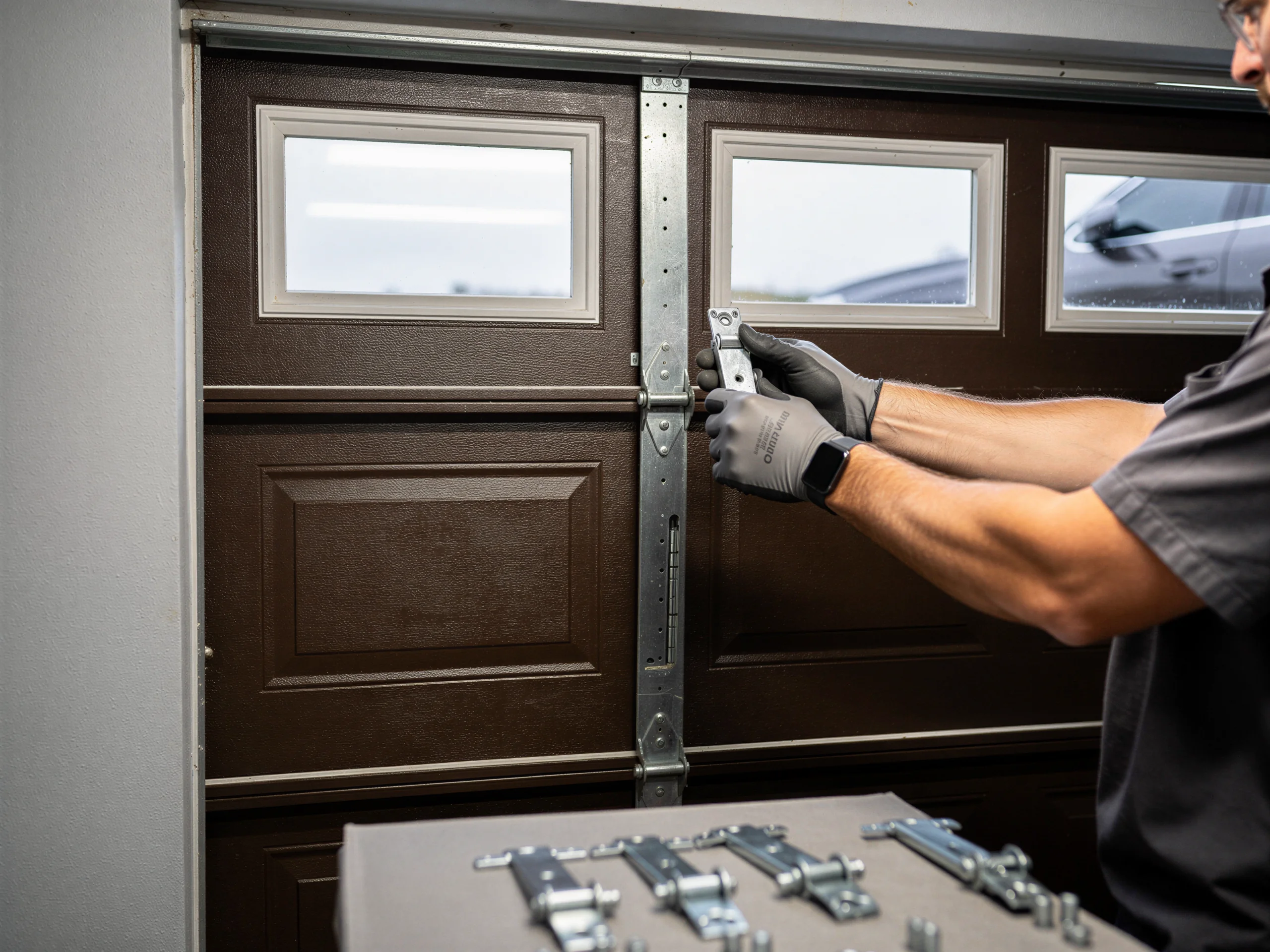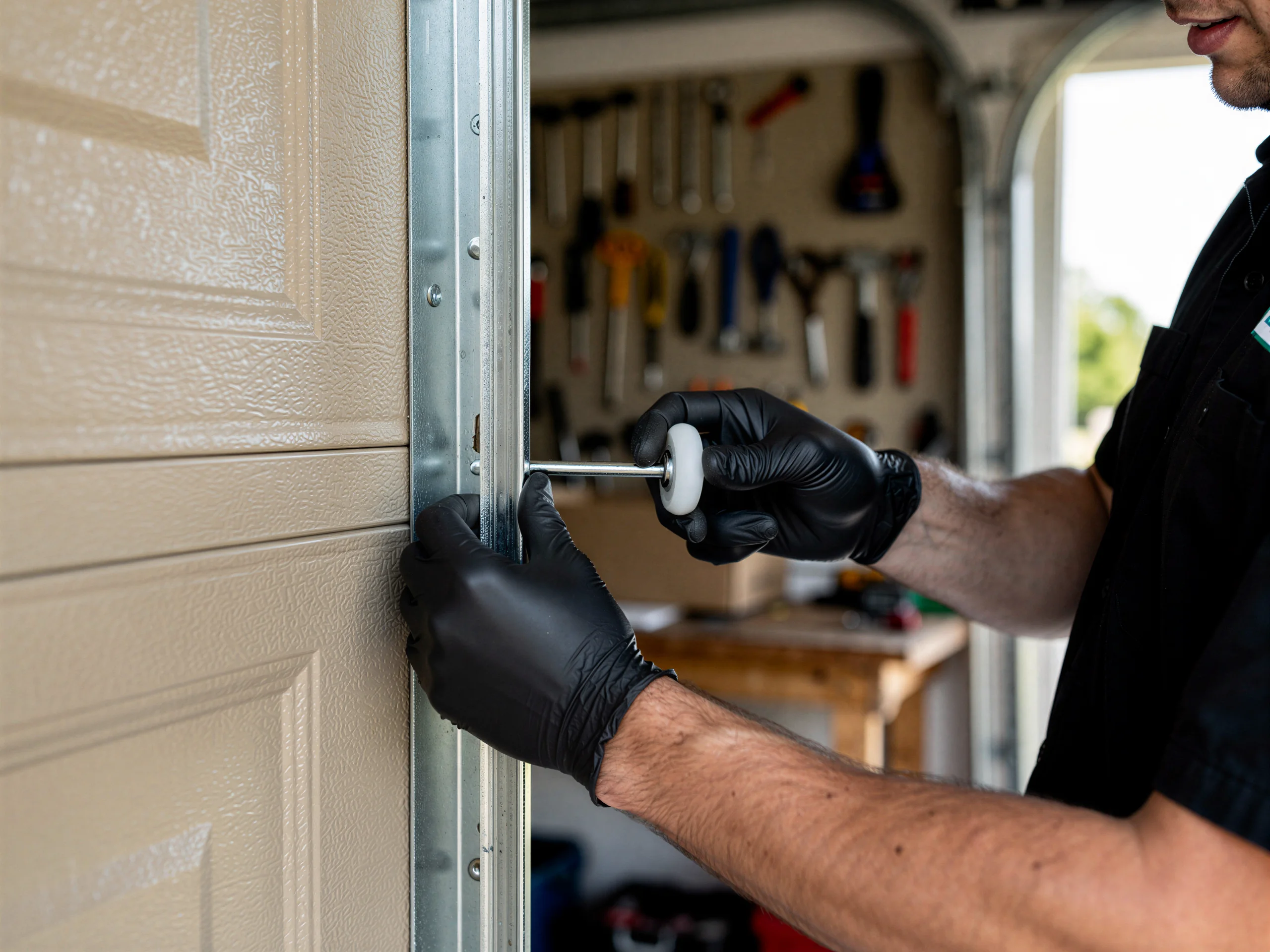
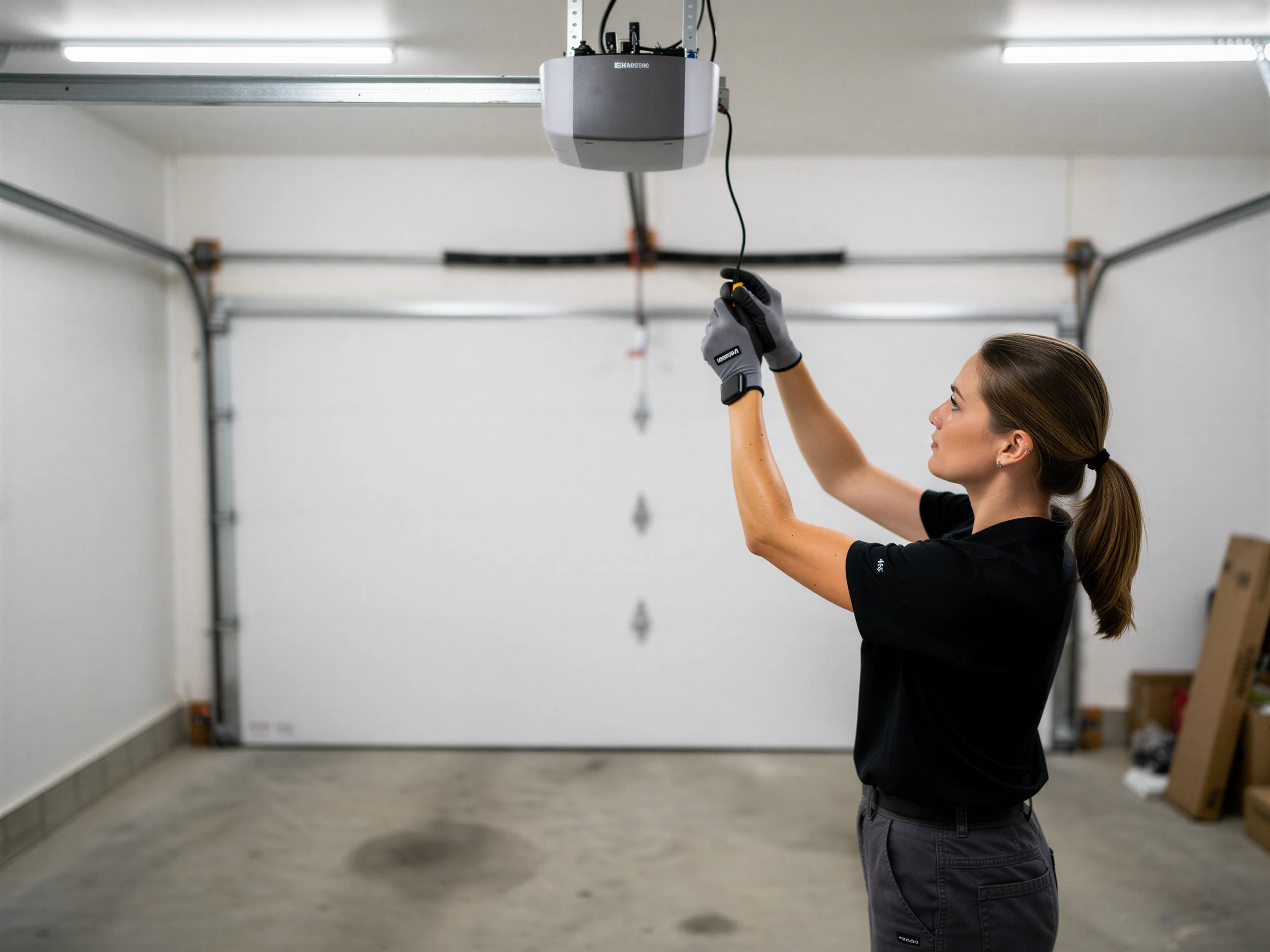
The Complications
Moorpark's housing largely went up around 1987, later than much of the rest of our Ventura service area, where the broader stock runs 1956 to 1997.
Original 1987 opener specs
That one fact changes what we find behind the wall switch. A house built in 1987 almost always shipped with a chain-drive opener in the 1/3-horsepower range, a wall-mounted push button instead of a keypad, and no photo-eye safety sensors as standard equipment - those came later as manufacturers phased them in.
Capacitor and chain wear
Thirty-plus years on, the chain has usually stretched at least once, the capacitor in the motor housing is near or past its working life, and the logic board shows the kind of intermittent faults that come from age, not abuse. The mild temperate climate here doesn't put the kind of thermal stress on hardware that extreme heat or cold does, so most of what fails is simply old, not weather-damaged.
Wiring and sensor upgrades
That's good news in one sense: the problem is usually the unit, not the house. The complication is that replacing a 1987 opener often means also replacing the wiring to the wall switch and adding sensors the original install never had, since code and good practice both expect them now.
Getting It Booked In
We run this job out of Ventura, and Moorpark is one of the farther stops on that route at 24 miles each way. We don't pretend otherwise, and we don't promise a same-day truck for every call.
Block-scheduled install windows
What we do is schedule installs in blocks so the drive is worth it for both sides - you get a firm appointment window instead of a vague "sometime today," and we're not burning half a tank chasing a single call across the valley.
Stuck-door job priority
If your opener dies without warning, tell us that up front when you book, because we prioritize jobs where the door is stuck shut or open over ones where it's just noisy or slow.
Motor housing photos
Bring us the make and model off the motor housing if you can find it, or a photo of the unit itself - that tells us before we load the truck whether we're dealing with a straightforward swap or one that needs extra parts because the original rail or header bracket doesn't match anything still in production.
How Long It Takes
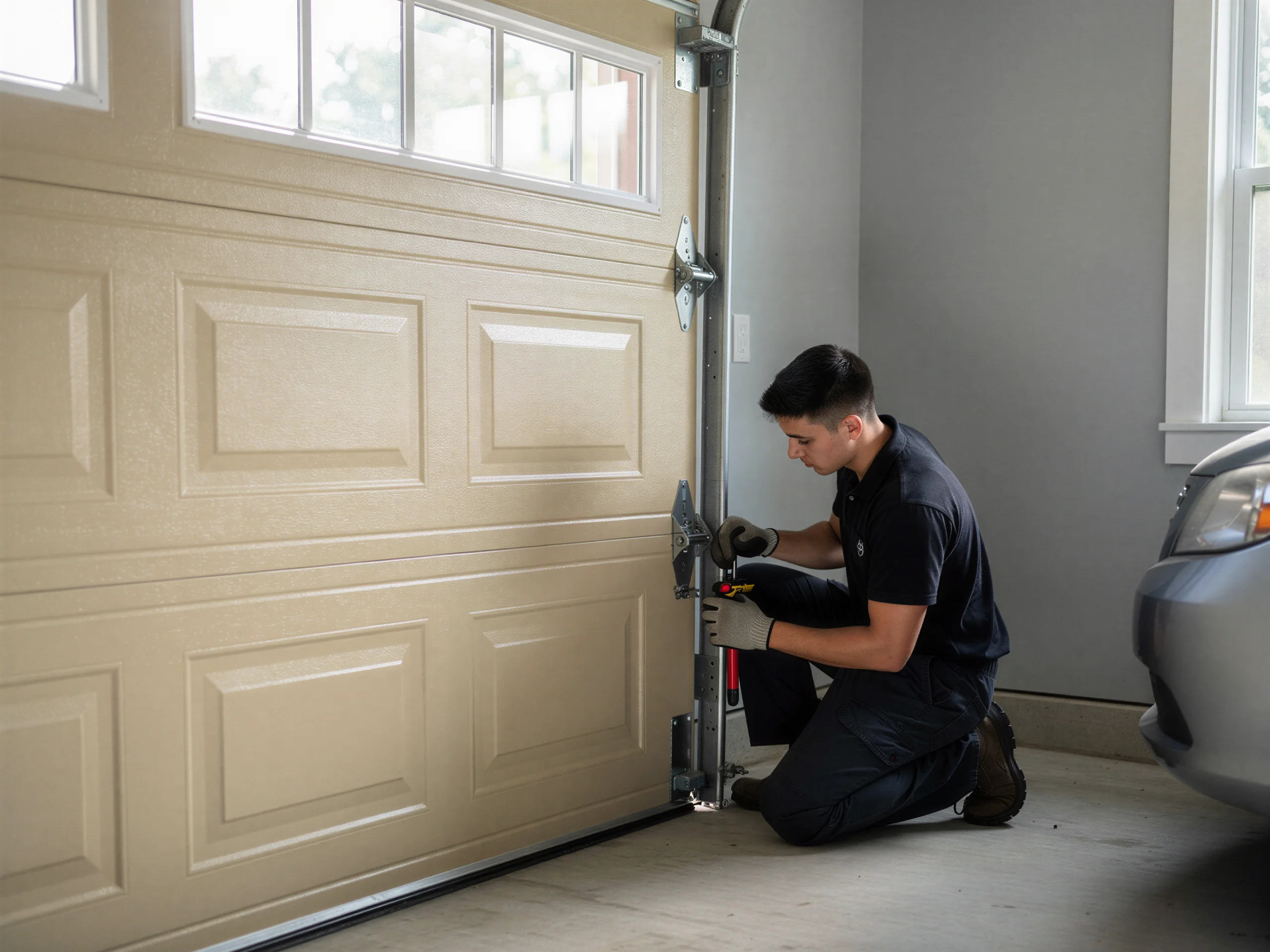
A straight swap - same rail length, same mounting points, new opener in place of the old chain-drive unit - usually runs under two hours once we're on site.
Wall switch wiring timing
Houses from this build era complicate that timeline more often than newer ones do, because the original wiring wasn't run with a modern opener in mind. We frequently find the wall switch wired straight to the motor with no low-voltage control wire for a keypad, which means running new wire before the new unit goes in.
Sensor mounting time
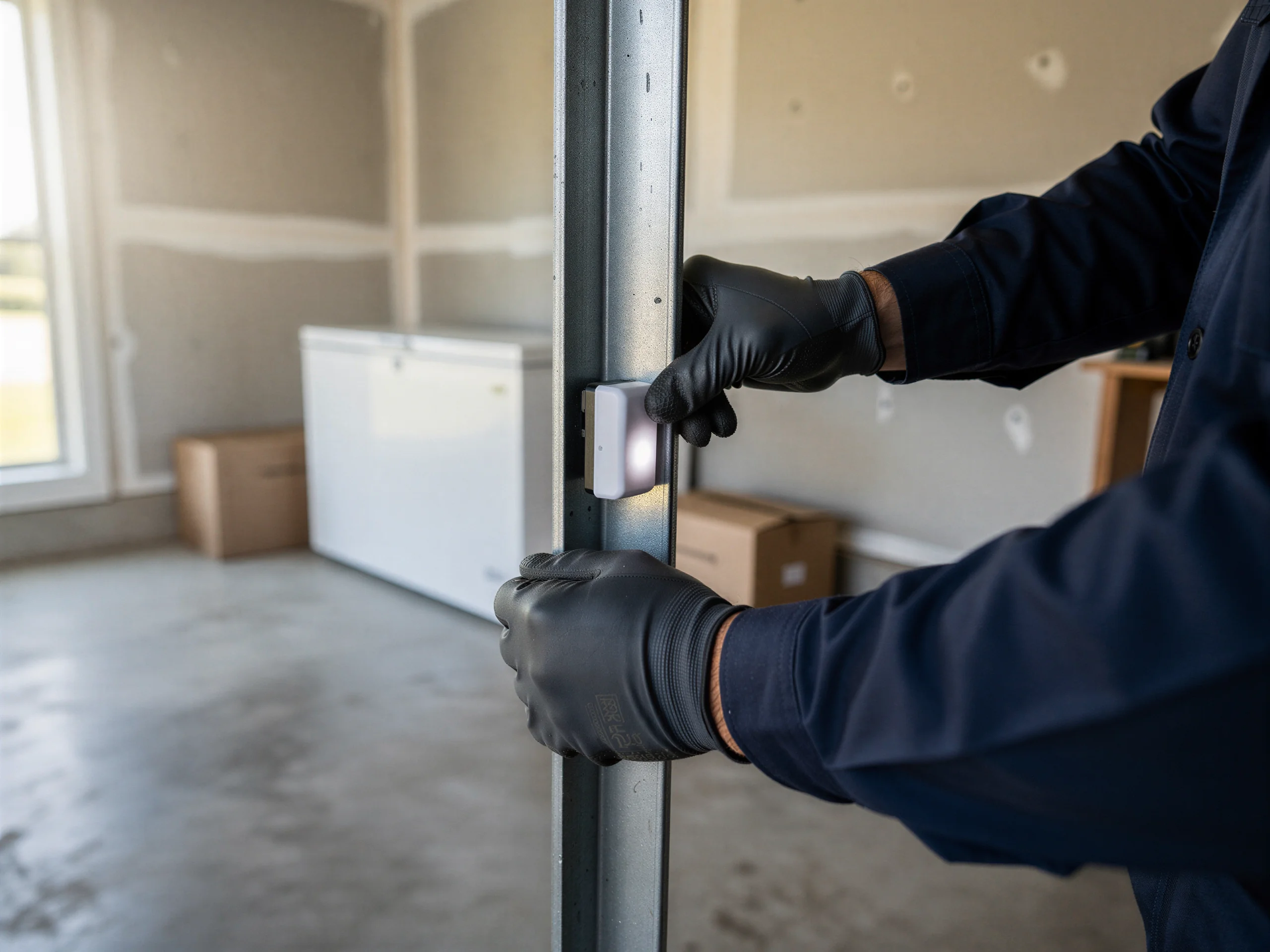
If your door also needs new photo-eye sensors added at the base of the track - common on a 1987 install that never had them - that adds time for mounting and aiming, since they have to see each other clearly across the opening to pass a safety test.
Upfront time estimates
None of this is a guess made at the door; we tell you what we see and what it adds to the job before we start, not after.
Can You Do This Yourself
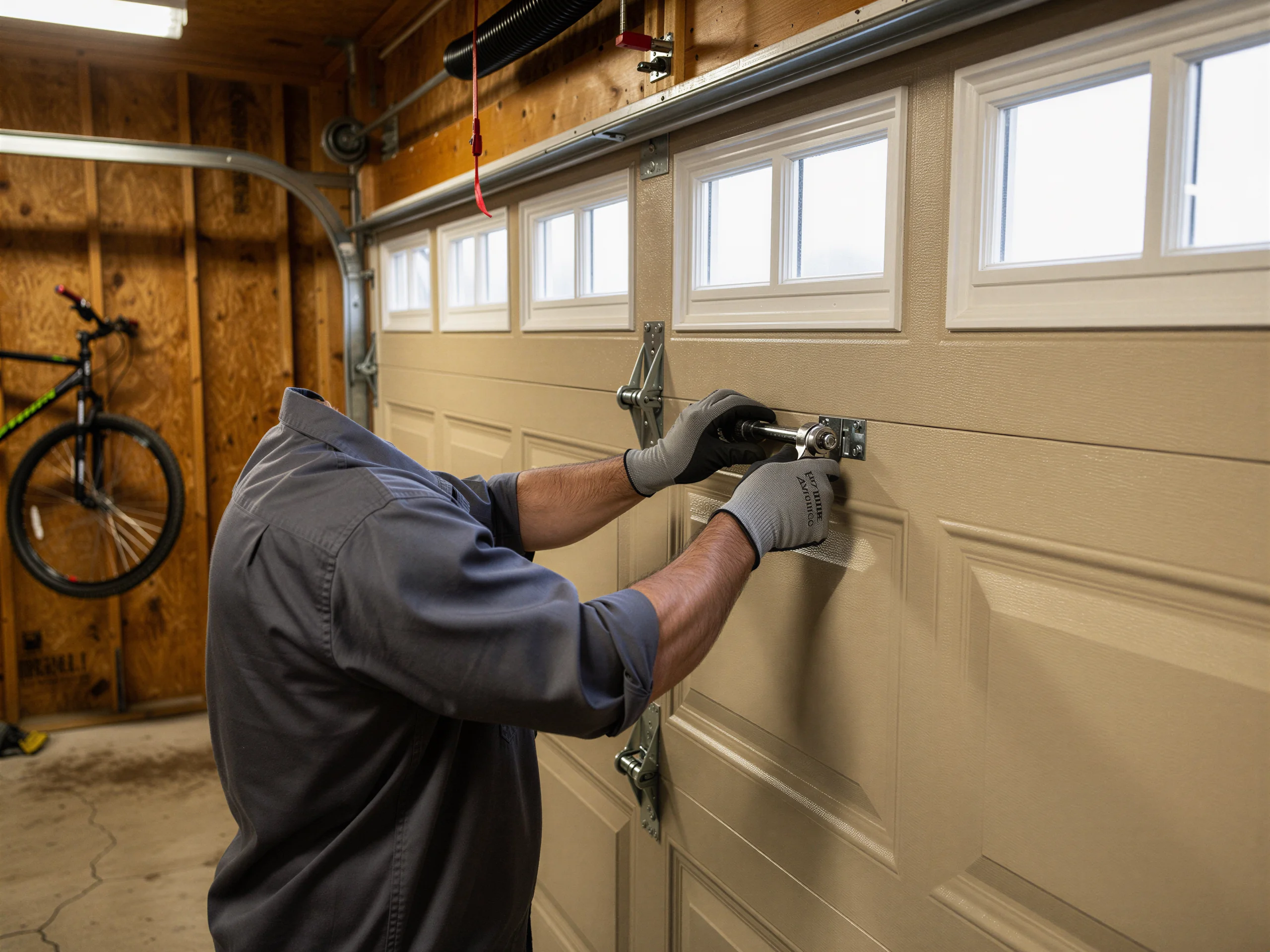
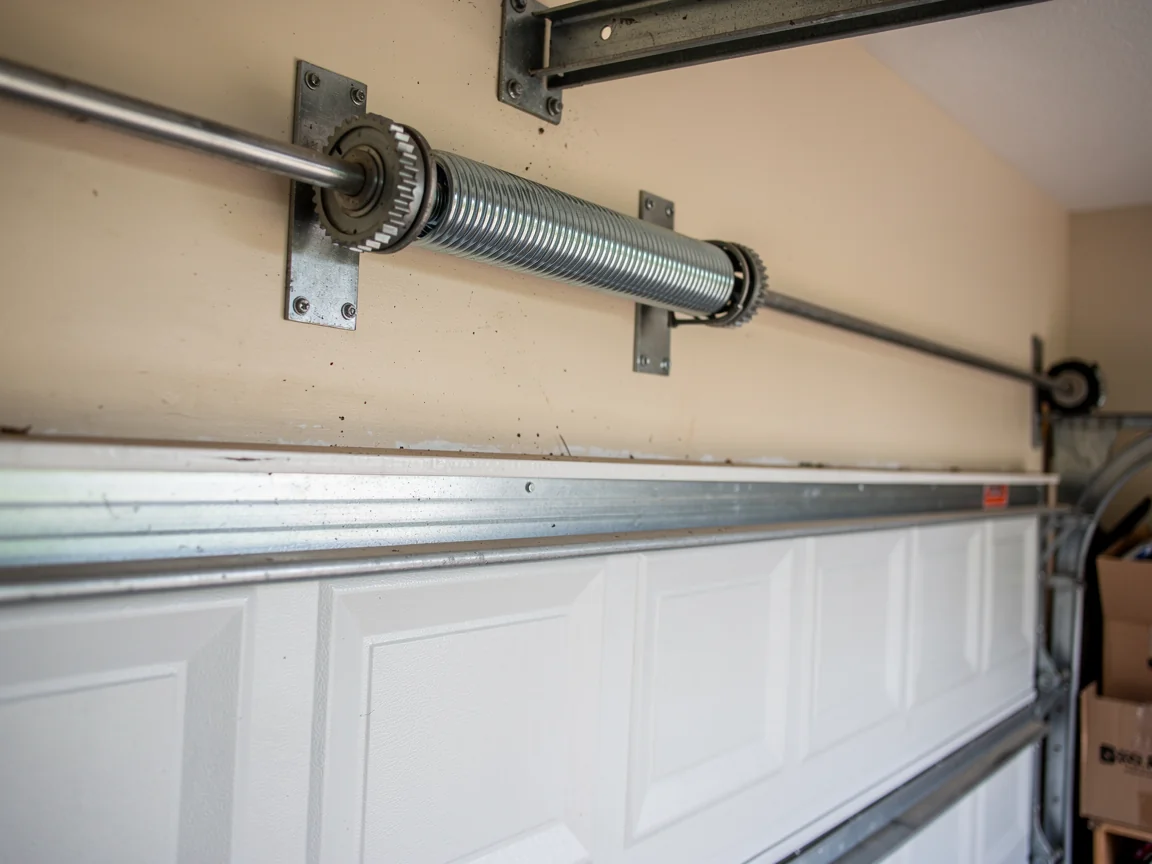
Swapping a modern opener onto an existing rail is within reach for someone comfortable with basic wiring and willing to read the manual twice. Where it gets dangerous fast is the spring and cable side of the door, which has nothing to do with the opener but everything to do with whether the door can hurt you - a torsion spring under tension is not a DIY repair, full stop. On a 1987 door, the honest limitation is this: we don't always know until we're there whether the original hardware will accept a new unit cleanly, or whether the rail bracket, the header, or the door itself needs attention first. If your garage only has one working outlet near the opener and no neutral wire for a smart unit, that's a wiring job for an electrician, not something we paper over. We'll tell you plainly when a job is simple enough to do yourself and when it isn't.
What You Are Seeing
The opener groaning or chain-slapping against the rail on a door built in the late 1980s almost always means a stretched chain or worn sprocket, not a dying motor.
Mid-travel reversals
A door that reverses halfway up for no reason, especially on an older unit without photo-eye sensors, usually points to a failing limit switch or a logic board losing its memory of travel distance.
Remote range failures
If the remote works only when you stand directly under the unit, that's a fading antenna or a dying circuit board, common once a board passes the twenty-year mark. A light that won't turn off, or a motor that hums without moving the door, both suggest the capacitor is going.
Spring-free opener faults
None of these point to the spring or cable system - those are separate parts entirely, and a working door that opens by hand but won't respond to the opener almost always means the problem lives in the motor housing, not the hardware holding the door up.
Parts We Carry
We carry belt-drive and chain-drive openers in the horsepower ranges that fit most residential single and double doors, along with the photo-eye sensor kits that older installs in this area typically never had. For a 1987 door, the rail length and header clearance often don't match current factory defaults, so we also carry extension rail sections and universal mounting brackets to bridge that gap without forcing a different door opening. Battery backup units come up often enough as an upgrade request that we stock them rather than special-order on every call. What we don't stock is obsolete OEM parts for openers that have been out of production for decades - if your unit needs a specific proprietary board that's no longer made, replacement is the honest answer over a repair we can't actually complete.
Talk to a local pro
Garage door service in Ventura?
Same-day service with honest, upfront quotes.